



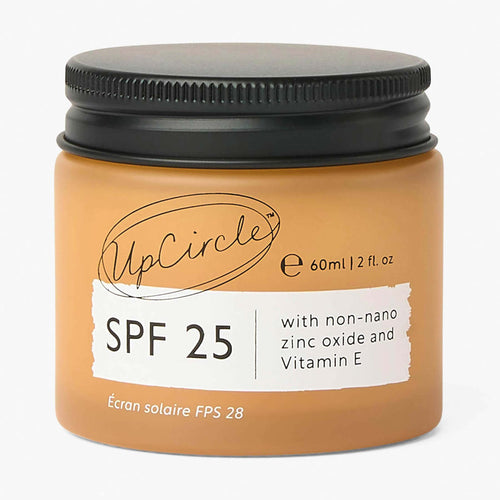


We use glass jars with aluminium caps across most of our range because glass and aluminium are two of the very few packaging materials UK councils genuinely collect and reprocess at scale. That is the short answer. The longer one is that "sustainable skincare packaging" is a phrase brands use loosely, and the only way to judge it is to know what the material is, whether your council takes it, and what you have to do before it goes in the bin. Here are all three, including where our own packaging is not there yet.
Key takeaways
- Our jars are glass with an aluminium cap. Both are collected by most UK councils and both can be reprocessed repeatedly rather than downcycled once.
- Recycle Now describes the metal used in tins and cans as "endlessly recyclable", and says recycling a can "costs 95% less energy and emissions than making a new one".
- Recyclable is not the same as recycled. A material only counts if your council collects it, so the honest answer is often "check your postcode".
- Empty and rinse before it goes out. Recycle Now says leftover residue "can contaminate other recyclables which may mean they aren't recycled".
- Recycle Now advises putting lids and caps back on glass containers so small metal parts are not lost in sorting, which is the opposite of what most people assume.
- Not everything we make is solved: our Face Toner still has a plastic spray nozzle and our Face Oil ships with a pump.
Why we moved from plastic caps to aluminium ones
We moved to aluminium caps because a plastic cap quietly cancels out the benefit of a glass jar. A glass jar with a plastic lid is a mixed-material item, and mixed-material items are where recycling systems fall down. The glass goes in the glass stream, the plastic cap is usually too small and too low in value to be captured, and the part that gets lost is the part you were told was fine.
Swapping the cap to aluminium turns the whole container into two materials the UK system is set up to handle. Nothing about the formula changes. What changes is the odds that the empty container has a second life.
What was wrong with the plastic cap
Small rigid plastics frequently fall through the screens at a materials recovery facility and end up in the residue stream. Caps are often a different polymer to the container they sit on, which makes them harder to sort and lower in value. And it made our own claim harder to defend: if we tell you a product is in recyclable packaging, every component needs to hold up.
What aluminium changes
Aluminium is one of the few packaging materials with an economic case for recycling that does not depend on goodwill. It holds its properties through reprocessing, so recycled aluminium is not a lesser grade than new, and Recycle Now, the national campaign run by the charity WRAP, puts the energy saving at 95%. That is why aluminium gets collected reliably: there is a buyer waiting for it.
What circular packaging actually means
Circular packaging means packaging designed to come back into use as a material rather than being used once and destroyed. It is a design decision made before anything is filled, not a label applied afterwards: a material with a real reprocessing route, in a format that route can handle, with as few different materials bonded together as possible.
That rules out a lot of things that look responsible. A technically recyclable polymer no UK council collects is not circular. A paper sleeve glued to a plastic body is not circular. A pack that needs dismantling with a knife is not circular in practice, because almost nobody will. For the wider argument, we have a guide to what circular beauty means.
Recyclable is not the same as recycled
This is the most important distinction in packaging and the one most often blurred. "Recyclable" describes a material's theoretical potential. "Recycled" describes what happened to the item you put in the bin outside your house. The gap is filled by collection infrastructure, sorting technology and council budgets, none of which a brand controls.
So when we say our jars and caps are recyclable, we mean the materials have a functioning UK reprocessing route and sit on the standard collection list. We cannot promise your council takes them, because councils differ.
Is aluminium actually recyclable in the UK?
Yes, and it is one of the better performing materials in the system. Recycle Now states that the metal used in food tins and drink cans "is endlessly recyclable, so it's important that it is saved rather than thrown away", and notes a can "could be recycled and be back on sale as another can in just 60 days".
There is one wrinkle with small aluminium items such as caps: they can be too small to be picked out reliably during sorting. Recycle Now's foil guidance handles this by telling you to scrunch small pieces together into a ball so they are big enough to be caught, with a simple test: "Scrunch the wrapper in your hand, if it remains scrunched in a ball it is recyclable foil." The same logic applies to caps.
Is glass actually recyclable in the UK?
Yes, and glass has close to universal coverage. Recycle Now says "most local authorities collect glass bottles and jars in their household collections", and adds that "they can also be dropped off at bottle banks" if yours does not.
Coverage is improving by law, too. Under the government's Simpler Recycling reforms in England, councils must collect a core set of materials from households, specifically "glass, metal, plastic, paper and card, and food waste", by 31 March 2026. Scotland, Wales and Northern Ireland run their own arrangements, so outside England the postcode check is still the reliable route.
What you actually have to do with an UpCircle jar
Not much, but the details matter more than people expect.
Step one: use it all up
The most circular thing that can happen to a container is that everything inside it gets used. Jars help, which is part of why we favour them: you can reach the bottom with a finger or a spatula, where a pump leaves a stubborn reservoir behind. The practical version is in our guide to getting every last drop out of your products, and storage matters too, which we cover in how to store skincare so it lasts longer.
Step two: empty and rinse
Give the jar a quick rinse before it goes out. Recycle Now's guidance on glass bottles and jars is direct: "Empty and give a quick rinse, leftover liquid can contaminate other recyclables which may mean they aren't recycled." Cold water and a few seconds is enough.
Step three: cap on, not cap off
The instinct is to separate the metal cap from the glass jar. Recycle Now advises the opposite for glass containers: "Put lids and caps back on, this reduces the chance of them getting lost during the sorting process as they can be recycled separately." A loose aluminium cap is small enough to fall through sorting screens. Screwed back on, it travels attached to something big enough to be caught, and is separated later by machinery far better at it than a kerbside sort.
Step four: check your council, honestly
If you take one action from this piece, make it this one. Enter your postcode into the Recycle Now recycling locator and find out what your council collects and how they want it presented. Some want glass in a separate box, some collect metals commingled, and some ask for lids off rather than on because their sorting line is configured differently. Local instructions beat national guidance, and they beat anything a skincare brand tells you.
Glass and aluminium compared with the alternatives
Here is how common pack formats compare on what actually determines a second life.
| Pack format | Materials | Typical UK kerbside collection | What you have to do | Main weakness |
|---|---|---|---|---|
| Glass jar with aluminium cap | Two, both widely collected | Glass in most areas, metal in most areas | Empty, rinse, cap back on, check council | Heavier to ship than plastic |
| Glass jar with plastic cap | Two, one widely collected | Glass yes, small plastic cap often not captured | Separate the cap, which may still be lost | The cap usually escapes the system |
| Plastic jar or tub | One, variable polymer | Pots and tubs accepted in many but not all areas | Empty, rinse, check polymer and council | Quality drops each time it is reprocessed |
| Pump or spray bottle | Three or more, including a metal spring | Bottle often yes, dispenser usually not | Bin the dispenser, recycle the bottle | The dispenser is effectively unrecyclable |
| Sachet or pouch | Laminated layers, bonded together | Not accepted at kerbside | Store drop-off where available | Layers cannot be economically separated |
Where our packaging is still not there
Transparency is worth little if it only covers the flattering parts.
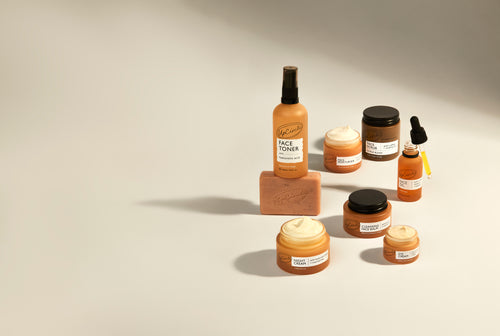
Our Face Toner with Hyaluronic Acid is a glass bottle with a cardboard outer box and a plastic spray nozzle. The nozzle is a mixed-material component with a spring inside and is not kerbside recyclable. On repeat orders you can choose a plastic-free aluminium cap instead of a new nozzle and keep using the one you already have.
Our Organic Face Oil with Coffee Extract works the same way: a glass bottle with a pump, and on repeat orders you can select the aluminium cap and hold on to your original pump. That is a smaller improvement than we would like, and it depends on you remembering to choose it.
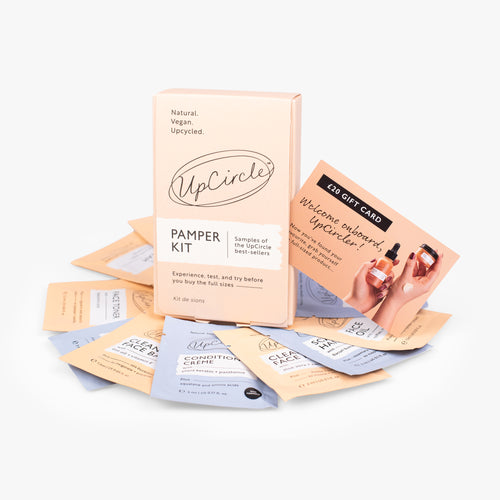
Our sachets, which exist so people can try a formula before committing to a full size, are laminated and not kerbside recyclable. A 3ml sachet that prevents a 60ml jar being bought and abandoned is a reasonable trade, but it is a trade, not a win.
The move to aluminium caps is also a rolling change rather than a finished one. It is in place across the jarred range and is being extended through pump and spray formats as stock cycles through, so we would rather call it in progress than claim a clean sweep we have not made.
The part of circularity that happens before the bin
Packaging is the visible end of circularity, not where most of the impact sits. Our formulas are built around ingredients rescued from other industries: coffee grounds from cafes, argan shells left after oil pressing, chamomile stems from tea production, blueberry extract from juicing. Using them means we are not commissioning new agricultural production to get the same active. Our piece on whether upcycled ingredients are actually effective covers the evidence, and why we use rescued ingredients explains how it shapes what we make.
How to judge any brand's packaging claim
Three checks separate a real claim from a decorative one.
Does it name the material?
A confident brand tells you exactly what the container and the closure are made of. "Glass bottle with an aluminium cap" is a claim you can verify. "Sustainably designed packaging" is not a claim at all, because there is nothing in it to check.
Does it tell you what to do?
Real guidance is specific and slightly boring. It tells you to rinse, says what to do with the lid, and points you at your council rather than pretending national coverage is uniform. If the instruction is just "please recycle", nobody has thought it through.
Does it admit the gaps?
Every range has a component that is not solved, whether a pump, a pipette or a laminated sachet. A brand that names its own weak points is more likely to be accurate about its strong ones. Certifications help as a backstop, and we have unpacked what the common labels guarantee in our guide to decoding certification claims.
Beyond the bathroom cabinet
Recycle Week and Zero Waste Week land in early September, a sensible moment to look at the rest of the routine. Reusable alternatives take pressure off the recycling system by never entering it: our guide to whether reusable makeup remover pads actually work is an honest look at one, and our Earth Day guide to beauty accessories that are not adding to landfill covers the rest of the shelf. A plastic-free safety razor is the biggest single swap most people can make, and a cleansing bar removes a bottle altogether.
To rebuild a whole routine, there is a step-by-step version in how to build a plastic-free skincare routine, a wider look at packaging-first thinking in a more zero-waste home and lifestyle, and what we learned from the Big Plastic Count. Our post on UpCircle's reusable cloth wrapping covers gifting, and the guide to blue beauty covers the ocean-facing side.
Frequently asked questions
Can I recycle an UpCircle glass jar at home?
In most of the UK, yes. Recycle Now says most local authorities collect glass bottles and jars in household collections, and bottle banks cover areas that do not. Empty it, rinse it, and check your postcode on the Recycle Now locator if you are unsure.
Do I take the aluminium cap off before recycling?
Recycle Now's guidance for glass containers is to put lids and caps back on, because loose caps are small enough to be lost during sorting and can be separated later. Some councils ask for the opposite, so if your local instructions differ, follow them rather than us.
Is aluminium better than plastic for skincare packaging?
For recyclability, yes. Aluminium can be reprocessed repeatedly without losing its properties, and Recycle Now describes the metal used in cans as endlessly recyclable. Plastic degrades in quality each time it is reprocessed, and small plastic components are often lost at sorting. Aluminium is heavier to ship, which is a genuine trade-off.
Why do some UpCircle products still have plastic parts?
Because some formats have no fully solved alternative yet. Spray and pump dispensers contain a spring and multiple polymers and are not kerbside recyclable. Where we can offer an aluminium cap instead on repeat orders we do, and where we cannot we say so.
Does rinsing a jar use more water than the recycling saves?
A quick cold rinse uses very little water, and skipping it risks contaminating a whole batch of collected material. Recycle Now is clear that leftover residue can mean other recyclables are not recycled. Rinsing a jar in your washing-up water is the most efficient version.
Is packaging aluminium the same as the aluminium in antiperspirants?
No. Packaging aluminium is metal on the outside of a container. The aluminium in antiperspirants is a group of aluminium salts formulated into the product to reduce sweating. A product can be packaged in aluminium and contain none of them.
Why you can trust this guide
UpCircle is a certified B Corporation, which means our environmental and social performance has been independently assessed rather than self-declared. We scored 96.3 against a median of 50.9 for ordinary businesses, and legally embedded our commitment to purpose beyond profit in our company articles to complete the certification. The detail is on our B Corp page, and the story is in we are now a certified B Corporation.
We have built products around rescued ingredients since we started collecting spent coffee grounds from London cafes. Every recycling fact here is attributed to Recycle Now, the campaign run by the charity WRAP, or to UK government guidance, and every claim about our own packaging comes from what is printed on the products themselves. Where the answer depends on your council, we have said so. For the same scepticism applied to other brands, our buyer's guide to spotting a genuinely circular skincare brand is the companion piece.
Where to start
If you change one thing today, spend two minutes with the Recycle Now locator and find out what your own council takes. It is the highest-value packaging action available to you, and it is free.
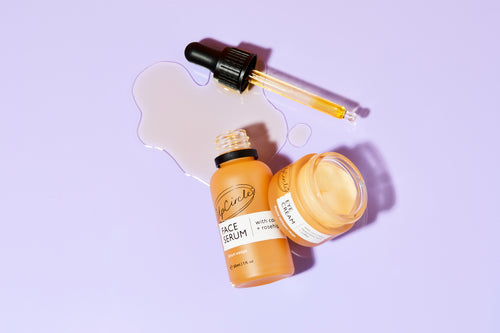
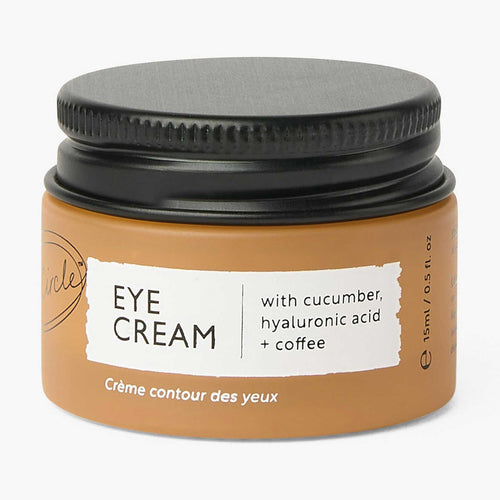
To see what packaging-first design looks like across a range, browse our plastic-free collection. The Face Scrub with Coffee and Rosehip Oil, Face Moisturiser with Vitamin E, Eye Cream with Hyaluronic Acid and Coffee and Night Cream with Hyaluronic Acid and Niacinamide are all glass jars with aluminium lids, and the Cleansing Face Milk with Oat Powder and Aloe Vera starts the routine off.
For the whole thing in one go, The 5-Step Essentials Bundle brings together the Cleansing Face Milk, Peptide Serum, Eye Cream, Face Moisturiser and Face Oil. It is the simplest way to move a full routine onto glass and aluminium, and to find out whether the packaging argument holds up once the products are on your shelf.