





Building a plastic-free skincare routine means choosing products whose packaging can be reused, refilled, recycled, or composted, then swapping out the single-use plastic at each step of your regime. You do not have to overhaul everything at once. The easiest way to start is to replace items as they run out, one at a time, with a glass, aluminium, or paper alternative that still does the job. This guide walks through a full routine, from cleanse to protect, and shows you how to make each step plastic-free without trading down on results.
Key takeaways
- A plastic-free routine swaps single-use plastic for refillable, reusable, recyclable, or compostable formats at every step, from cleanser to moisturiser.
- Start small. Replace one product at a time as it runs out, so nothing usable goes in the bin and the cost is spread over months.
- Packaging and performance are separate questions. Glass jars, aluminium tubes, and reusable pads can hold formulas that are every bit as effective as their plastic-packed equivalents.
- Reusable cotton and bamboo pads remove the single biggest source of repeat plastic waste in most routines, the disposable cotton round.
- Look for third-party proof, like B Corp certification, so a plastic-free claim is backed by an audited standard rather than a label on the front of the box.
What does a plastic-free skincare routine actually mean?
A plastic-free skincare routine is one where the packaging is designed to avoid single-use plastic, using materials that can be refilled, reused, recycled, or composted instead. In practice that means glass bottles and jars, aluminium tubes and tins, paper and card outers, and reusable tools in place of throwaway plastic. It is worth being honest about the word "plastic-free", because very few beauty products are completely free of every polymer down to the pump mechanism. What you can realistically achieve is a routine that removes the bulk of the single-use plastic, chooses recyclable or refillable formats for the rest, and cuts the disposable items, like plastic-backed wipes and cotton rounds, that you would otherwise throw away every single day.
The reason this matters is scale. The Big Plastic Count, a UK-wide citizen investigation run by Everyday Plastic and Greenpeace, found households throw away a striking volume of plastic packaging every week, much of it from bathroom and personal care products. Skincare is a daily habit, so even small swaps compound quickly over a year. If you want the wider context for why a circular approach beats a single-use one, our guide to what circular beauty is explains the thinking behind it.
Why packaging and performance are two different questions
The format a product comes in tells you nothing about how well the formula works. A serum in a glass bottle and a serum in a plastic one are judged on the same thing, the actives inside and how they are formulated. This is the single most useful idea to hold on to when you build a plastic-free routine, because it frees you from the worry that going plastic-free means going gentle or ineffective.
UpCircle formulas are a good example. Our packaging is recyclable, in glass bottles, glass jars, or aluminium tubes, yet the products inside are made with proven, often clinically tested ingredients. The point is that you choose the format for its end-of-life story and the formula for its evidence, as two separate decisions. For more on how to read an ingredient claim properly, see our explainer on what "clinically proven" really means in skincare.
Step one: cleanse without the plastic
Start your plastic-free routine at the first step you do every day, cleansing, because it is where disposable plastic builds up fastest. A solid balm or a cream cleanser in a recyclable jar or tube replaces the pump bottles and plastic-wrapped wipes that most routines lean on.
A balm that doubles as a makeup remover
Our Cleansing Face Balm with Vitamin E is made with the finely ground powder of discarded apricot stones, a by-product of the apricot oil industry that is naturally rich in antioxidant Vitamin E. The rich texture breaks down and removes makeup, including waterproof mascara, plus pollution and impurities in the pores, and it is ophthalmologically safe for use around the eyes. It is 100% plastic-free, vegan, cruelty-free, and handmade in the UK, which makes it a natural first swap. If you are not sure which cleanser format suits you, our guide on which cleanser to use walks through the options.
Skip the throwaway cotton round
The cotton round is the quiet plastic problem in most routines, because conventional rounds often contain plastic fibres and get binned after a single use. Our Cotton and Bamboo Makeup Pads are made from 70% bamboo and 30% cotton, are biodegradable, and can be reused up to 1,000 times, then washed in the mesh bag they come with. Swapping disposable rounds for reusable pads removes one of the largest sources of repeat waste in a daily regime.
Step two: exfoliate with upcycled ingredients
For a gentle exfoliation step, a coffee-based scrub in a recyclable container lets you buff away dull, dead surface skin without single-use plastic. Our Coffee Face Scrub is made entirely with Arabica coffee grounds repurposed from London cafes. The grounds gently buff away dead skin cells while shea butter nourishes and Vitamin A-rich rosehip oil supports skin regeneration, leaving a smoother, brighter looking complexion. Use it two to three times a week rather than daily. If you prefer a clay-based reset, the Kaolin Clay Face Mask is made with the finely ground powder of discarded olive stones from the olive oil industry, and uses gentle kaolin to draw out dirt and impurities while olive powder and aloe vera calm the skin.
Step three: hydrate and treat in glass
The treat-and-hydrate steps, serum and moisturiser, are where glass and aluminium packaging come into their own. A targeted serum followed by a moisturiser covers most skin needs, and both are widely available in recyclable formats.
A clinically tested serum
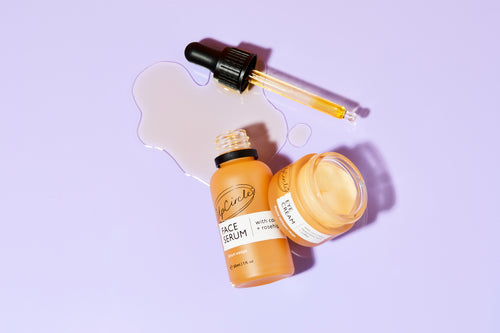
Our Peptide Serum with Custard Apple and Blood Orange is crafted with upcycled fruit waters and extracts, and has been clinically proven to improve skin elasticity by 29% over 14 days. Peptides and niacinamide support the skin barrier and firmness, while Vitamin C and blood orange water help brighten and even tone. It is suitable for all skin types, including sensitive skin.
A moisturiser that seals it in
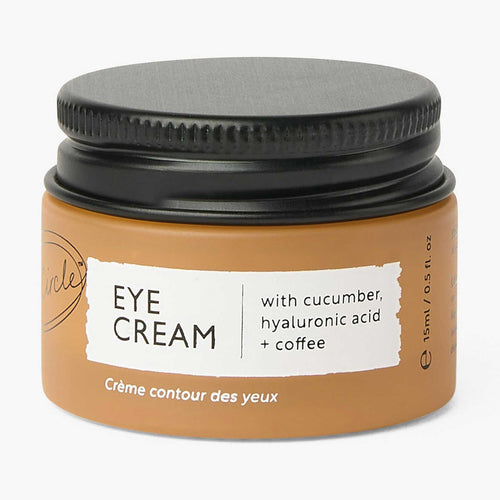
Follow with our Face Moisturiser with Vitamin E, a deeply nourishing, fast-absorbing cream suitable for all skin types, including sensitive skin. It provides moisture, balance, and protection without feeling heavy or greasy. For the delicate under-eye area, our Eye Cream with Hyaluronic Acid and Coffee pairs caffeine-rich coffee oil, which helps reduce the look of puffiness and dark circles, with hyaluronic acid to hydrate and plump. If you are unsure what order to apply everything, our guide on how to layer skincare correctly sets out the sequence.
Step four: protect, and complete the routine
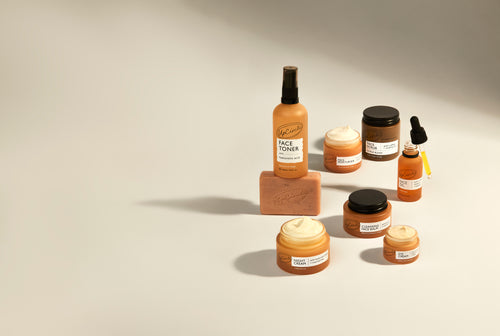
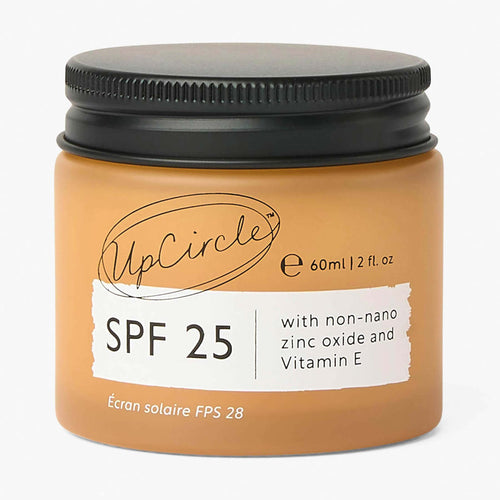
Finish your morning routine with sun protection, the step dermatologists rate most highly for long-term skin health. Plenty of mineral sunscreens now come in recyclable tubes, so this step fits a plastic-free routine without compromise. A daily broad-spectrum SPF rounds out a five-step regime of cleanse, exfoliate or treat, serum, moisturise, and protect. The simplest way to put the whole thing together in one go is our 5-Step Essentials Bundle, which brings together a cleanser, toner, eye cream, moisturiser, and face oil in recyclable packaging, so you can build a complete plastic-conscious routine in a single step.
Plastic-free swaps at a glance
If you want a quick reference, here is how the most common single-use items map to a plastic-free alternative.
| Routine step | Common single-use item | Plastic-free swap | End-of-life |
|---|---|---|---|
| Makeup removal | Plastic-backed wipes | Cleansing balm in a jar | Jar recyclable |
| Cleansing | Disposable cotton rounds | Reusable cotton and bamboo pads | Reuse up to 1,000 times, then compostable |
| Exfoliating | Plastic microbead scrub | Upcycled coffee grounds scrub | Recyclable container |
| Treating | Plastic serum bottle | Serum in glass | Glass recyclable |
| Moisturising | Plastic tub | Moisturiser in a recyclable format | Recyclable |
How to make the switch without waste
The most sustainable way to go plastic-free is to use up what you already own before you replace it, then choose a plastic-free version of each product as it runs out. Throwing away half-used plastic bottles to buy glass ones defeats the purpose, because the most wasteful product is the one you bin before it is finished. Spreading the swaps over a few months also spreads the cost, and it lets you test each new product properly rather than changing everything at once. Browse the full Plastic-Free Collection to plan your swaps, and read our notes on reusable and recyclable packaging to understand what each format means at end of life.
How to spot a genuinely plastic-free brand
Look past the words on the front of the box and check for third-party proof. Anyone can print "plastic-free" or "sustainable" on a label, so the meaningful signals are an audited certification, transparency about exactly what the packaging is made of, and a take-back or recycling route for the parts that need one. Certifications like B Corp assess a company against verified social and environmental standards, which is harder to fake than a marketing claim. Our page on what makes UpCircle a B Corp sets out the standard we are held to, and our guide to what the main certifications mean helps you decode the logos. External bodies worth knowing are the Plastic Free Foundation, which runs Plastic Free July, and the Ellen MacArthur Foundation, which sets out the principles of a circular economy.
Frequently asked questions
Is plastic-free skincare as effective as regular skincare?
Yes. Packaging and performance are separate questions. The effectiveness of a product comes from its active ingredients and how it is formulated, not from whether the bottle is glass or plastic. A well-formulated product in a recyclable jar performs exactly like the same formula in plastic.
How do I start a plastic-free routine on a budget?
Replace products one at a time as they run out, rather than buying everything at once. This spreads the cost over months and means you never bin a usable product, which is both cheaper and less wasteful. Reusable items, like washable pads, also save money over time because you stop buying disposables.
What is the easiest first swap to make?
Reusable makeup pads are the simplest high-impact swap, because they replace something you would otherwise throw away every day. Switching from disposable cotton rounds to washable cotton and bamboo pads removes a daily source of plastic waste with almost no change to your routine.
Are glass and aluminium really better than plastic?
Glass and aluminium are widely and repeatedly recyclable, and aluminium in particular can be recycled many times without losing quality. Plastic is harder to recycle and often is not recycled in practice, so choosing glass or aluminium gives the packaging a better chance of a second life.
Can a plastic-free routine work for sensitive skin?
Yes. Many plastic-free products, including our cleansing balm, moisturiser, and eye cream, are suitable for sensitive skin. As always, introduce one product at a time and patch test first so you can see how your skin responds.
Does "plastic-free" mean zero plastic anywhere?
Not always, and it is worth being realistic. Some components, like a pump or a seal, can still contain small amounts of plastic. A genuine plastic-free routine removes the bulk of single-use plastic and chooses recyclable or reusable formats for the rest, which is where the real impact lies.
Why UpCircle builds for a circular routine
UpCircle is a certified B Corp built on a simple idea, that powerful skincare ingredients are being thrown away every day, and that skin does not care whether an active was rescued or bought new. We started by collecting spent coffee grounds from London cafes and turning them into face and body scrubs, and we now rescue a range of by-product ingredients across the range, from apricot and olive stones to surplus fruit waters. Our packaging is recyclable, in glass, aluminium, and card, and every efficacy claim we make is tied to the specific active in the formula, grounded in ingredient science or clinical testing rather than hype. That is the standard we hold ourselves to, and the standard we think every brand using the words "plastic-free" should meet.
Build your plastic-free routine
If you want to go deeper on the thinking first, read our guide to why we use rescued ingredients. When you are ready to start swapping, explore the full Plastic-Free Collection to find a recyclable version of each step. And if you would rather build a complete plastic-conscious routine in one go, the 5-Step Essentials Bundle gives you cleanser, toner, eye cream, moisturiser, and face oil together, in recyclable packaging, so going plastic-free is as simple as one decision.