





Transitioning your skincare routine for autumn means adding back the layers summer let you skip. As UK temperatures fall and indoor heating comes on, the air around your skin holds less moisture, so the lightweight gels and thin lotions that felt right in July quietly stop doing enough. The good news is that this is not a rebuild. It is a handful of deliberate swaps: richer and more occlusive layers at night, a gentler cleanse, and SPF that stays in the routine instead of going in a drawer.
Key takeaways
- Autumn is a transition, not a reset. Keep the structure of your routine and change the textures.
- Retire lightweight summer layers gradually and add occlusive ones, starting with the final step at night.
- Keep SPF on. The NHS advises using sunscreen in the UK from March to October, which covers the whole autumn transition.
- Cleanse more gently. Habits built for summer sweat and heavy SPF can leave autumn skin feeling tight.
- Change one product at a time, roughly a week apart, so you can tell what is actually working.
What actually changes about your skin in autumn?
Skin loses water to the air faster in autumn because outdoor temperature and humidity both drop, and indoor heating dries the air further. Nothing about your skin type changes overnight. What changes is the environment it sits in, and how much support it needs to hold on to moisture.
According to Met Office UK climate averages, mean temperatures fall steadily through September and October across the UK. Add central heating from late September and you get a double squeeze: colder, drier air outside and warm, dry air inside. The everyday result is familiar. Foundation clings to flaky patches and skin feels tight after cleansing.
If that sounds like your skin every year, our guide to seasonal skin changes covers the wider picture. This post is about the swap itself.
When should you switch your skincare routine for autumn?
Switch when your skin tells you, not when the calendar does. For most people in the UK that falls between late August and early October, and the two reliable cues are the first cool mornings and the first day the heating goes on.
Watch for three signals: your moisturiser stops feeling sufficient by the afternoon, your skin feels tight rather than clean after washing, and makeup starts to catch on dry patches that were not there in July. Any one of those is your cue to start.
Start with one change, not five. Swapping everything in a single week makes it impossible to tell which product helped and which caused a reaction. Roughly one new product a week is a sensible pace, and it spreads the cost of the switch.
Step one: retire the lightweight summer layers
The first job is subtraction, not addition. Summer routines are built around lightness, and those thin textures are what leave skin feeling short-changed in October.
What to phase out
Anything you chose in June specifically because it disappeared into the skin is a candidate. Very light gel textures, mattifying layers and blotting habits built for controlling shine in humid air are usually the first to go. If you leaned into frequent cleansing to deal with sweat and sunscreen build-up, ease that back too.
What to keep
Keep your actives if they are working, and keep your hydrating steps. A hydrating toner earns its place all year, because it is doing a different job to a moisturiser. Our Face Toner with Hyaluronic Acid pairs hyaluronic acid and glycerin to lock in hydration with soothing chamomile stem extract, and the residual water of organic green mandarin it is built on has been clinically proven to leave skin hydrated and protected. That is a summer step that gets more useful in autumn, not less.
And keep your SPF, which we will come back to, because it is the step people most often drop by mistake.
Step two: move your cleanse from stripping to comforting
Change your cleanser before anything else, because a cleanser that leaves skin tight undermines every product that follows it. If your face feels squeaky after washing, that feeling is the problem, not the goal.
Two formats suit autumn particularly well. A cream cleanser keeps things gentle for daytime and for anyone whose skin is already reactive. Our Cleansing Face Milk with Oat Powder and Aloe Vera uses upcycled oat powder whose polysaccharides help restore the moisture barrier, alongside aloe vera, jojoba oil and vitamin E rich sunflower oil, and it is formulated to calm rather than strip.
A balm suits the evening, especially if you are still wearing SPF daily. Our Cleansing Face Balm with Vitamin E breaks down makeup, sunscreen and pollution using the finely ground powder of rescued apricot stones, naturally rich in antioxidant vitamin E, with oat oil to rebalance the skin's own oils. It is ophthalmologically tested, so it handles eye makeup.
One practical note: double cleanse in the evening, single cleanse in the morning. Many people find water alone is enough on an autumn morning.
Step three: add an occlusive layer, and put it in the right place
An occlusive is the layer that sits on top and slows water escaping from the skin. It is the single most useful addition to an autumn routine, because the core autumn problem is water loss to dry air rather than a lack of hydrating ingredients underneath.
Humectant, emollient, occlusive: the three jobs
Humectants such as hyaluronic acid and glycerin draw water in. Emollients such as shea butter and jojoba soften and smooth. Occlusives, typically richer oils and butters, form the seal that keeps the first two working. Summer routines lean humectant. Autumn routines need all three, and the American Academy of Dermatology makes the same point when it recommends richer creams and ointments over thin lotions, applied straight after washing. In practice that means a cream that stays put, such as our Face Moisturiser with Vitamin E, formulated to nourish and hydrate all skin types, including sensitive skin, without feeling heavy or greasy.
Where a face oil goes in the order
A face oil goes last, or close to last, because oils seal in the water-based steps beneath them rather than pushing through them. Our Organic Face Oil with Coffee Extract is 100% oil based and built on upcycled coffee seed oil with rosehip, jojoba and sea buckthorn, so it locks in hydration and nourishes the moisture barrier. It is also non-comedogenic, which is why it suits oily and acne-prone skin as well as dry skin, and the raspberry seed oil in it helps calm redness.
If you want the full order of operations, including where serums and SPF sit, our guide to how to layer skincare correctly walks through it. To go further on the sealing idea, slugging with natural products covers the heaviest version of it.
Step four: keep SPF in the routine
Do not retire your sunscreen in September. The NHS advises using sunscreen in the UK from March to October, which means the entire autumn transition sits inside sunscreen season. The World Health Organization notes that the UV index rises and falls with the sun's angle and the time of year, so autumn levels are lower than July rather than absent.
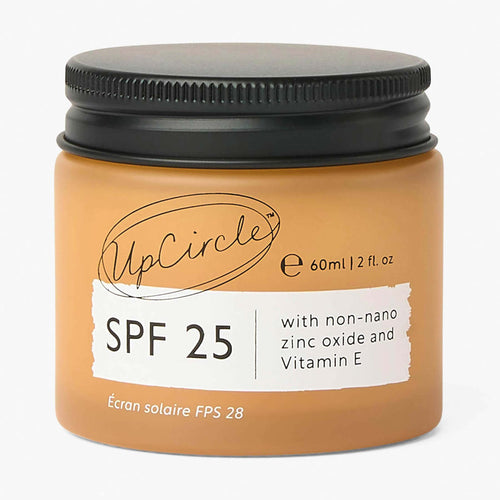
What often changes is the texture you want, because a sunscreen that felt perfect over bare summer skin can feel thin over an autumn routine with more layers under it. Our SPF 25 Mineral Sunscreen does two jobs at once. It is a broad spectrum mineral formula using non-nano zinc oxide, and it carries barrier-supporting ingredients: sunflower oil rich in fatty acids, glycerin to strengthen the natural moisture barrier, aloe vera to soothe, and upcycled raspberry seed oil high in vitamins A and E. It absorbs in about five minutes with no white cast.
Step five: build the night routine back up
Night is where autumn routines earn their keep, because you are not competing with makeup, sunscreen or the working day. It is the right place for your richest textures.
Night cream, and why niacinamide suits the season
A dedicated night cream is the clearest upgrade from a summer routine. Our Night Cream with Hyaluronic Acid and Niacinamide is built around niacinamide, which replenishes the skin's natural barrier and works to minimise the look of pores and even skin tone. Hyaluronic acid boosts hydration, rosehip oil supports skin regeneration, and the cold-pressed extract of rescued blueberries adds vitamin A as a source of pro-retinol that works on the look of fine lines. It is lightweight rather than greasy, so it layers well under a face oil.
Ease off on exfoliation, do not abandon it
Autumn skin still benefits from exfoliation, just less often. If you were scrubbing three times a week in summer, once or twice is usually plenty once the heating is on, and it pays to choose something that nourishes while it buffs. Our Face Scrub with Coffee and Rosehip Oil is formulated for dry and dehydrated skin, using Arabica coffee grounds rescued from London cafes to lift away dead surface cells while shea butter nourishes the moisture barrier.
If your skin is already sore, flaky or reactive by the time you read this, pause exfoliation entirely and follow our skin barrier repair routine first. Repair, then exfoliate.
Summer routine versus autumn routine: what actually changes
The structure stays the same. The textures, the frequency and the emphasis move. Here is the swap at a glance.
| Step | Summer version | Autumn version | Why it changes |
|---|---|---|---|
| Cleanse | Twice daily, often foaming, built for sweat and SPF | Balm at night, cream or water in the morning | Less sweat, drier air, so stripping is the bigger risk |
| Hydrate | Hydrating toner or mist, light and frequent | Same toner, applied to damp skin and sealed straight after | Humectants need something on top when the air is dry |
| Treat | Antioxidants and lightweight serums | Same actives, introduced more slowly | The barrier is more easily disrupted in cold, dry conditions |
| Moisturise | Light lotion or gel cream | Richer cream, plus a dedicated night cream | Water loss to the air increases as humidity drops |
| Seal | Often skipped | Face oil or balm as the last step at night | Occlusion is what holds the previous steps in place |
| Protect | SPF daily, reapplied | SPF daily, richer base underneath | UK sunscreen season runs to the end of October |
| Exfoliate | Two to three times a week | Once or twice a week | A stressed barrier tolerates less physical exfoliation |
Our companion post on how to transition your skincare routine for summer is the mirror image, and it is worth a skim to see which of your own summer swaps now need reversing.
Do not forget hands, lips and eyes
Hands and lips show the season first, because they have less oil of their own and are the parts most exposed to wind and hot water. Adding them to your autumn switch takes about ten seconds a day.
For hands, our Hand Cream with Hibiscus Flowers combines upcycled hibiscus flower acids, which contain 45% AHAs to gently lift pollutants from the upper layers of skin and support cell renewal, with grapeseed oil to strengthen the skin barrier and nourishing shea butter. It absorbs without feeling greasy.
For lips, our Lip Balm with Hemp Seed Oil and Shea Butter uses upcycled hemp seed oil that is high in linoleic acid to strengthen the skin barrier, with shea butter for vitamins A and E. Keep one in the bag you actually carry, not the one by the sink.
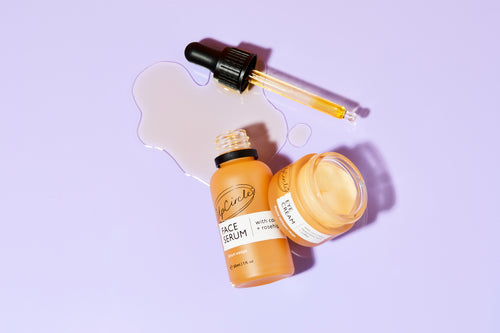
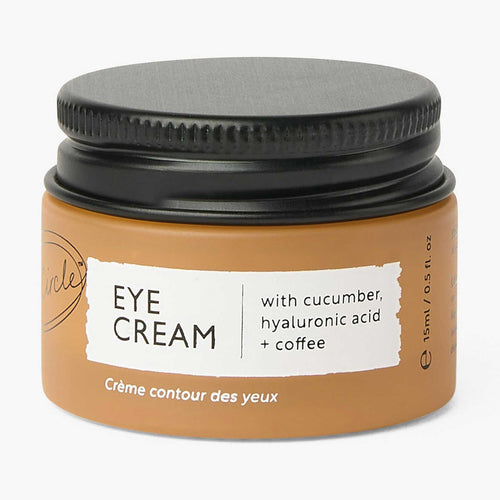
Eyes show dehydration early because the skin there is thinner. Our Eye Cream with Hyaluronic Acid and Coffee uses upcycled maple bark extract, clinically shown to reduce dry skin, with hyaluronic acid to hydrate and caffeine-rich coffee oil to reduce the look of puffiness and dark circles.
Your autumn routine by skin type
The direction of travel is the same for everyone, richer and gentler, but the pace differs.
Dry skin
Move first and move furthest. Bring in the night cream and the face oil together, use the balm cleanser every evening, and apply moisturiser to damp skin. Our Dry Skin Bundle gathers the cleanser, toner, moisturiser, night cream and face oil in one place.
Oily and combination skin
Do not skip the swap because your skin is oily. Oily skin can be dehydrated at the same time, and stripping it usually makes oiliness feel worse. Keep your hydrating toner, add a richer moisturiser at night only, and use a non-comedogenic oil rather than a heavy balm as your sealing step.
Sensitive and reactive skin
Slowest of all. One product every ten days, patch tested on the jaw first, and no new actives during the switch. Our Sensitive Skin Bundle groups the cleanser, eye cream, moisturiser and face oil we formulate for dry and sensitive skin, and the barrier repair routine is a better starting point than a seasonal swap if your skin is currently stinging.
Mature skin
Autumn is a natural moment to add a firming step, because the richer base you are building gives it something to sit on. Our Peptide Serum with Custard Apple and Blood Orange is clinically proven to improve elasticity by 29% within 14 days, using peptides and niacinamide to support the skin barrier alongside vitamin C and blood orange water to help brighten and even tone.
A simple five step autumn routine you can copy
If you want the shortest possible answer, this is it. Morning: cleanse gently or rinse with water, hydrating toner on damp skin, moisturiser, SPF. Evening: balm cleanse, toner, night cream, face oil as the final seal.
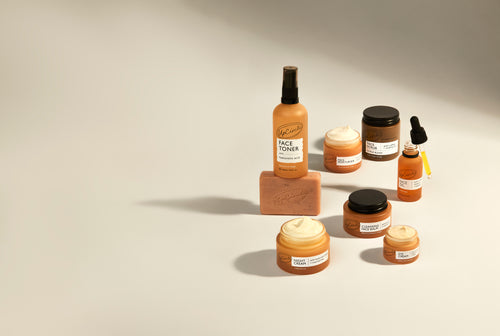
That is exactly the shape of our 5-Step Essentials Bundle, which brings together the Cleansing Face Milk, Face Toner, Eye Cream, Face Moisturiser and Face Oil. It suits all skin types and is particularly well suited to dry skin, which is why it is our pick for the autumn switch. Please note it is not suitable during pregnancy.
Two habits matter as much as the products. Apply everything to slightly damp skin, because humectants have more to hold on to. And resist turning the shower up as the weather turns down, because hot water is the fastest way to undo a good autumn routine.
Common autumn skincare mistakes
Five come up again and again. Changing everything at once, then having no idea what caused the reaction three days later. Dropping SPF in September. Confusing dryness with dehydration, and reaching for a heavy oil when what skin needs is water underneath it. Over-exfoliating to deal with flakiness, which tends to make it worse. And treating autumn like winter, when deep winter needs more again. Our guide to caring for your skin in winter picks up where this one leaves off.
Why trust UpCircle on this
UpCircle is a certified B Corp that has spent a decade formulating skincare around rescued ingredients, starting with spent coffee grounds collected from London cafes and now spanning apricot stones, blueberry extract, maple bark and hibiscus flowers. You can read how we hold ourselves to that standard on our B Corp page.
Efficacy comes first in everything we publish. Where we cite a number, such as the 29% improvement in elasticity within 14 days behind our Peptide Serum, it comes from a clinical study on the finished formula. If your skin is painful, broken or not responding to a gentler routine, that is a conversation for a pharmacist or GP rather than a blog post.
Frequently asked questions
When should I switch to an autumn skincare routine?
Switch when the first cool mornings arrive or the heating goes on, which in the UK is usually between late August and early October. Your skin gives you the cue: moisturiser stops feeling like enough by the afternoon, and skin feels tight after cleansing.
Do I still need SPF in autumn?
Yes. The NHS advises using sunscreen in the UK from March to October, so the whole autumn transition falls within sunscreen season. UV levels are lower than in July but they are not zero, and daily use is easier to maintain than a stop-start habit.
Should I use a heavier moisturiser in autumn?
Usually yes. The simplest version is to keep your daytime moisturiser and add a richer one at night. The American Academy of Dermatology recommends creams and ointments over thin lotions for dry skin, applied straight after washing while skin is still damp.
Why does my skin feel tight and flaky in autumn?
Because colder outdoor air and heated indoor air both hold less moisture, so skin loses water faster than it did in summer. The fix is usually a gentler cleanser plus an occlusive final step, rather than more exfoliation.
Should I stop exfoliating in autumn?
No, but reduce the frequency. Once or twice a week is plenty once the heating is on, and choosing a scrub with nourishing oils rather than a bare abrasive makes a noticeable difference. Pause entirely if your skin is sore or reactive.
Can I keep using my summer products in autumn?
Many of them, yes. Cleansers, toners, serums and SPF usually carry straight over. What needs replacing is the final layer: a lightweight summer moisturiser needs a richer partner, or an oil on top of it, once the air dries out.
The bottom line
Transitioning your skincare routine for autumn is a texture change, not a personality change. Cleanse more gently, hydrate on damp skin, seal it in with something richer at night, and keep the SPF going. Make the changes one at a time and your skin gets to autumn without the usual fortnight of tightness and flaking.
Want to get the order right first? Start with our guide to how to layer skincare correctly. Ready to browse the swaps? Explore the full skincare range, or head straight to what we formulate for dry skin. And if you would rather make the whole switch in one go, the 5-Step Essentials Bundle is the autumn routine above, boxed.