








You do not strictly need a night cream, but plenty of people notice a real difference from one. Skin loses more water overnight than it does during the day, and a night cream is simply a richer, longer lasting moisturiser built to slow that loss while you sleep. The two ingredients doing most of the work in ours are niacinamide, a form of vitamin B3 with solid published evidence behind barrier support and even tone, and hyaluronic acid, a humectant that holds water in the upper layers of the skin. This guide covers what each does overnight, who genuinely benefits, and where the honest limits are.
Key takeaways
- A night cream is a moisturiser formulated for the hours when your skin is not exposed to sunlight, makeup or the weather, so it can be richer and can skip SPF.
- Skin barrier function is not constant across the day. Transepidermal water loss has been measured at its highest in the evening and overnight, which is the practical case for a heavier cream before bed.
- Niacinamide is one of the best evidenced ingredients in this category. Published studies link it to increased ceramide production, better barrier function, and a reduction in the appearance of pigmentation.
- Hyaluronic acid is a humectant. It draws and holds water in the upper layers, and it works best when something sits on top of it to slow evaporation, which is exactly what a cream does.
- You do not need a night cream if your day moisturiser already keeps you comfortable until morning. If you wake up tight, flaky or dull, that is the signal to try one.
What is a night cream, and how is it different from a day cream?
A night cream is a moisturiser formulated for the hours you are asleep, which usually means it is richer, more occlusive, and free of the things a daytime formula has to carry. The single biggest structural difference is sun protection. A day cream often needs to work under or alongside SPF and makeup, so it tends to be lighter and faster absorbing. A night cream has no such constraint, so formulators can use more emollients and more humectants without worrying about pilling under foundation.
The second difference is ingredient choice. Actives that are photosensitising, or that simply have no reason to be used in daylight, tend to be put into the evening step. We have written a fuller comparison in our guide to the difference between a day cream and a night cream, so this article stays on the question people actually search for, which is whether the extra product is worth it.
What a night cream is not
A night cream is not a treatment, and it is not a substitute for a serum, a prescription, or sunscreen. Anything sold as an overnight fix for a diagnosed skin condition is overpromising, and if you have one, a GP or dermatologist is the right person to ask rather than a product page.
Do you actually need a night cream?
You need a night cream if your skin feels tight, looks dull, or flakes by morning on your current routine. If it does not, you do not. That is the honest answer, and it is more useful than a blanket yes.
Think of it as a diagnostic rather than a rule. Sleep on your usual routine, then pay attention to how your skin feels in the first ten minutes after you wake up. Comfortable and springy means your current moisturiser is doing enough. Tight, papery or itchy means the barrier is losing more water than it is holding, and a richer evening layer is the cheapest thing to try before you start adding actives. If your skin regularly feels tight straight after cleansing, solve that first, because an over stripping cleanser will undo any cream you put on afterwards.
What is your skin actually doing while you sleep?
Your skin loses more water at night than it does in the morning, which is the strongest practical argument for a dedicated evening moisturiser. Researchers measuring skin barrier function across a 24 hour cycle found that transepidermal water loss varies with the time of day, rising through the evening and reaching its peak in the small hours, while skin surface pH and temperature also shift (Yosipovitch et al., Journal of Investigative Dermatology, 1998).
Why higher water loss matters
Transepidermal water loss is the technical name for moisture evaporating out through the skin, and it is the number researchers use as a proxy for how intact your barrier is, unpacked properly in our explainer on what transepidermal water loss actually is. A higher rate means more water leaving, which is why a cream that slows evaporation earns its place at night specifically.
Nothing is competing for space
At night your skin is not carrying SPF, makeup or friction from a mask or a scarf, so whatever you apply gets several uninterrupted hours to sit and work. That is why the evening is where most people see the clearest return on a well chosen product.
What does niacinamide do overnight?
Niacinamide supports the skin barrier, and the evidence for that is unusually good for a cosmetic ingredient. In a study published in the British Journal of Dermatology, topical nicotinamide increased the biosynthesis of ceramides and other stratum corneum lipids, and improved the epidermal permeability barrier in human skin (Tanno et al., 2000). Ceramides are the lipids that hold your barrier together, so more of them means less water escaping, which lines up neatly with the fact that water loss peaks while you sleep.
It helps even out the look of tone
Niacinamide also has published work behind pigmentation. A controlled study found that niacinamide reduced cutaneous pigmentation, and the proposed mechanism was suppression of melanosome transfer from pigment producing cells to surrounding skin cells (Hakozaki et al., British Journal of Dermatology, 2002). A separate review of niacinamide in ageing facial skin reported improvements in the appearance of fine lines, hyperpigmented spots, red blotchiness and sallowness over 12 weeks of twice daily use (Bissett et al., Dermatologic Surgery, 2005). If uneven tone is your main concern, our guide to caring for uneven skin tone and texture goes deeper.
The concentration caveat nobody mentions
Those studies used specific concentrations, typically 2 to 5 percent, applied consistently over weeks. That is why we describe what the ingredient does in the literature rather than promising the same measured outcome from any product that happens to list it. For how to read a claim like this, see what "clinically proven" actually means in skincare.
Morning or night?
Niacinamide is not photosensitising, so it works at either end of the day. Most people put it at night because that is where a richer cream naturally lives. If you are deciding between niacinamide and vitamin C, or wondering whether you can layer them, we answered that in niacinamide vs vitamin C.
What does hyaluronic acid do overnight?
Hyaluronic acid pulls water into the upper layers of your skin and holds it there. It is a humectant, meaning it binds many times its own weight in water, and it occurs naturally in skin, where its levels and behaviour change with age (Papakonstantinou et al., Dermato-Endocrinology, 2012). Applied topically, it is the reason skin looks and feels plumper and springier rather than papery.
Why hyaluronic acid needs a cream around it
A humectant on its own is only half a solution. It attracts water, but nothing stops that water evaporating again, and in dry air a bare humectant layer can leave skin feeling no better than it started. Putting hyaluronic acid inside a cream, alongside emollients that slow evaporation, is what turns attraction into retention. This is the practical distinction we set out in hydration versus moisturisation, and it is the single most useful thing to understand about why night creams are formulated the way they are.
Does it work with niacinamide?
Yes. Niacinamide and hyaluronic acid are one of the least fussy pairings in skincare. One reinforces the barrier that holds water in, the other supplies and binds the water. There is no pH conflict to manage and no waiting time between layers, which is why they turn up together in so many formulas, including ours.
Night cream vs day cream vs face oil vs toner: a quick comparison
Four products, four different jobs. Here is what each is actually for, so you can work out your gaps rather than buying the full set by default.
| Product | Main job | Typical texture | When to use | Skip it if |
|---|---|---|---|---|
| Night cream | Slow overnight water loss and deliver evening actives | Rich, cushioned | Last step at night | You wake up comfortable on your day cream |
| Day cream | Hydrate and sit well under SPF and makeup | Light, fast absorbing | Morning | Never, this is the non negotiable one |
| Face oil | Add lipids and seal what is underneath | Oil, no water phase | Either, over cream | Your skin already feels balanced |
| Toner | Add a first thin layer of water based hydration | Watery | Straight after cleansing | You prefer fewer steps |
The pattern is worth naming. A day cream is the one step almost nobody should drop. Everything else, night cream included, earns its place by solving a problem you can actually observe.
What else is in our night cream, and what we do not claim
Our Night Cream with Hyaluronic Acid and Niacinamide pairs those two ingredients with rosehip oil, which is a source of essential fatty acids that soften and comfort the skin, and with a cold pressed extract of blueberries rescued from the food and drink industry. The blueberry extract is an antioxidant rich ingredient and it is the circular part of the formula, recovered from a stream that already exists rather than grown specifically for cosmetics.
Here is the part most brands leave out. We are not going to tell you that any single cream reverses ageing, shields you from screens, or replaces a retinoid. Screens and skin is a genuinely interesting question, and we covered the current evidence in our piece on the impact of blue light on skin rather than turning it into a product claim here. If you are after retinoid style results, read our rundown of natural retinol alternatives and what they can and cannot match. The formula is vegan, cruelty free, made without palm oil, parabens, phthalates, silicones, mineral oil or added parfum, and it comes in a recyclable glass jar.
How to use a night cream properly
Apply a night cream as the final step of your evening routine, on skin that is still slightly damp. Damp skin gives the humectants something to work with, and the cream on top slows that moisture leaving again.
Where it sits in the order
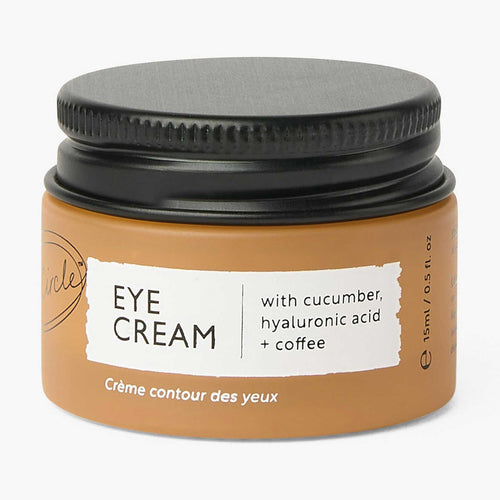
Cleanse, then any water based layers, then treatments, then the cream. In practice that looks like a gentle cleanser, a hyaluronic acid toner, an eye product such as our eye cream with hyaluronic acid and coffee, then the night cream last. If you use a facial oil, that goes over the cream rather than under it. The full logic behind the order, and the mistakes that undo it, is in our guide to layering skincare correctly.
How much, and how often
A pea sized amount covers the whole face and neck for most people. Warm it between your fingertips first so it spreads rather than drags, and use it every night. Consistency matters far more than quantity, and the published niacinamide work is all built on daily use over weeks.
Who benefits most from a night cream?
The people who see the clearest difference are those whose skin is losing more water than it is holding, whatever the underlying reason.
Dry, dehydrated and mature skin
This is the clearest case. Skin that feels tight in the evening, or has stopped bouncing back the way it used to, will notice a richer overnight layer. Hyaluronic acid addresses the water side, the emollients address the seal.
Oily and combination skin
Oily skin still loses water, and stripping it on the mistaken belief that oil equals hydration usually makes things worse. Niacinamide is a sensible pick here, and it is also the ingredient people reach for when the look of pores is the concern. Use a lighter hand rather than skipping the step.
Sensitive or reactive skin
If your skin reacts easily, prioritise barrier repair over active ingredients. Our skin barrier repair routine lays out a four step reset that is worth doing before you add anything new. Introduce a night cream on its own, patch test on the inner forearm first, and give it two weeks before you judge it.
What a night cream cannot do
A night cream cannot replace sunscreen, treat a medical skin condition, or undo sun exposure that has already happened. It also will not deliver overnight results in the literal sense. Skin cell turnover takes weeks, and every credible study behind the ingredients in this category runs for 8 to 12 weeks of consistent use, not one night.
It is also not a substitute for the boring inputs. Sleep, water and not over cleansing will move your skin further than any single jar.
Frequently asked questions
Do you really need a night cream?
Not everyone does. You need one if your skin feels tight, flaky or dull by morning on your current routine. If you wake up comfortable, your day moisturiser is doing the job and a second product is optional rather than necessary.
Can I just use my day moisturiser at night?
Yes, and for many people that is enough. Day moisturisers are lighter so they sit well under SPF and makeup, which can mean they do not hold up through a full night if your skin runs dry. Try yours first and only upgrade if you wake up tight.
Is niacinamide better in the morning or at night?
Either works, because niacinamide is not photosensitising. Most people use it at night simply because that is where a richer cream fits in their routine, and because it layers comfortably with almost everything else in an evening step.
Can you use niacinamide and hyaluronic acid together?
Yes, and they complement each other well. Hyaluronic acid brings water into the upper layers of the skin, and niacinamide supports the barrier lipids that keep it there. There is no conflict and no waiting time needed between them.
How long does a night cream take to work?
Comfort and softness are usually noticeable within a few days. Changes in the appearance of tone or fine lines take much longer. The published niacinamide studies ran for around 12 weeks of twice daily use, so treat three months as the realistic horizon for anything beyond hydration.
Can you use a night cream if you have oily or acne prone skin?
Yes. Oily skin can still be dehydrated, and skipping moisturiser tends to backfire. Choose a formula that is not heavily occlusive, use less of it, and give it a fortnight. If you have active acne being treated by a professional, check with them before adding anything new.
Why trust UpCircle on this
UpCircle is a certified B Corporation, which means our environmental and social performance is independently assessed rather than self declared, and you can read what that involved on our B Corp page. We started by rescuing spent coffee grounds from London cafes and turning them into skincare, and we now build formulas around ingredients recovered from the food and drink industry, including the blueberry extract in this night cream. You can see where each one comes from on our ingredients page.
On claims, our standard is simple. Every efficacy statement here is either tied to a named published study, linked so you can read it yourself, or described as an appearance rather than a medical outcome. Where the evidence is thin, we say so rather than filling the gap with adjectives.
The bottom line
A night cream is worth it if your skin is losing more water overnight than it can hold, and the two ingredients most worth looking for are niacinamide for the barrier and hyaluronic acid for the water itself. If your skin already feels good in the morning, save your money and keep your routine short.
If you want to go deeper on the difference between the two ends of the day, start with our guide to day cream versus night cream. If you are ready to compare textures and formats, browse the full range of vegan and plastic free moisturisers. And if you already know your skin wants a richer evening layer, the Night Cream with Hyaluronic Acid and Niacinamide is the one we built for exactly that, or you can pair it with its daytime counterpart in the Day and Night Hydration Set.