







A powder face wash is a cleanser that starts as a dry powder and turns into a foam or paste when you add water in your palm. Because it leaves out the water that makes up the bulk of a normal liquid cleanser, the formula is more concentrated, travels well, and needs less packaging. The result is a gentle, often enzyme-powered cleanse that suits most skin types. This guide explains exactly how a powder cleanser works, what is in a good one, the benefits of switching, and how to use it.
Key takeaways
- A powder face wash is a waterless, concentrated cleanser that activates into a foam or paste when mixed with water in your hands.
- Leaving water out means a smaller, lighter format, less need for heavy preservation, and easier travel, with no liquid to spill or decant.
- Many powder washes use natural enzymes, like papain from papaya, to gently loosen dull, dead surface cells for a brighter looking finish.
- A good powder cleanser is pH-balanced to around 5.5 when activated, so it cleans without leaving skin feeling tight or stripped.
- Powder formats are well suited to a low-waste routine because the concentrated product means less water shipped and less packaging per use.
What is a powder face wash?
A powder face wash is a facial cleanser sold in dry, powdered form that you activate with water at the moment of use. You tip a small amount into a damp palm, add a little water, and work the two together until the powder transforms into a foam, lather, or soft paste, which you then massage over your face and rinse off. The idea is simple, but it changes a few things about the product. Conventional liquid cleansers are mostly water, often the first ingredient on the list, which acts as a carrier and a diluent. A powder cleanser removes that water and ships you the active part of the formula instead, leaving you to add the water yourself, fresh, every time.
That small shift is why powder cleansers have become popular with people building a more considered routine. If you are weighing up cleanser types in general, our guide on which cleanser to use covers balms, milks, and gels alongside powders, and our overview of waterless skincare explains the wider category that powder formats belong to.
How does powder-to-foam cleansing work?
A powder face wash works because the dry formula contains mild cleansing agents that only activate once they meet water. When you add water in your palm, plant-derived surfactants in the powder begin to lift away oil, makeup, sunscreen, and daily build-up, while the powder itself transforms into a soft, cushiony foam. Because you control how much water you add, you also have some control over the texture, from a light foam to a richer cream.
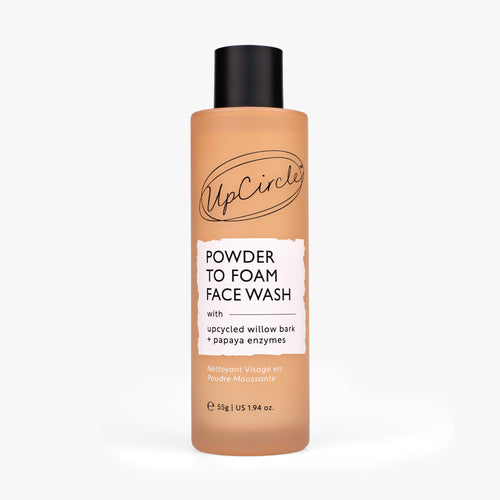
Our Powder to Foam Face Wash with Willow Bark and Papaya Enzymes is a clear example. It is soap-free and powered by mild, plant-derived surfactants, so it lifts away makeup, oil, sunscreen, and build-up without leaving skin feeling tight or stripped. Just a coin-sized amount foams up into a generous lather, so a little goes a long way, and the formula is pH-balanced to 5.5 once activated with water, which matches the skin's own slightly acidic surface.
What is inside a good powder cleanser?
The best powder cleansers pair gentle surfactants with active botanicals that do something useful as they cleanse. Here are the ingredients worth looking for, and what each one does.
Papaya enzymes for gentle exfoliation
Papain, the enzyme found in papaya, is a proteolytic enzyme, which means it works on proteins. In a cleanser it gently loosens dull, dead surface cells, helping reveal a smoother, fresher looking complexion without the friction of a physical scrub. This kind of enzymatic exfoliation is a gentler alternative to grainy scrubs for many people, which is why enzymes have become a popular cleanser ingredient.
Upcycled willow bark, a botanical clarifier
Willow bark is a natural source of salicin, the plant compound related to salicylic acid, the beta hydroxy acid prized for clearing pores. In our face wash, upcycled willow bark adds a clarifying botanical note to the cleanse. If you want to understand the pore-clearing family of ingredients more broadly, our explainer on BHA skincare is a good starting point, as is our guide on how to minimise the look of pores. For independent, non-commercial information on skincare ingredients and skin health, dermatology bodies such as the British Association of Dermatologists and the British Skin Foundation are reliable sources.
A calming, glow-supporting supporting cast
A good powder formula also looks after comfort. Ours includes upcycled rice lees to bring softness and a glow-supporting finish, plus a quiet supporting cast of green tea, centella, chamomile, and panthenol that keeps skin feeling calm and comfortable. The willow bark and rice lees are both upcycled from agricultural and food industry by-products, giving discarded materials a second life as skin-loving ingredients.
Powder cleanser vs liquid cleanser: how they compare
Neither format is universally better, but they differ in ways that matter depending on what you want. This table sets out the main trade-offs.
| Feature | Powder face wash | Liquid or gel cleanser |
|---|---|---|
| Water content | Waterless, you add water at use | Mostly water |
| Concentration | High, active part of the formula only | Diluted |
| Preservation | Less needed in a dry format | More needed in a water-based one |
| Travel | Light, no spill, hand-luggage friendly | Heavier, liquid limits apply |
| Texture control | You adjust with water added | Fixed by the formula |
| Exfoliation | Often enzyme-based, in the same step | Usually a separate product |
Why switch to a powder face wash?
The main reasons to switch are concentration, gentleness, travel, and waste. Because a powder leaves out the water, you are buying and shipping the active part of the formula rather than a bottle that is mostly water, which means less packaging and less weight per cleanse. The dry format also needs less heavy preservation than a water-based one, since the conditions that microbes need to grow are not present in a dry powder. For travel, a powder cannot spill, weighs very little, and sidesteps the liquid limits on hand luggage. And when the powder is enzyme-based, you get a gentle exfoliating action folded into your cleanse, rather than a separate scrubbing step. Add a glass bottle rather than plastic, as ours uses, and a powder wash fits neatly into a lower-waste routine. For the bigger picture on why concentrated, rescued-ingredient formulas matter, see our guide to circular beauty.
Who is a powder face wash for?
A gentle, pH-balanced powder cleanser suits most skin types, including sensitive skin, which is one of its quiet strengths. Because you control the water and the formula is mild and soap-free, it tends to cleanse without the tight, stripped feeling that harsher washes can leave. If your skin often feels tight after cleansing, that is usually a sign the previous cleanser was too stripping, a problem we cover in our guide on why skin feels tight after cleansing. Enzyme-based powders are also a good option for anyone who finds grainy scrubs too abrasive, since the exfoliation comes from enzymes loosening dead cells rather than from physical friction. As with any new product, if your skin is reactive, introduce it slowly and patch test first.
How a powder cleanser fits into your wider routine
A powder face wash works as your main cleanser, and it pairs especially well as the second step of an evening double cleanse. The idea of double cleansing is to break down makeup and sunscreen first, then clean the skin underneath, which a powder wash does neatly without over-stripping.
Start with a first-cleanse balm
On days you have worn makeup or SPF, begin with an oil or balm to dissolve it. Our Cleansing Face Balm with Vitamin E melts away makeup, including waterproof mascara, then the powder wash lifts away what is left for a clean, comfortable finish. After cleansing, follow with the rest of your routine while skin is still slightly damp. A gentle weekly exfoliation with our Coffee Face Scrub complements the enzyme action of the wash, and a Face Moisturiser with Vitamin E seals in hydration afterwards. If you want to trial a few steps together, the Discovery Set pairs a cleanser, serum, and moisturiser in travel sizes.
Common myths about powder cleansers
A few misconceptions put people off trying a powder format, so it is worth clearing them up. The first is that powder cleansers are drying. Whether a cleanser strips the skin depends on the formula, not the format, and a soap-free, pH-balanced powder cleans without leaving skin feeling tight. The second is that they are fiddly to use. In practice it takes one extra second to activate the powder in your palm, and you quickly learn the right amount of water. The third is that enzyme exfoliation is harsh, like a gritty scrub. The opposite is usually true, because enzymes like papain loosen dead cells chemically rather than by physical abrasion, which makes them a gentler option for many people, including those who find scrubs too rough.
How to use a powder face wash
Using a powder cleanser takes one extra second compared with a liquid, and getting the water ratio right is the whole trick. Tip a coin-sized amount of powder into a damp palm, add a little water, and rub your hands together until it transforms into a foam or soft paste. Massage gently over damp skin for around 20 to 30 seconds, avoiding the eye area, then rinse with lukewarm water and pat dry. Use it morning and evening, or as the second step of a double cleanse in the evening to remove makeup and sunscreen thoroughly. If double cleansing is new to you, our guide on how to double cleanse explains when and why to do it. Follow with the rest of your routine while skin is still slightly damp, to lock in hydration.
Frequently asked questions
What is a powder face wash?
A powder face wash is a cleanser sold as a dry powder that you activate with water in your palm, where it transforms into a foam or paste. It removes the water found in liquid cleansers, so you are using a more concentrated formula and adding fresh water yourself at each use.
Are powder face washes good for your skin?
A well-formulated, pH-balanced powder cleanser is gentle and suits most skin types, including sensitive skin. Because many use enzymes rather than grains to exfoliate, they can be a softer option than physical scrubs, cleansing without leaving skin feeling tight or stripped.
Do powder cleansers actually clean as well as liquid ones?
Yes. Once activated with water, the surfactants in a powder cleanser lift away oil, makeup, and build-up just like a liquid cleanser. The cleansing happens at the moment of use, so the only real difference is that you add the water rather than the bottle.
Are powder face washes better for the environment?
Generally they have advantages, because removing water means a lighter, more concentrated product with less packaging and less weight to ship per cleanse. Paired with recyclable packaging, like a glass bottle, a powder format fits a lower-waste routine well.
Can I use a powder face wash every day?
Yes, a gentle powder cleanser can be used morning and evening. If it contains exfoliating enzymes and your skin is on the sensitive side, see how your skin feels and adjust frequency to suit, the same as you would with any active.
What does the papaya enzyme do in a face wash?
Papain, the enzyme from papaya, gently loosens dull, dead surface cells as you cleanse, helping reveal a smoother, fresher looking complexion. It is a gentler way to exfoliate than a grainy scrub, because it works by loosening cells rather than by physical abrasion.
Why UpCircle made a powder cleanser
UpCircle is a certified B Corp built on rescuing ingredients that would otherwise be discarded. Our Powder to Foam Face Wash is made with willow bark and rice lees upcycled from agricultural and food industry by-products, giving discarded materials a second life as skin-loving ingredients. It is vegan, cruelty-free, dermatologically tested, and housed in a glass bottle, so the format matches the formula. Every claim we make about it is tied to what is actually in the formula, from the papaya enzymes that loosen dead cells to the willow bark that adds a clarifying note, rather than to marketing language. That is the standard we hold all our products to.
Try the switch
If you want to read more first, our guide on cleansing milk versus micellar water rounds out the picture on gentle cleansing. When you are ready to try the format, explore our full range of gentle cleansers, or learn exactly what goes into our formulas on our ingredients page. To go straight to the source, the Powder to Foam Face Wash with Willow Bark and Papaya Enzymes is the easiest way to see what a powder cleanse feels like for yourself.