





You cannot undo sun damage with a moisturiser, and any brand telling you otherwise is selling you something. What you can do, once the holiday is over, is rehydrate skin that sun, salt and chlorine have dried out and rebuild a routine that protects it. This is an honest look at what a post-summer skin reset changes, what it does not, and the order to do it in.
Key takeaways
- Skincare can improve the look of dryness, dullness and uneven texture after a summer. It cannot undo changes below the surface.
- Most of what people call sun damage in September is dehydration. Sun, salt, chlorine, heat and air conditioning all pull moisture out of the surface, and dehydrated skin looks duller than it is.
- The reset is unglamorous: cleanse gently, rehydrate with humectants, seal with a barrier-supporting moisturiser, keep SPF on through autumn.
- Give scrubs and acids a fortnight off. Piling actives onto sensitised skin usually makes redness worse.
- Anything changing, bleeding, itching or refusing to settle belongs with a GP or pharmacist, not a skincare routine.
What does sun damaged skin look like after a summer?
After a summer of sun, sea and pools, most skin looks dry, dull and rougher in texture, with existing freckles and patches showing more clearly against a fading tan. That is what most people see in September, and it is worth separating from the medical meaning of sun damage.
The everyday version reads like this. Skin feels tight after washing. Foundation clings to flaky patches. Fine lines look more obvious than in May, because dehydrated skin does not reflect light evenly. Tone looks patchy as a tan fades. Our guide to uneven skin tone and texture goes deeper.
The medical version is different, and not something a cream addresses. The NHS sunscreen and sun safety guidance treats prevention as the whole point, and our post on sun damaged skin and the importance of SPF covers that side. This piece picks up at the aftercare.
Can you repair sun damaged skin?
You can improve how sun-exposed skin looks and feels, and you cannot undo what ultraviolet exposure has already done beneath the surface with a cosmetic product. That is the line, and a lot of marketing sits on the wrong side of it.
A cosmetic routine restores water to the outer layers, softening the look of fine lines and evening how light bounces off the surface. It supports the barrier, reducing water loss and tightness, smooths surface texture, and adds antioxidants that help defend against everyday free radical exposure. All of that is real and worth doing.
What it does not do: remove existing pigmentation, rebuild what UV has changed below the surface, or replace sun protection. On melasma, which flares in summer, no over-the-counter routine is a fix, and our post on what melasma is and what causes it explains why it needs a professional conversation, not a shopping list. The World Health Organization's guidance on ultraviolet radiation is the sober background: UV accumulates, so the useful response is protection from now on.
What sun, salt and chlorine each do to your skin
Summer is not one exposure but four, and they dry skin out by different routes. Knowing which you have had most of tells you where to put the effort.
Sun and UV
Ultraviolet exposure is the one with long-term consequences. Short term it dries the surface, triggers the redness and peeling of sunburn, and darkens existing pigmentation so unevenness shows more. If you have burnt, the NHS sunburn guidance comes first. Free radical exposure rises with UV too, as our post on free radicals and skin explains.
Salt water
Salt draws water out of the surface as it dries, which is why skin feels taut and powdery after a beach day despite hours in water. It is not all bad news, and we looked at both sides in does a dip in the sea help your skin. The fix: rinse with fresh water before the salt dries.
Chlorine
Pool water is treated to be inhospitable to microbes, and the skin's surface lipids are collateral. Regular swimmers report the same symptoms: tightness, itchiness across the shoulders and back, hair like straw. Chlorine strips the oils that hold water in, a barrier problem more than a hydration one, and our skin barrier repair routine answers it.
Heat, sweat and air conditioning
The least dramatic and most persistent. Heat increases sweating, which can leave skin congested; air conditioning pulls humidity out of the air. Between them they push up transepidermal water loss. Our heatwave skincare survival guide covers the in-the-moment version.
Sun, salt and chlorine compared
Four exposures, four signatures on the skin.
| Exposure | What it does to the surface | How it shows up | What helps most | Roughly how long |
|---|---|---|---|---|
| Sun and UV | Dries the surface, raises free radical exposure, darkens existing pigment | Dullness, rough patches, uneven tone | Daily SPF, antioxidants, patience | Surface improves in weeks; pigment is long-term |
| Salt water | Pulls water out of the outer layers as it dries | Tightness, powdery feel, flaking on cheeks and shins | Rinse straight after, then humectants and moisturiser | A few days |
| Chlorine | Strips the surface lipids that hold water in | Itchiness, tightness across back and shoulders, dry hair | Shower promptly, barrier-supporting moisturiser, body cream | One to two weeks |
| Heat, sweat and air con | Raises water loss; sweat can leave skin congested | Oily and dehydrated at once | Gentle cleansing, lightweight hydration, no over-stripping | Improves as soon as the routine changes |
The post-summer skin reset, step by step
Four steps, about two weeks to show. Deliberately boring, because skin that has had a hard summer responds to consistency, not a new active.
Step one: cleanse more gently than you did in August
Summer routines drift towards stronger cleansers because skin is oilier and sweatier. September skin does not need that. Swap to something creamier and see whether the tightness you blamed on the sun was actually your face wash.
Our Cleansing Face Milk with Oat Powder and Aloe Vera is what we reach for now: a 99% natural creamy cleanser built around upcycled oat powder, whose polysaccharides support the skin's moisture barrier while antioxidants help defend the surface against free radical damage. If you have worn SPF properly, a first-cleanse balm like our Cleansing Face Balm with Vitamin E removes it without scrubbing.
Step two: put water back in
Dehydrated skin needs humectants, ingredients that attract and hold water in the surface layers. This is the step that shows in the first fortnight, because plumped surface cells reflect light evenly. Our explainer on natural humectants for skin lists the ones worth knowing.
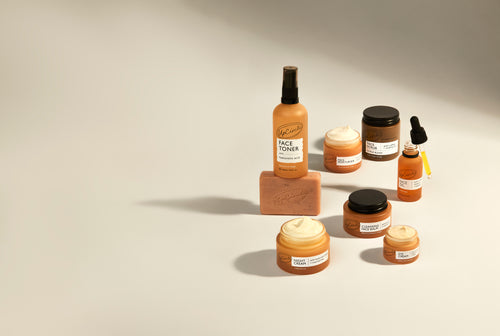
Our Face Toner with Hyaluronic Acid pairs glycerin and hyaluronic acid to lock in hydration, in a base of organic green mandarin water clinically tested to leave skin hydrated. One caveat: it also contains salicylic acid, a BHA. If your skin is sensitised, reintroduce it every other day rather than twice daily.
Step three: seal it in
Humectants without a moisturiser on top are half a routine. Sealing slows the water loss the humectant works against, the difference between hydration that lasts an hour and a day. If the distinction is fuzzy, our post on hydration versus moisturisation settles it.
Our Face Moisturiser with Vitamin E is the hero of this routine. It is built around finely ground argan shell powder, a by-product of the argan oil industry rich in vitamin E, and formulated so the fatty acids in cocoa butter reinforce the skin's moisture barrier while glycerin locks moisture into the surface layer. Linseed oil balances the skin's own oils, sage oil and aloe vera soothe. It suits all skin types including sensitive skin, and does not sit heavy under SPF.
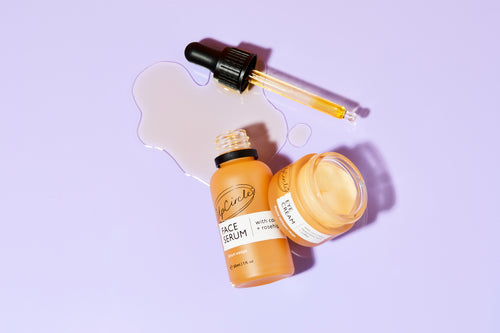
If chlorine has left skin feeling stripped, layering our Face Oil with Coffee over the moisturiser at night adds rosehip and jojoba oils that lock in hydration and nourish the moisture barrier. It is non-comedogenic, so oily and acne-prone skin can use it too, and our guide to layering skincare correctly covers the order.
Step four: keep SPF on, even in September
The highest-value thing in this post. UV does not switch off with the school holidays, and the NHS advises sun protection whenever UV levels are meaningful, not just on beach days. Everything else here is cosmetic; this is what matters long-term.
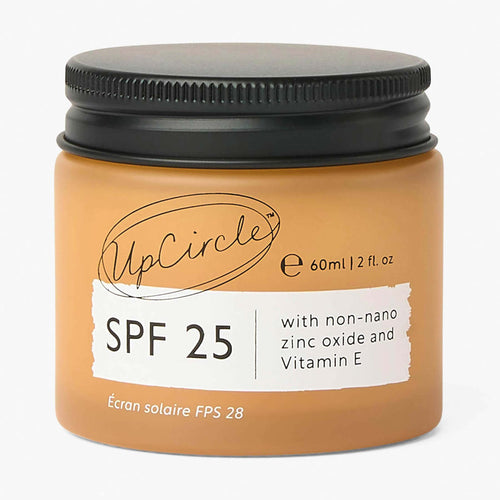
Our SPF 25 Mineral Sunscreen is a broad spectrum mineral formula built on high quality non-nano zinc oxide, and it absorbs in about five minutes without the white cast that puts people off mineral filters. Barrier-supporting sunflower oil and glycerin sit alongside upcycled raspberry seed oil. Weighing up filter types? See chemical versus mineral sunscreen.
Which ingredients actually help post-summer skin
Four categories do the heavy lifting, none exotic.
Humectants: hyaluronic acid and glycerin
These attract water into the outer layers and hold it there, which is why skin can look better within a week. Glycerin is cheap and one of the best-evidenced hydrating ingredients in cosmetics.
Vitamin E and other antioxidants
Vitamin E nourishes the skin barrier and helps protect the surface against free radical damage. We source it from upcycled material: argan shells in the moisturiser, apricot stones in the cleansing balm. Our post on antioxidant skincare covers the category.
Oat
Upcycled oat powder is the quiet performer here. The polysaccharides support the moisture barrier and it is gentle enough for sensitive and acne-prone skin, which is why it anchors our cleansing milk rather than a surfactant.
Coffee oil
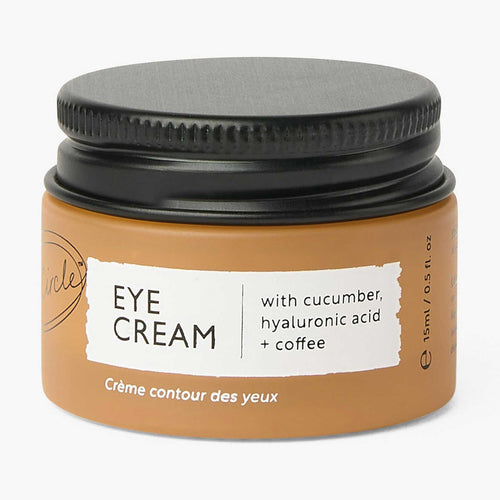
Upcycled coffee oil is caffeine-rich and used in our formulas to brighten the look of skin. Around the eyes, where post-holiday tiredness shows, our Eye Cream with Hyaluronic Acid and Coffee pairs it with hyaluronic acid to plump the look of the under-eye area.
What to leave alone for the first two weeks
The instinct after a summer is to exfoliate the dullness away. Resist it for a fortnight. Dehydrated, sensitised skin responds to strong scrubs and acids by getting redder and tighter, so you chase a problem you created.
Pause gritty scrubs, AHA and BHA exfoliants, retinoids and retinol alternatives, and any at-home device. Prescription topicals are a conversation with whoever prescribed them. The American Academy of Dermatology's advice on relieving dry skin makes the same point.
Reintroduce one thing at a time, a week apart, gentlest first. When you come back to exfoliation, our Citrus Blend Coffee Face Scrub uses upcycled Arabica grounds from London cafes to buff away dead surface cells, with shea butter nourishing the moisture barrier as it goes. Twice a week is plenty. If your barrier still feels compromised, run the seven signs of a damaged skin barrier first.
Do not forget your body, lips, hands and hair
Faces get the attention and bodies take the exposure. Shins, shoulders, chest and the backs of hands are usually drier in September than your face, and are where chlorine sits longest.
For the body, our Body Cream with Aloe Vera and Cocoa Butter is the richer option, built on raw shea and cocoa butter, lightweight rather than greasy. For hands, our Hand and Body Lotion with Bergamot Water uses upcycled bergamot water from the Southern Italian juicing industry alongside antioxidant-rich cocoa butter.
Lips take a disproportionate hit and have no oil glands to fall back on. Our Lip Balm with Hemp Seed Oil and Shea Butter uses upcycled hemp seed oil, high in linoleic acid, to strengthen the lip barrier, and our guide to lip care has the rest. For hair that has spent months absorbing chlorine and salt, see caring for your hair in summer.
When to see a GP or pharmacist instead
Skincare is for how skin looks and feels, not for anything that has changed. Please do not skim this section.
Book an appointment with a GP, or speak to a pharmacist in the first instance, if a mole or patch of skin has changed in size, shape or colour, if something is bleeding, crusting, itching or not healing, if a rash or irritation will not settle after a couple of weeks, or if sunburn has blistered. The NHS page on moles sets out what is worth getting checked. We are a skincare company, not a clinical service, and we will not pretend a moisturiser is the right response to any of that.
The same applies to melasma and stubborn pigmentation. Both flare with sun, and a pharmacist or GP can point you to the right route rather than an expensive cycle of products.
How long does a post-summer reset take?
Hydration shows first, usually within three to seven days. Texture and dullness follow over two to four weeks as surface cells turn over. Tone is slowest, and any change is measured in months, if at all.
That is why the reset is worth doing in early September rather than December. It folds into the wider shift covered in seasonal skin changes, and is the mirror image of how to transition your skincare routine for summer from July. Same principle, opposite direction.
Why trust UpCircle on this
UpCircle is a certified B Corporation and has made skincare from rescued ingredients since 2016, starting with spent coffee grounds collected from London cafes. Our B Corp certification covers how we operate, not just what we sell, and our ingredients page sets out where each rescued material comes from.
On claims, we hold ourselves to a rule that shapes a post like this one. Every efficacy statement here traces to a specific ingredient in a specific formula, or to a named authority such as the NHS, the World Health Organization or the American Academy of Dermatology. Where a claim crossed from cosmetic into clinical, we cut it, which is why this post tells you what a routine cannot do as clearly as what it can. Our post on what "clinically proven" means in skincare explains the standard.
Frequently asked questions
Can sun damaged skin repair itself?
Skin renews its surface continuously, so the dryness, flaking and dullness that follow a summer improve on their own over several weeks. Changes ultraviolet exposure has caused below the surface are different, and not something a cosmetic routine addresses. The realistic goal is better-hydrated skin plus protection from here on.
How do you repair sun damaged skin naturally?
Gently, and with less rather than more. Cleanse with something creamy rather than stripping, hydrate with humectants such as hyaluronic acid and glycerin, seal with a barrier-supporting moisturiser, and wear a broad spectrum SPF daily. Pause exfoliants and retinoids for a fortnight. Consistency beats intensity.
Is salt water or chlorine worse for your skin?
They dry skin out by different routes. Salt draws water out of the surface as it dries, uncomfortable but short-lived if you rinse promptly. Chlorine strips the surface lipids that hold water in, which takes longer to settle. For most people chlorine is the more persistent.
Should I exfoliate after a holiday to get rid of dull skin?
Not straight away. Sun-exposed, dehydrated skin is more easily sensitised, and scrubbing usually produces redness rather than radiance. Give it a fortnight of gentle hydration, then reintroduce a gentle exfoliant no more than twice a week.
Does moisturiser help with sun damage?
A moisturiser improves how sun-exposed skin looks and feels by restoring water to the outer layers and supporting the barrier, softening the appearance of fine lines and dullness. It does not undo ultraviolet exposure and is not a substitute for sunscreen.
When should I see a doctor about sun damaged skin?
See a GP, or a pharmacist first, if a mole or patch of skin changes in size, shape or colour, if anything is bleeding, crusting, itching or not healing, if irritation persists beyond a couple of weeks, or if sunburn has blistered. The NHS guidance on moles sets out what to look for.
The bottom line
A post-summer skin reset is not a repair job, it is a rehydration job with a protection habit attached. Cleanse more gently, put water back in, seal it, keep the SPF going, leave strong actives alone for two weeks. That will visibly improve how skin looks by the end of the month without overpromising on the part no cream can change.
To read further, our skin barrier repair routine is the next step for skin that still feels reactive. To shop the reset as a set, our full skincare range and the 5-Step Essentials Bundle cover the four steps above, and the Sensitive Skin Bundle is the gentler route.
And if you change one thing, make it the moisturiser. Our Face Moisturiser with Vitamin E, made with upcycled argan shell powder, does the most work here and is where a post-summer reset should start.