








A skincare routine for over 50 works best when it is short, consistent and ordered by what gives back the most: a barrier that holds moisture, daily sun protection, and one well-chosen active for elasticity. Skin in your fifties is genuinely different, but the difference is about oil, water and time rather than anything you have done wrong. Here is what changes, what deserves your attention first, and what you can happily ignore.
Key takeaways
- The biggest shift after 50 is that skin makes less oil and holds less water, so barrier and hydration steps carry more of the routine.
- Priority order beats product count. Barrier and moisture first, sun protection second, elasticity third, texture and tone fourth. Five well-chosen products outperform twelve.
- Our Peptide Serum is clinically proven to improve skin elasticity by 29 per cent within 14 days, the sort of measurable result worth building a step around.
- Tolerance often narrows in this decade, so the winning move is usually to simplify rather than add.
- Neck, chest and hands show change earlier than the face, and are the areas most routines forget.
One note first. UpCircle does not do "fight the signs". Ageing is not a fault to be corrected. This is about comfort, resilience, and skin doing a perfectly good job.
What actually changes in skin after 50
Skin after 50 changes in four measurable ways: it produces less oil, repairs its barrier more slowly, renews its surface layer less often, and carries the visible record of decades of sun exposure. Everything else follows from those four facts.
Oil production falls, and dryness becomes the default
Sebaceous gland output declines with age, and by the fifties most people notice skin that feels tight after washing or flakes in cold weather. A 2021 review of sebaceous gland structure and function in Dermatologic Therapy sets out how sebum output shifts across the lifespan. The consequence is simple: the lightweight gel that was plenty at 35 is often not plenty now. That is a formulation problem, not a discipline problem.
The barrier takes longer to recover
The skin barrier is the outermost layer that keeps moisture in and irritants out. Research in the Journal of Clinical Investigation found that aged human skin has reduced stratum corneum lipids and slower barrier recovery after disruption. That is the mechanism behind two familiar experiences: a product you used for years suddenly stings, and one over-enthusiastic exfoliation takes a fortnight to settle. Our skin barrier repair routine is the reset to run first.
Surface renewal slows, so texture and marks linger
Cell turnover is the rate at which skin replaces its surface layer, and it slows steadily with age. A review of ageing skin in Advances in Wound Care describes that slowdown alongside thinning of the dermis and reduced elasticity. In everyday terms, dry patches linger and pigment marks fade more slowly. It also explains why gentle exfoliation earns its place and aggressive scrubbing does not.
Firmness and elasticity change
Collagen and elastin give skin its bounce, and both decline with age. That shows up as softening along the jaw, finer crepiness on the eyelids, and skin that takes a beat longer to spring back. The mechanics are in how to improve skin elasticity, and the longer game in collagen banking.
Sun exposure becomes visible
Much of what gets read as ageing on the face is cumulative ultraviolet exposure: mottled tone, broken capillaries, rougher texture and stubborn pigmentation. That is good news, because it is the one input still worth changing today, as our piece on sun damaged skin sets out.
On hormones: a 2012 review in Gynecological Endocrinology reports that women lose roughly 30 per cent of skin collagen in the first five years after menopause. That is context, not a treatment plan. Menopause itself is a conversation for your GP, and the NHS menopause pages are the place to start. Our perimenopause skincare guide covers the earlier run-up phase.
The priority order: what is worth your attention first
The most useful thing you can do for skin over 50 is rank your routine rather than lengthen it. Steps do not all return the same amount, and the ones that return most are the least glamorous.
| Priority | What it addresses | In practice | Skip it if |
|---|---|---|---|
| 1. Barrier and moisture | Tightness, flaking, new sensitivity | Cream cleanser, humectant layer, richer moisturiser, twice daily | Never. Everything else sits on it |
| 2. Sun protection | Pigmentation, uneven tone, texture | Mineral SPF as the last morning step | Never, year round if you are outdoors |
| 3. Elasticity support | Firmness, bounce, crepiness | A peptide serum used consistently | Only while a compromised barrier settles |
| 4. Texture and tone | Rough patches, slow-fading marks | Gentle exfoliation once or twice a week | Pause without guilt if skin is reactive |
| 5. Everything else | Eye area, lips, targeted extras | Eye cream, lip balm, facial oil, massage | Freely, whenever life is busy |
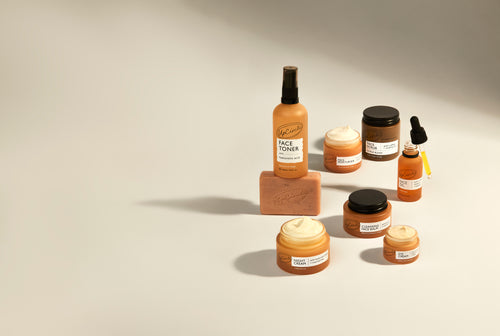
If you would rather not assemble this yourself, our Ageing Gracefully Skincare Bundle is built around this order, with a gentle cleanser, eye cream and night cream chosen to work together.
Priority one: barrier and moisture
Getting the barrier right fixes more visible problems than any active will, because well-hydrated skin is what looks smooth and even. Three moves: a gentler cleanse, a humectant layer on damp skin, and a moisturiser with enough substance to hold it there.
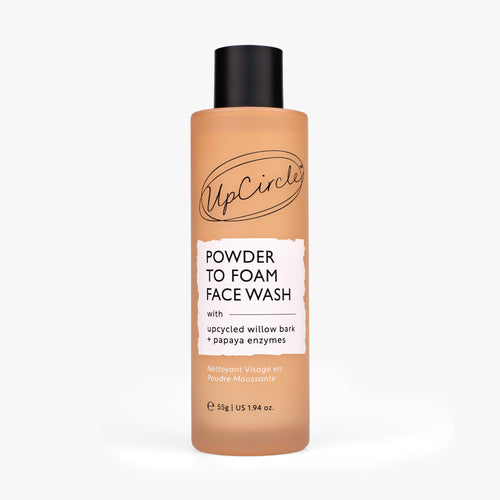
Start with the cleanse, where most dryness is created. A cream or milk cleanser removes the day without stripping lipids you now have fewer of. Our Cleansing Face Milk with Oat Powder and Aloe Vera uses upcycled oat powder, whose polysaccharides help restore the moisture barrier, with aloe vera and jojoba to hydrate and calm. A Cleansing Face Balm, made with the ground powder of rescued apricot stones, melts off SPF without foaming.
Next, add water to damp skin and seal it. Our Face Toner with Hyaluronic Acid gives skin something to hold, and a Face Moisturiser with Vitamin E keeps it there. If the difference between those jobs is unclear, our explainers on hydration versus moisturisation and transepidermal water loss are worth five minutes.
At night a richer finish helps. Our Night Cream with Hyaluronic Acid and Niacinamide pairs hyaluronic acid for hydration with niacinamide, which replenishes the skin's natural barrier and helps even the look of tone. On very dry skin, a few drops of Organic Face Oil with Coffee Extract pressed in last locks it down.
Priority two: daily sun protection
Daily sunscreen is the highest-return step in a skincare routine for over 50, because ultraviolet exposure is the one driver of visible change you can still meaningfully reduce. NHS sun safety guidance recommends sunscreen alongside shade and covering up, and in the UK the March to October window matters most.
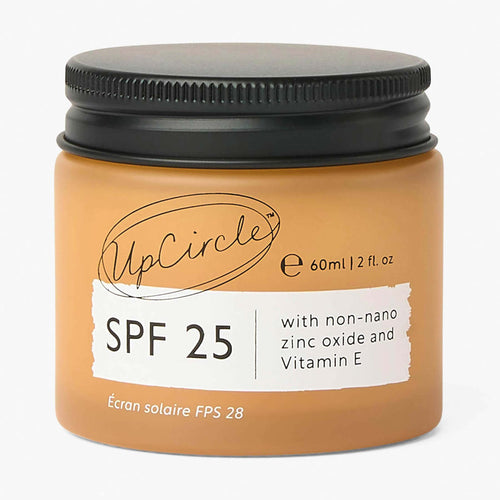
Mineral formulas suit this decade well. They sit on the surface and reflect ultraviolet rather than absorbing it, which is kinder to a barrier already working harder. Our SPF 25 Mineral Sunscreen uses non-nano zinc oxide with barrier-supporting sunflower oil and glycerin, plus upcycled raspberry seed oil, rich in antioxidant vitamins A and E, which helps shield skin from free radical damage.
The trick is placement rather than willpower. Keep it beside your moisturiser, as the last step of the morning, not something you weigh against the forecast.
Priority three: support elasticity with something proven
If you add one active in your fifties, make it peptides. They target firmness and elasticity directly and have clean, measurable data behind them. Peptides are short chains of amino acids that act as signal molecules, prompting skin to keep its own collagen production ticking over rather than adding collagen from outside. Our explainer on peptides versus collagen covers why that matters.
Our Peptide Serum with Custard Apple and Blood Orange is clinically proven to improve skin elasticity by 29 per cent within 14 days, measured on the finished formula rather than an ingredient in isolation. It also carries niacinamide for barrier support and upcycled blood orange water for brightness, and is gentle enough for sensitive skin. For how seriously to take "clinically proven" on anyone's packaging, including ours, see what clinically proven actually means in skincare.
Consistency matters more than intensity: a serum used most days for three months does more than a stronger one used sporadically. The Elasticity Boosting Duo pairs it with the moisturiser designed to sit over it.
Priority four: texture and tone, handled gently
Because surface renewal slows, gentle exfoliation becomes more useful after 50, not less, provided the emphasis stays on gentle. Once or twice a week is plenty, and a fine, non-tearing exfoliant such as our Coffee Face Scrub with Rosehip Oil, used lightly on damp skin, suits most people better than a high-percentage acid.
For tone, patience and sun protection do most of the work. Our guide to uneven skin tone and texture goes deeper, and if the word retinol is hovering, our piece on natural retinol alternatives covers the gentler options and where they fall short.
What to stop doing
Most routines over 50 improve faster by subtraction than addition, because the barrier is the limiting factor. Four habits to drop.
Stop the foaming cleanse if it leaves skin squeaky, because that feeling is stripped lipids and the commonest self-inflicted cause of tightness. Stop stacking actives in one session: one per evening, alternated across the week, and our guide to layering skincare correctly shows the order that works. Stop using the strength that suited you a decade ago, whether a high-percentage acid toner or a retinol that no longer feels comfortable. And stop switching products every three weeks, because skin needs a turnover cycle or two to show what something does, which is closer to two months.
Do not forget neck, chest, hands and lips
The areas that show change earliest after 50 have the thinnest skin and fewest oil glands: neck, chest, backs of the hands and lips. They also get the least attention, which makes them the easiest place to see a difference.
Neck and chest
Whatever you use on your face, take it down. Both get significant sun exposure and less structural support than the cheeks, which is why crepiness often appears there first. Our guides to crepey skin and the best body moisturiser for crepey skin have the specifics, and a rich Body Cream with Aloe Vera and Cocoa Butter does the job.
Hands
Hands take more washing and more ultraviolet exposure than any other skin on the body. A Hand Cream with Hibiscus Flowers, which uses upcycled hibiscus flower acids to support cell renewal alongside shea butter and marshmallow root, or a lighter Hand and Body Lotion with Bergamot Water, is the whole intervention. Our hand care guide and case for taking bodycare seriously cover the rest.
Lips
Lips have no oil glands, so they rely entirely on what you put on them. A Lip Balm with Hemp Seed Oil and Shea Butter beside the bed handles it, and our lip care guide has the rest.
A simple skincare routine for over 50
A good routine at this stage is five or six steps, same products most days.
Morning: rinse with water or a cream cleanser, hydrating toner on damp skin, Peptide Serum, eye cream, moisturiser, then mineral SPF last.
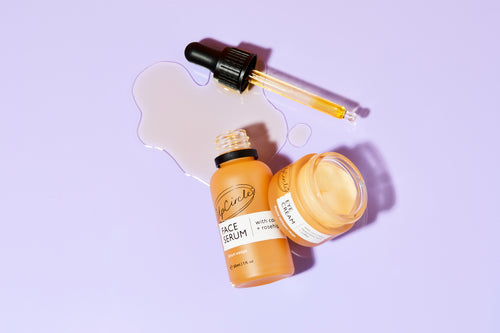
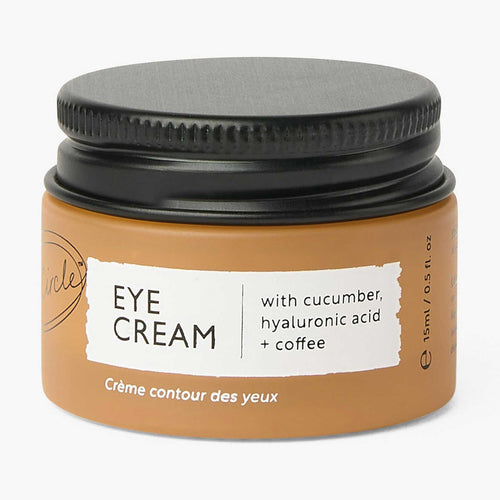
Evening: cleansing balm or milk to remove SPF and the day, gentle exfoliation once or twice a week only, Peptide Serum, Eye Cream with Hyaluronic Acid and Coffee for the thinner skin around the eye, night cream, and face oil if skin feels especially dry.
If a step starts to feel like an obligation rather than a pleasure, drop it and keep the two that matter most: moisturiser and SPF.
Does natural skincare work for mature skin?
Yes, provided you judge it on the named active and its evidence rather than on the word natural, which describes sourcing and says nothing about performance. Plenty of naturally derived ingredients have solid data behind them, and plenty of natural-sounding products are thin formulas with a good story.
The checks are the same as for any product. Find the active in the ingredient list, check it sits high enough to matter, and look for a specific claim tied to a specific test. Our Peptide Serum is the example we would point at: the 29 per cent elasticity figure comes from testing the finished formula over 14 days, not from a supplier's ingredient sheet. See how we choose what goes in on our ingredients page, or browse the natural skincare for mature skin range.
How to tell whether it is working
Give a new routine at least eight weeks, and watch comfort before appearance. Barrier and hydration changes show first, usually within one to two weeks, as skin that no longer feels tight after cleansing. Texture follows over four to eight weeks. Firmness is slowest, so the 14-day peptide result is best read as an early signal, not a finish line.
Two habits help. Photograph your skin in the same light each month, because daily observation is useless for slow change. And change one thing at a time. The broader framing sits in our piece on skin longevity, the mindset we would rather people carried into this decade than a countdown.
Skincare over 50: frequently asked questions
What is the best skincare routine for over 50?
A short, consistent one in this order: a gentle cream cleanser, a hydrating layer on damp skin, a peptide serum, a moisturiser rich enough to hold moisture in, and daily mineral SPF. Add gentle exfoliation once or twice a week and an eye cream if you like one. Five or six steps used daily outperform twelve used occasionally.
What skincare ingredients matter most after 50?
Four earn their place: hyaluronic acid and glycerin for hydration, niacinamide for barrier support and even-looking tone, peptides for elasticity, and zinc oxide for sun protection. Plant oils such as rosehip, jojoba and sea buckthorn help with comfort and softness, which matters more once oil production has fallen.
Should I use more products in my fifties?
Usually not. What changes is the type of product, not the number: richer textures, gentler cleansers, lower-strength actives. Adding steps to a barrier already working harder tends to backfire.
Is it too late to start a skincare routine at 55 or 60?
No. Barrier support and hydration improve comfort and the look of skin at any age, often within a fortnight, and sun protection reduces further ultraviolet exposure from day one.
Why does my skin feel tight and dry now when it never used to?
Falling oil production and a slower-repairing barrier mean skin loses water faster and replaces its lipids more slowly. Change the cleanser first, then add a humectant layer on damp skin, then a richer moisturiser. If it persists, or comes with redness or itching, speak to a GP or pharmacist.
Do I still need SPF in winter in the UK?
Ultraviolet levels in the UK are low enough in deep winter that daily sunscreen matters less than from March to October, but the habit is easier to keep than to restart. If you spend time outdoors, near windows or at altitude, keep it on year round. NHS guidance treats sunscreen as one part of an approach alongside shade and clothing.
Why we build for this stage
UpCircle is a certified B Corp and a circular skincare brand built on rescued ingredients, so our actives come from the by-products of other industries: coffee grounds from cafes, apricot stones from the oil industry, custard apple and blood orange from food production. Those materials are rich in useful compounds, and the circular sourcing follows the efficacy decision rather than leading it. Where a claim needs proof we test the finished formula, which is where the Peptide Serum's 29 per cent elasticity result comes from. What B Corp certification requires of us is on our B Corp page.
We also have a view on how this decade gets talked about. The bundle we built for it is called Ageing Gracefully, not something with "anti" in the title, because skin that has done fifty-odd years of work does not need correcting. It needs support, and less lecturing than the category tends to offer.
Where to start
To read more, our guide to skin longevity and our skincare routine for your 40s are the companions to this one. To browse, the natural facial skincare range and skincare for mature skin edit are organised by need, not age.
And if you want it decided for you, the Ageing Gracefully Skincare Bundle is the coordinated set: cleanser, eye cream, night cream and the rest, in the priority order above. Give it eight weeks, and let comfort be the first thing you measure.