








Jump to: What is perimenopause · What's actually changing in your skin · The five signs nobody warned you about · The 30s routine vs the perimenopause routine · What to add · What to drop or down-shift · Peptides and the collagen question · SPF, melasma, and pigmentation · A simple perimenopause skincare routine · FAQ
If your skin has started behaving like a stranger somewhere in your forties, with hormonal breakouts on a chin that feels drier than it has in twenty years, you are not imagining it and you have not done anything wrong. Perimenopause is the run-up phase to menopause, often five to fifteen years long, and it changes skin in ways that catch most people off guard because almost nobody talks about it.
This is the skincare problem we hear about most from women in their forties, and it sits in a different territory to full menopause. For the post-menopausal phase, see our guide to menopause skincare and haircare. This piece is about the messier, earlier years, where hormones fluctuate rather than fall, and a routine that worked for a decade suddenly stops.
Key takeaways
- Perimenopause is the five to fifteen year run-up phase before menopause, typically beginning in the early to mid forties, and it is defined by fluctuating oestrogen rather than declining oestrogen, which is why skin behaves so unpredictably.
- The signature mix is hormonal acne and increased dryness at the same time, plus heightened sensitivity, melasma flare-ups, and fine lines that seem to appear overnight as collagen production drops by roughly 30 per cent in the first five years.
- Add: peptides for collagen support, niacinamide for redness and barrier, hyaluronic acid for hydration, gentle exfoliation for slowed cell turnover, and daily SPF for melasma. Down-shift: harsh exfoliants, foaming cleansers, and the retinol strength that worked in your thirties.
- Our Peptide Serum is clinically proven to improve skin elasticity by 29 per cent in 14 days, which is the kind of measurable shift the skin is asking for in this phase.
What is perimenopause, and why does it change your skin
Perimenopause is the transitional phase before menopause, where the ovaries gradually wind down oestrogen and progesterone production. It typically starts in the early to mid forties, although it can begin earlier, and it ends twelve months after a person's final period, which is the moment menopause is officially diagnosed. The phase in between can last anywhere from a couple of years to over a decade, and during that window hormones do not fall steadily. They fluctuate, sometimes wildly, and that fluctuation is what makes the skin so confusing to manage. Cleveland Clinic describes perimenopause as the transitional years of changing hormone levels leading up to menopause, and the skin shows that turbulence before almost anywhere else.
This matters because most "anti-ageing" advice is written for skin that is in steady decline, not skin that is on a hormonal rollercoaster. Treating perimenopausal skin with a flat post-menopause routine misses the volatility, and treating it with a thirties acne routine misses the dryness. A useful starting point is our guide to common skincare myths, which clears out a lot of the bad advice that gets recycled here.
What is actually changing in your skin
Oestrogen is the master hormone for skin, and as it fluctuates, almost every measurable property of the skin shifts with it. Understanding the four big mechanisms makes the rest of this piece make sense.
1. Oestrogen fluctuations drive the acne and oil cycle
When oestrogen drops temporarily, androgens (the testosterone-family hormones we all produce) become relatively more dominant. Androgens stimulate the sebaceous glands, which is why hormonal acne shows up along the jawline and chin in cycles that feel completely unpredictable. The same person can have an oily breakout one week and parched, flaking skin the next. This is the single most disorienting feature of perimenopausal skin, and it is the reason the routines that worked in your thirties stop working.
2. Collagen production drops sharply
Published research on the effect of menopause on the skin and other connective tissues reports that women lose around 30 per cent of their skin collagen in the first five years after menopause, with the decline beginning in late perimenopause. Collagen is the protein scaffolding that gives skin its firmness, and once production falls, fine lines, slackness around the jaw, and crepiness around the eyes become much more visible. This is why peptides matter so much in this phase, and we have a full piece on the related symptom of how to get rid of crepey skin.
3. Cell turnover slows down
Cell turnover is the rate at which the skin renews its top layer. In your twenties it runs at roughly 28 days; by your forties it can be closer to 45 to 60 days. That slowdown is why skin starts looking duller, why pigment marks linger longer, and why textures change. Gentle, regular exfoliation becomes much more important than the aggressive scrubs many of us grew up with.
4. The skin barrier weakens
Falling oestrogen reduces the production of natural ceramides and lipids that hold the skin barrier together. The skin barrier is the outermost layer that holds moisture in and irritants out, and when it weakens, transepidermal water loss (TEWL, the rate at which moisture leaves the skin) increases, dryness worsens, and reactivity goes up. If you suddenly cannot tolerate a product you used for years, this is usually why. We have written more about it in our piece on the signs of a damaged skin barrier.
The five signs of perimenopausal skin nobody warned you about
The signs of perimenopausal skin show up as a confusing mix rather than a single clear shift, which is why so many people misdiagnose what is happening. If three or more of the below sound familiar, hormones are likely a meaningful part of the picture.
1. Hormonal acne returning, often along the jaw and chin
Adult-onset acne in your forties is one of the most common and least talked-about features of perimenopause. The breakouts are usually deeper, more inflamed, and slower to heal than teenage acne, and they often appear in the same places each cycle. The instinct is to reach for the harsh acne products of your teens, but that almost always makes the simultaneous dryness worse. A balanced approach with niacinamide and gentle salicylic exposure works better than aggressive benzoyl peroxide for this phase.
2. Skin that is drier, even if you have always been oily
The second hallmark is creeping dryness, even on T-zones that were oily for thirty years. The barrier weakens and TEWL rises, so moisture leaves the skin faster than it used to. The drink-of-water feeling after washing is gone. Hydrating layers and richer creams replace the lightweight gels that used to be plenty.
3. Sudden sensitivity to products you have used for years
Stinging, redness, or a tight feeling from products that were fine last year is a classic perimenopause flag. The thinned barrier lets active ingredients penetrate faster and more reactively. Our guide to what to do when your skin feels tight after cleansing walks through how to rebuild from this point.
4. Melasma flare-ups and uneven tone
Melasma is the brown or grey-brown patchy pigmentation that often shows up on the cheeks, forehead, and upper lip. It is hormone-driven and sun-amplified, which is why it is so common in pregnancy and again in perimenopause. Daily SPF is non-negotiable here. We have a fuller piece on managing uneven skin tone and texture.
5. Fine lines that seem to appear overnight
The collagen drop and the slowed cell turnover combine to make existing fine lines suddenly more visible, especially around the eyes and mouth. The lines were forming for years; they only become noticeable when the surface of the skin stops holding water and refracting light the way it used to.
The 30s routine vs the perimenopause routine, by step
The clearest way to think about this shift is by comparing what worked in your thirties to what serves perimenopausal skin now. Most of the changes are about gentleness, layering, and adding rather than swapping.
| Step | 30s routine | Perimenopause routine |
|---|---|---|
| Cleanse | Foaming or gel cleanser, often morning and night | Cream or milk cleanser, morning rinse only with water if skin is reactive |
| Exfoliate | Acid toner two to three times a week, sometimes scrubs | Gentle weekly exfoliation, lower-concentration acids, no harsh scrubs |
| Treat | Vitamin C, retinol at moderate strength | Peptides nightly, vitamin C as tolerated, retinol at the lowest effective strength |
| Hydrate | Light gel moisturiser, or skipped on oily days | Hyaluronic-acid serum then a richer cream, every day, no skipping |
| Eyes | Optional eye cream | Daily eye cream with peptides and humectants for thinning skin |
| SPF | Used in summer or on bright days | Daily, year-round, mineral preferred for melasma management |
| Night | Lightweight night moisturiser if any | Dedicated night cream with niacinamide and pro-retinol botanicals |
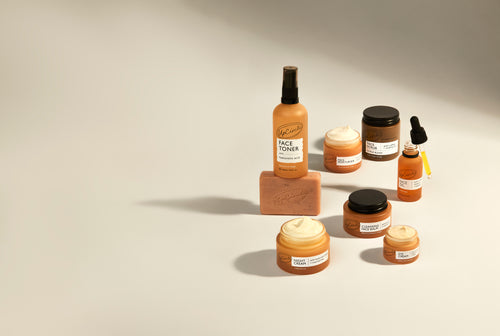
Our Mature Skin Bundle is built around exactly this perimenopause shape, with the cleanser, peptide serum, eye cream, moisturiser, night cream, face oil, and mineral SPF as a coordinated set rather than a stack of products from different routines.
What to add: the four ingredients that earn their place now
Four ingredients shift from "nice to have" in your thirties to "load-bearing" in perimenopause. Each one targets a specific mechanism from the section above.
1. Peptides, for collagen support
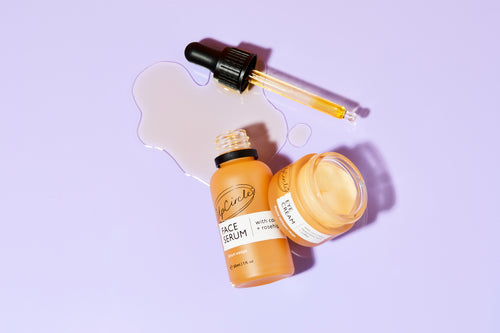
Peptides are short chains of amino acids that signal the skin to support its own collagen production. They are slow but compounding, and they are one of the few topical actives with credible data behind firmness and elasticity in this phase. Our Peptide Serum with Custard Apple and Blood Orange uses a tripeptide-1 complex, and after independent clinical testing it is proven to improve skin elasticity by 29 per cent over 14 days. That is the kind of measurable, repeatable shift that matters once collagen production starts to drop.
2. Niacinamide, for sensitivity and redness
Niacinamide (vitamin B3) supports the skin barrier, helps regulate sebum production, and reduces the appearance of redness and uneven tone. It is one of the most useful single ingredients for the simultaneous-acne-and-dryness paradox of perimenopause, because it works on both at once without being aggressive. It pairs well with everything and rarely irritates.
3. Hyaluronic acid, for hydration
Hyaluronic acid is a humectant that holds up to 1,000 times its weight in water, drawing moisture into the skin and helping it stay there. As barrier function weakens and TEWL rises, hyaluronic acid is the simplest way to put back the surface hydration the skin is losing. We go deeper on this in our piece on hydrating ingredients for dry skin.
4. Gentle exfoliation, for cell turnover
With cell turnover slowing, regular but gentle exfoliation becomes more useful, not less. The shift is about strength and frequency. Lower-concentration salicylic or lactic acid once or twice a week, or a fine, non-tearing physical exfoliant, beats the aggressive weekly scrubs of a decade ago.
What to drop, or down-shift
Just as important as what to add is what to step back from. Most perimenopausal skin gets worse before it gets better because people double down on the routine that used to work, when the skin needs the opposite.
1. Harsh exfoliants and high-percentage acids
The 10 per cent glycolic toner that brightened your thirties skin will often inflame perimenopausal skin and flare melasma. Drop the strength, drop the frequency, or move to enzyme exfoliants which work without disrupting the barrier.
2. Retinol at the strength that worked in your thirties
Retinol is still useful, but the same percentage that you tolerated cleanly at 35 may strip your barrier at 45. Drop the concentration, build up slowly, and consider gentler retinol alternatives such as bakuchiol or pro-retinol botanicals (the upcycled blueberry extract in our Night Cream is one example) which deliver benefit without the irritation.
3. Foaming cleansers
Foaming cleansers strip the skin's natural lipids, which is fine in your twenties but punishing now. Switch to a cream, milk, or balm cleanser. Our Cleansing Face Balm melts off SPF and pollution without disrupting the barrier.
4. Multi-step actives stacks
Layering vitamin C, AHA, BHA, and retinol in the same week was an aspirational thirties move. Now it is a fast route to a reactive, irritated mess. Pick one active per night, alternate, and rest in between.
Peptides and the collagen question
Peptides are the single most important addition for perimenopausal skin, because they are one of the few ingredients that directly addresses the collagen drop driving most of the visible change. Peptides are signal molecules, short chains of amino acids that mimic fragments of larger proteins. When applied topically, certain peptides bind to receptors in the skin and prompt fibroblasts (the cells that build collagen and elastin) to keep working at a higher rate than they otherwise would.
The phrase "boost collagen" gets thrown around freely in skincare marketing, so we want to be precise. Peptides do not flood the skin with new collagen. They support the skin's natural firmness over time by keeping the production process active. The visible result is a slow, compounding improvement in elasticity and bounce, which is what shows up in well-run clinical tests.
For our own Peptide Serum the testing was an independent 14-day study that measured a 29 per cent improvement in skin elasticity, on a formula that pairs tripeptide-1 with upcycled custard apple extract, niacinamide, and a stable vitamin C derivative. The custard apple is the upcycled fruit ingredient, rescued from the food industry, and brings its own antioxidant and hydrating action. We use it because it works, and because it is a circular-by-design alternative to virgin sourcing, which sits at the heart of how we build every product. We have written more about that ethos in our piece on how we choose upcycled ingredients.
SPF, melasma, and why daily protection becomes non-negotiable
Melasma is the most common pigmentation issue in perimenopause, and it is driven by two things working together: hormonal shifts and ultraviolet exposure. You can reduce hormones only so far. You can reduce UV exposure a great deal, which is why daily SPF stops being a summer habit and becomes a year-round non-negotiable in this phase. The American Academy of Dermatology lists daily broad-spectrum sunscreen as the single most important step in managing melasma, and that recommendation gets stronger, not weaker, in perimenopause.
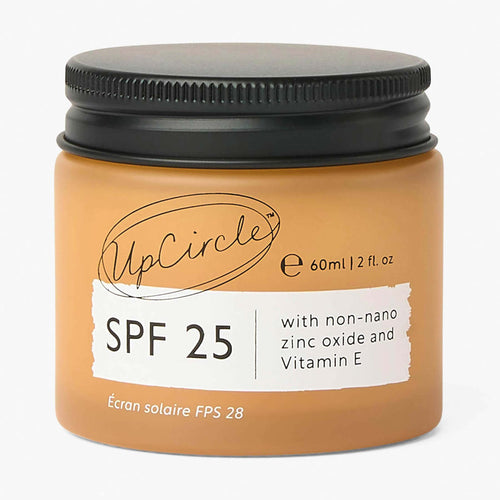
Mineral SPFs (zinc oxide, titanium dioxide) tend to be the better fit for perimenopausal skin, because they sit on the surface and reflect UV rather than absorbing it. They are gentler on a thinned barrier, less likely to flare melasma, and easier to layer with the rest of a hydrating routine. Visible-light protection (a tint, an iron oxide-containing SPF) adds a useful extra layer for people whose melasma is stubborn.
A simple perimenopause skincare routine, morning and night
The routine below is the practical translation of everything above. It is not the only valid shape, but it is the one that we most often recommend to people coming into this phase from a thirties routine that has stopped working.
Morning
- Rinse with water, or a gentle cream cleanser if skin needs it
- Hyaluronic-acid serum on damp skin
- Peptide Serum, applied before moisturiser
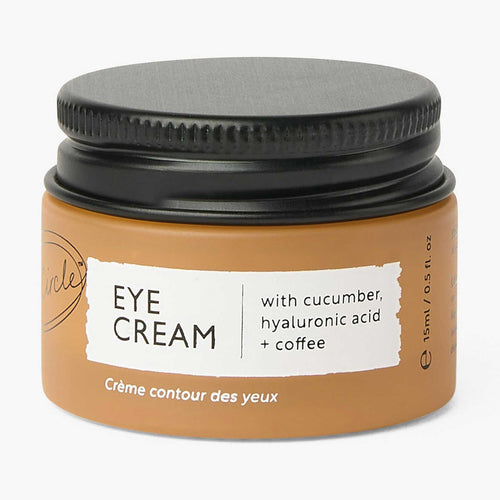
- Eye cream with caffeine and hyaluronic acid for the thinning under-eye, such as our Eye Cream with Hyaluronic Acid and Coffee
- Face moisturiser with vitamin E, like our Face Moisturiser
- Mineral SPF 30 or higher, every day, year-round
Night
- Cleansing balm or milk to remove SPF and the day
- Optional gentle exfoliant one or two nights a week
- Peptide Serum
- Eye cream
- Night cream with niacinamide and a pro-retinol botanical, such as our Night Cream with Hyaluronic Acid and Niacinamide
- A few drops of facial oil if skin feels especially dry
If you would rather start with a single coordinated set, our Mature Skin Bundle covers all eight steps in the matched products we use for this phase. For a personalised version, our skin quiz walks through the same logic in five minutes and recommends what to start with. The full collection is at our face care collection, and a Subscribe and Save on the staples saves around 15 per cent and lands them on a cadence that matches how fast you actually use them.
Perimenopause skincare FAQ
What age does perimenopause skincare become relevant?
Most people start to notice perimenopausal skin changes between 40 and 45, although it can begin in the late thirties or as late as the early fifties. If your skin has started behaving differently and your existing routine has stopped working, hormones are worth considering as a likely driver, regardless of exact age.
Can perimenopause cause acne?
Yes, perimenopause is a very common cause of adult-onset acne. As oestrogen fluctuates, androgens become relatively more dominant, which stimulates the sebaceous glands and triggers breakouts that are often deeper and slower-healing than teenage acne. The breakouts tend to cluster along the jawline, chin, and lower cheeks.
Why is my skin suddenly sensitive in my forties?
Falling oestrogen reduces the production of ceramides and lipids that hold the skin barrier together. A weaker barrier lets active ingredients penetrate faster and react more easily, which is why products you tolerated for years can suddenly sting or redden. Simplifying the routine and rebuilding the barrier with niacinamide and rich creams usually settles it within a few weeks.
Is retinol still safe to use in perimenopause?
Retinol is still useful, but the strength that worked in your thirties may be too aggressive now. Drop the concentration, use it less often, and consider gentler pro-retinol botanical alternatives. The goal is consistent, low-grade stimulation of cell turnover, not weekly irritation.
What is the best moisturiser for perimenopausal skin?
The best moisturiser for perimenopausal skin is one that combines barrier-supporting ingredients (ceramides, niacinamide, fatty acids) with humectants (hyaluronic acid, glycerin) and a richer texture than a thirties gel. Our Face Moisturiser with vitamin E and our Night Cream with niacinamide are built around exactly this profile.
Does perimenopause cause melasma?
Hormone fluctuations in perimenopause are one of the most common triggers for melasma flare-ups. Sun exposure amplifies the pigmentation, which is why daily mineral SPF and gentle vitamin C are the first-line topical strategies. Melasma can fade but rarely disappears completely, and managing it is a long-term project.
How long does perimenopause skin last?
Perimenopause itself can last anywhere from a couple of years to over a decade, with five to seven years being typical. Skin tends to settle into a new equilibrium once oestrogen stabilises in post-menopause, although the underlying lower collagen production continues, which is why a peptide-and-SPF routine remains useful for years afterwards.
Can diet help perimenopausal skin?
Diet supports skin from the inside, especially through omega-3 fatty acids for the barrier, antioxidants for environmental defence, and adequate protein for collagen synthesis. Topical skincare and diet work in parallel rather than in competition, and both matter more in this phase than they did in your thirties.
Why we built our routine for this phase
We are UpCircle, a certified B Corp and a circular skincare brand built around upcycled ingredients. Our products are clinically tested where the claim demands it (the Peptide Serum's 29 per cent elasticity result over 14 days is one example), made with rescued ingredients such as coffee grounds from London cafes, argan shells from Moroccan oil production, and custard apple extract from the food industry, and packaged in glass and aluminium that is built to be reused or recycled. To date we have rescued over 400 tonnes of natural ingredient by-product that would otherwise have been thrown away. We do this because the rescued ingredients are genuinely brilliant for skin, and the circular sourcing is the byproduct of the efficacy decision, not the other way around.
If you are starting from scratch in perimenopause, the simplest place to begin is the Peptide Serum alongside daily mineral SPF. If you would rather have the whole routine in one set, the Mature Skin Bundle is the coordinated version we built for exactly this phase. And if you would like more reading first, our menopause skincare and haircare guide picks up where this one ends.