







Jump to: Why the order matters · The three layering rules · Step-by-step: how to layer skincare · Morning vs night routines · What actually ruins what · How long to wait between layers · Adding actives without wrecking your barrier · Common layering mistakes · The UpCircle routine, in order · FAQ
If you have ever stood in front of the bathroom mirror holding a serum in one hand and a moisturiser in the other and genuinely not known which goes first, you are in extremely normal company. We hear from customers every week who have built up a drawer of products they like, and then quietly stopped using half of them because they did not feel like the routine was doing anything. Most of the time the products are fine. The order is what is doing the damage.
The good news: how to layer skincare comes down to a small set of rules that hold across almost every routine, every skin type, and every brand. Get the order right and the same products start to work harder. Get it wrong and you will literally be paying for a serum you cannot absorb. This is the guide we would write for a friend who has just texted us a photo of their bathroom shelf.
Key takeaways
- The universal rule is thinnest to thickest, water-based to oil-based, low pH to high pH, with a 30 to 90 second pause between layers so each one can absorb before the next sits on top.
- Eye cream goes before moisturiser, not after. The under-eye skin is around 0.5 mm thick and richer textures sit on top of it instead of soaking in.
- SPF is always the final morning step, no exceptions. Anything you apply over it dilutes the filter and lowers the protection factor you paid for.
- Layering disasters are real but smaller than the internet says: retinol with a strong AHA on the same night will compromise your barrier, but the old vitamin C plus niacinamide warning is obsolete and not supported by current dermatology.
Why the order matters
The order you apply skincare products in directly controls how much of each active actually reaches your skin, because each layer changes what the next one can pass through. Skincare absorption is governed by the stratum corneum, the outermost layer of the epidermis, which is around 0.02 mm thick and acts like a brick-and-mortar barrier of dead corneocytes held together with intercellular lipids. Water-soluble ingredients pass through it relatively easily. Oil-soluble ingredients pass through it slowly. Once you put a thick occlusive layer on top, almost nothing else gets in.
That is the whole reason layering matters. Published reviews of skin permeability consistently show that vehicle and order alter how much active reaches the viable epidermis, sometimes by an order of magnitude. If you apply your richest cream first you have effectively built a wall that your serum cannot climb. If you apply your lightest mist last, it sits on the surface and evaporates without doing anything. We have written more about why a healthy barrier is the foundation under all of this in our piece on the signs of a damaged barrier.
The flip side: get the order right and even modestly priced products start to outperform expensive ones used badly. This is the lever that costs nothing.
The three layering rules that govern everything
Layering skincare follows three rules that hold for every routine: thinnest to thickest, water-based before oil-based, and low pH before high pH. Memorise these three and you can sequence almost any product you bring into the routine without thinking about it.
1. Thinnest to thickest
Apply products in order of viscosity, lightest first. A toner is thinner than a serum, a serum is thinner than a moisturiser, a moisturiser is thinner than a face oil. The reason is mechanical. A thin product can penetrate a richer layer placed on top of it. A rich product cannot be penetrated by a thinner one applied afterwards. If you put your Face Moisturiser on first, your Peptide Serum will sit on top of an emollient film and most of it will never reach the skin.
2. Water-based before oil-based
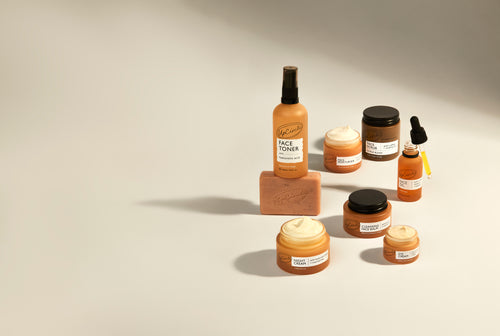
Water-soluble ingredients (hyaluronic acid, niacinamide, vitamin C derivatives, peptides, glycerin) need to go on first, while the skin is still slightly damp. Oil-based ingredients (face oils, plant butters, occlusive balms) form a film that water cannot pass through. This is the rule behind the saying "water before oil, never the reverse". Our Face Toner with Hyaluronic Acid goes on first because it is almost entirely water; an Organic Face Oil goes on near the end because it seals everything below it.
3. Low pH to high pH
Where you are using actives with specific pH requirements, apply the lower pH first and let it settle. Acidic products like AHAs (around pH 3.5) and L-ascorbic acid (around pH 2.5 to 3.5) need to act at their natural pH to work. If you apply something more alkaline first, you neutralise the active. Most UpCircle products sit in the gentle, skin-compatible 4.5 to 6.5 range, so this rule mostly comes into play when you are layering in a third-party AHA, BHA, or strong vitamin C serum.
4. Pause between layers
Wait between 30 and 90 seconds for each layer to settle. This is not a beauty-myth detail. The American Academy of Dermatology recommends letting each product absorb before applying the next so they do not pill or cancel each other out. We get into the timing in how long to wait between layers below.
Step-by-step: how to layer skincare in order
Here is the order, top to bottom, that almost every routine should follow. The exact products vary; the slots do not. We have written about each of the products below in more depth on our face care collection if you want to see what fits where.
1. Cleanser
Always first, morning and night. A clean surface is the only one that products can absorb into properly. At night use an oil-based cleanser like our Cleansing Face Balm with Vitamin E to break down sunscreen, makeup, and the day's pollution; if you wear heavy makeup or SPF, follow with a water-based cleanser to remove anything still sitting on the skin. This is the principle behind why your skin feels tight after the wrong cleanser.
2. Toner or essence
Apply while the skin is still damp from rinsing. A modern hydrating toner is not the astringent, alcohol-stripped product it was twenty years ago; it is a thin, water-based hydration step that prepares the skin for everything else. Our Face Toner with Hyaluronic Acid uses upcycled green mandarin water, glycerin, and a low dose of salicylic acid, so it hydrates and lightly resurfaces in one step.
3. Water-based serum (treatment layer)
This is the active ingredient slot. Most water-based serums contain peptides, niacinamide, hyaluronic acid, vitamin C derivatives, or a combination. They are concentrated, lightweight, and designed to sit close to the skin. Our Peptide Serum is clinically proven to improve skin elasticity by 29% over 14 days, and it works best applied to slightly damp skin (right after the toner) because a hydrated stratum corneum is more permeable to small molecules like peptides.
4. Eye cream
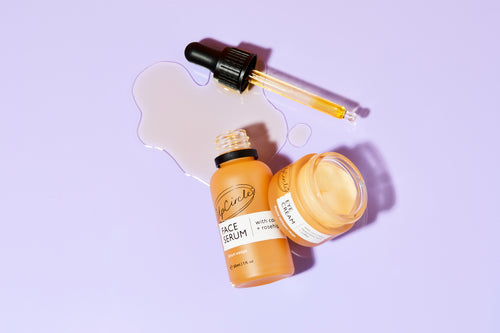
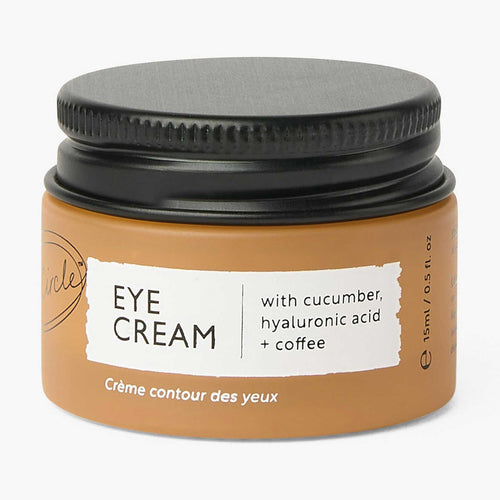
Eye cream goes before facial moisturiser, not after. This is the single most-asked layering question we get, and the answer is counter-intuitive but correct. Eye creams are typically formulated thinner than face moisturisers because the under-eye skin is around 0.5 mm thick (roughly half the thickness of cheek skin) and cannot absorb a heavy emollient. If you apply your face moisturiser first, the eye cream lands on a film and never penetrates. Apply our Eye Cream with Hyaluronic Acid + Coffee with a ring finger, gently patting from the inner corner outwards; the rest of the routine sits on top.
5. Face moisturiser
The moisturiser locks everything underneath into the skin. Face Moisturiser with Vitamin E uses cocoa butter and shea butter to slow transepidermal water loss (TEWL), the rate at which moisture evaporates from the skin, while glycerin and aloe pull water in from the surface. We get into how humectants and occlusives work together in our piece on hydrating ingredients for dry skin.
6. Face oil (optional, evening only or for very dry skin)
An oil seals in everything below. Because oils form a film that water cannot pass through, anything water-based applied after an oil will not absorb. This is why oil belongs near the end of the routine, not the start. If you have oily skin you can skip this slot entirely. If you have dry or mature skin, an oil at the end of an evening routine is genuinely useful.
7. SPF (morning only, always last)
Sunscreen is the last morning step, every single morning, with no exceptions. Anything applied on top of SPF dilutes the filter and lowers the protection factor on the bottle. The American Academy of Dermatology is unambiguous on this: SPF goes on after skincare, before makeup, and gets reapplied every two hours of sun exposure. We have written about why daily SPF is the highest-leverage anti-ageing step in our guide on how to get rid of crepey skin.
Morning vs night: what changes between routines
Morning and evening routines share a structure but use different products at several slots. Morning is about prep and protection; evening is about repair. Treat them as the same shape with different fillings, not as two unrelated routines.
| Step | Morning | Evening |
|---|---|---|
| 1. Cleanse | Splash of water or gentle cleanse | Oil cleanse, then water cleanse if needed |
| 2. Toner | Hydrating toner | Hydrating toner (or skip if using actives) |
| 3. Serum | Antioxidant or peptide serum | Repair serum, retinol, or peptide |
| 4. Eye cream | Caffeine for puffiness | Hyaluronic acid for overnight hydration |
| 5. Moisturiser | Lightweight day cream | Richer night cream |
| 6. Oil | Skip (would interfere with SPF) | Optional, for dry skin |
| 7. Final step | SPF, no exceptions | Skip; let skin breathe |
Notice the two real differences: face oils belong to the evening because they interfere with sunscreen adhesion, and SPF belongs to the morning because it has no role at night. Everything else is mostly a matter of choosing the right active for what you want each routine to do.
What actually ruins what (and what is internet myth)
Most of the layering combinations the internet warns against are either obsolete or were never true. A small handful are real, and worth taking seriously.
The obsolete warnings (you can ignore)
The vitamin C plus niacinamide warning is the most-repeated piece of bad skincare advice on the internet. It dates from a 1960s study using extreme heat and pure forms of both ingredients, conditions that bear no resemblance to a finished cosmetic. Modern formulations of niacinamide and vitamin C derivatives layer happily, and most peptide serums (including ours) include both in the same bottle. Apply them together; you are not creating a flush reaction.
"Hyaluronic acid causes dryness if you do not apply it on damp skin" is similarly overstated. It works better on damp skin because there is more water available to bind, but it is not actively dehydrating in dry environments at the percentages used in finished products.
The real conflicts (worth respecting)
Three combinations genuinely cause problems for most skin types:
- Retinol plus a strong AHA on the same night. Both increase skin cell turnover and disrupt the stratum corneum. Stacked, they reliably trigger irritation, redness, and a temporarily compromised barrier. Alternate nights instead.
- Strong vitamin C (L-ascorbic acid) plus AHAs at the same step. Both work at acidic pH, and stacking them often pushes the skin past its tolerance. Use vitamin C in the morning and AHAs in the evening, or alternate evenings.
- Oil before water-based products. This is not a conflict, it is just a waste. The water-based product cannot penetrate the oil film. You will absorb very little of whatever you applied second.
The "depends" cases
Retinol plus niacinamide is fine for most people and may even improve tolerance. Retinol plus peptides is fine. SPF plus everything is mandatory. The only universal rule is that when adding any new active, introduce one at a time and give yourself three to four weeks of tolerance before stacking the next.
How long to wait between layers
The standard answer is 30 to 90 seconds between layers, with a full minute as the safe default for most products. This is not arbitrary. The absorption kinetics of topical actives show that most water-based serums need around 60 seconds for the carrier to start dissipating before another product can sit on top without pilling.
The exception, and one we feel strongly about: damp-skin layering is genuinely different. When the skin is still slightly wet, the stratum corneum is more permeable. Applying a peptide serum (or any small-molecule active) to damp skin can meaningfully improve absorption. We use this in our own routine; spritz the toner, then apply the Peptide Serum while the skin is still tacky, not bone dry.
For SPF specifically, give it a full two to three minutes to set before you put anything else on top, including makeup. This lets the filter form an even film across the skin instead of being smeared into patches by a sponge or a brush.
Adding actives without wrecking your barrier
The single most useful rule for actives is "less, slowly". Most barrier damage we see is from people stacking three new actives in the same week and then wondering why their skin is suddenly stinging when they cleanse. Read our piece on the signs of a damaged skin barrier if any of that sounds familiar.
Introduce one active every three to four weeks
Three to four weeks is roughly one full skin cell turnover cycle for an adult, the time it takes the deeper layers of the epidermis to migrate to the surface. Stratum corneum turnover takes 14 to 28 days depending on age, so giving yourself a month to assess tolerance before stacking the next active is the responsible default. If a new product is going to flare your skin, you will know in three weeks; if it is not, you can layer the next thing in.
Patch-test on the jaw, not the inner arm
The classic inner-arm patch test is fine for fragrance allergies, but it under-predicts facial reactions because facial skin is more permeable. Test new actives on the jawline for three nights before applying to the full face.
If your barrier is compromised, pause everything except hydration
The repair routine is short: gentle cleanser, hydrating toner, hyaluronic acid serum, plain moisturiser, SPF in the morning. No actives, no acids, no retinol. Most barriers recover within two to four weeks if left alone. Our Sensitive Skin Bundle is built around exactly this routine for the exact reason.
Sun protection is the active you cannot skip
If you only have time for two products in the morning, make them moisturiser and SPF. Every single retinol or acid you use at night relies on consistent daytime SPF to do its job; without it you are reversing the result you paid for.
Common layering mistakes (and the fix)
Most people getting underwhelming results from a good routine are making one of these five mistakes:
1. Eye cream after moisturiser
The most common mistake. Eye cream is thinner than face moisturiser, which means it has to go first. If you have been applying it last for years and wondering why nothing changed, this single switch is often visible within a fortnight.
2. Skipping the wait between active and moisturiser
Pancake-stacking a vitamin C serum and a moisturiser straight after each other reduces absorption of both. Wait 60 to 90 seconds. Use the time to brush your teeth.
3. Applying SPF over makeup at the start of the day
SPF goes on bare moisturised skin, then makeup. If you find yourself reaching for a sunscreen mist halfway through the morning to "top up", that is reapplication, not a substitute for the morning step.
4. Layering oil before serum because it "feels luxurious"
It feels good. It is also wasting your serum. Oil seals; it cannot be penetrated by the water-based product you applied after it. Reorder.
5. Using a different brand at every slot without checking pH
Mixing brands is fine and often necessary. The one thing worth checking is that you are not pairing a high-pH cleanser (above 7) with a low-pH vitamin C serum applied immediately after; the cleanser raises skin pH for around twenty minutes, and the vitamin C will not work properly until it normalises. A pH-balanced cleanser fixes this.
The UpCircle routine, in order
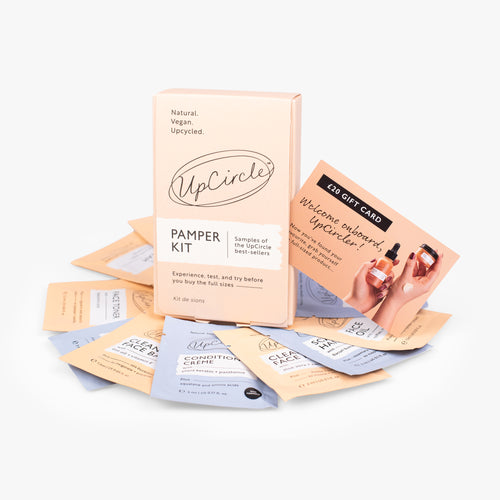
For anyone who wants the short version, this is the morning and evening routine we recommend. Each product was formulated to slot at a specific point in this sequence, with the active ingredients placed where they get the best absorption. The complete kit, in sample size, is in The Pamper Kit if you want to test the order before committing to full sizes.
| Slot | Morning | Evening |
|---|---|---|
| 1 | Splash of water | Cleansing Face Balm |
| 2 | Face Toner | Face Toner |
| 3 | Peptide Serum | Peptide Serum |
| 4 | Eye Cream | Eye Cream |
| 5 | Face Moisturiser | Night Cream |
| 6 | Skip oil | Face Oil (optional) |
| 7 | Mineral SPF | Lights out |
If you want to subscribe to the products you finish first, the Subscribe and Save collection takes 15% off and times the next bottle to arrive before you run out. We are not interested in trapping anyone into a subscription; cancel between deliveries with one tap.
FAQ
Does eye cream go before or after moisturiser?
Eye cream goes before moisturiser. Eye creams are formulated thinner than face moisturisers because the under-eye skin is around 0.5 mm thick. If a heavier moisturiser is applied first, the eye cream lands on a film and cannot absorb properly.
How long should I wait between skincare layers?
Wait 30 to 90 seconds between most layers, and a full two to three minutes after SPF before applying makeup. The pause lets each product settle into the skin before the next one sits on top, which prevents pilling and reduces the chance of layers cancelling each other out.
Can I use vitamin C and niacinamide together?
Yes, in modern formulations the two layer fine and often appear in the same product. The old warning came from a 1960s study using extreme heat and pure forms of both ingredients, conditions that do not apply to finished cosmetics. Our Peptide Serum contains both.
What order do I use serum and toner in?
Toner first, then serum. The toner adds a thin layer of hydration that primes the skin to absorb the more concentrated serum, and applying serum to slightly damp skin improves penetration of small-molecule actives like peptides and niacinamide.
Do I need both a moisturiser and a face oil?
Not necessarily. Oil seals moisture in but does not add water; moisturiser provides both water and lipids. If your skin runs oily or normal, moisturiser alone is enough. If your skin is dry or mature, adding an oil after the moisturiser at night can help reduce overnight transepidermal water loss.
Should I apply SPF before or after moisturiser?
SPF goes after moisturiser and before makeup, every morning. Applying SPF on top of moisturiser lets the moisturiser hydrate the skin while the sunscreen sits in a continuous film on the surface where the UV filter actually works.
How many products is too many in a routine?
Most people get the best results from four to six products per routine. More than that and you start to lose absorption efficiency, increase the chance of layering conflicts, and make it harder to identify which product caused a reaction if one does. Less is genuinely more here.
Can I skip toner?
You can, but a hydrating toner adds a step of water-based hydration that meaningfully improves the absorption of whatever serum follows. Modern toners are not the alcohol-stripping astringents they used to be; the current generation are essentially light essences.
Why we built our routine this way
UpCircle is a B Corp certified, Cruelty Free International approved skincare brand built around upcycled ingredients. Each product in the routine above was formulated by Anna Brightman with a specific slot in the layering sequence in mind: the Cleansing Face Balm uses upcycled apricot stone powder rich in vitamin E for the first oil-cleanse step; the Face Toner uses residual water from green mandarin juicing as the water phase; the Peptide Serum uses upcycled custard apple and blood orange water and is clinically proven to improve elasticity by 29% in 14 days; the Eye Cream uses caffeine extracted from rescued coffee grounds; the Face Moisturiser uses argan stone powder from rescued shells. We have B Corp certification, our products are dermatologically tested, and we have rescued over 400 tonnes of ingredients from going to waste.
Take the skin quiz if you want a tailored routine recommendation, or read more about how we develop products in our product developer's POV on how upcycled ingredients are chosen. If you want to learn more about the brand, our about page has the full story.
Where to start
If you are starting from zero, the simplest path is to test the layering order with sample sizes before committing to full bottles. The Pamper Kit contains the full face routine in sample sizes (Cleansing Face Balm, Cleansing Face Milk, Peptide Serum, Eye Cream, Face Moisturiser, Night Cream, Organic Face Oil) plus the hair range, all sequenced in the order this article describes. Two weeks of using the routine in the right order will tell you which products you want in full size.
If you already know which products you want, the face care collection has every full-size product, and the Subscribe and Save tier takes 15% off the ones you finish on a regular cycle. And if you have read this far and still are not sure where to start, our myth-busting guide is the next thing worth reading; it picks up several of the layering questions this article only touched on.