








Jump to: The "you can't layer them" myth · What each one actually does · When to prioritise niacinamide · When to prioritise vitamin C · How to layer them safely · Concentrations that actually matter · The pH stability question · Niacinamide vs vitamin C by concern · Why our Peptide Serum includes both · FAQ
If you've ever been told that niacinamide and vitamin C "cancel each other out", you're not alone, and the advice was never quite right. The myth traces back to a single 1960s study using pure ascorbic acid, the most unstable form of vitamin C, and most modern serums don't use that form anyway. The skincare world has updated; the internet, mostly, hasn't.
This is the honest guide to niacinamide vs vitamin C. We'll cover what each one actually does, who should prioritise which, the concentration ranges that make a real difference, the pH point that started the layering myth, and where our Peptide Serum with Custard Apple + Blood Orange fits in (it's formulated with both, on purpose).
Key takeaways
- Niacinamide and vitamin C are complementary, not competitive. The "you can't layer them" idea comes from a 1960s study with pure L-ascorbic acid, and modern stable derivatives like 3-O-Ethyl Ascorbic Acid sit at skin-friendly pH and layer with niacinamide without issue.
- Niacinamide (vitamin B3) is the better fit for oily, congested, redness-prone, or sensitive skin. It supports the skin barrier, regulates sebum, and reduces the appearance of pores and uneven tone, with most studies showing benefits at 2 to 5%.
- Vitamin C is the better fit for dullness, post-inflammatory pigmentation, and visible sun damage. Stable derivatives (3-O-Ethyl Ascorbic Acid, ascorbyl glucoside, sodium ascorbyl phosphate) deliver the brightening and antioxidant benefits without the irritation profile of pure L-ascorbic acid.
- If you're using both, apply the lower pH product first, wait 60 seconds, then layer the next. Or use a single serum like our Peptide Serum that already combines both at researched concentrations, which removes the layering question entirely.
The "you can't layer them" myth, where it came from, and why it's wrong
You absolutely can layer niacinamide and vitamin C, and modern formulation makes the old warning effectively obsolete. The myth traces back to a 1960s study where pure L-ascorbic acid (the most unstable, most acidic form of vitamin C) was combined at high concentration with niacinamide and the two formed a yellow compound called nicotinic acid, which can cause flushing on sensitive skin. That study was about a specific reaction at a specific pH with a specific form of each ingredient, and it's been over-extrapolated for sixty years.
Modern serums rarely use pure L-ascorbic acid as the only vitamin C source, because it's notoriously unstable, oxidises within weeks of opening, and stings sensitive skin. Most well-formulated brands now use stable derivatives such as 3-O-Ethyl Ascorbic Acid, ascorbyl glucoside, or sodium ascorbyl phosphate. These sit at skin-friendly pH (around 5 to 6, similar to niacinamide) and don't trigger the nicotinic-acid reaction the original study warned about.
The other reason the myth persists is that early home-mixing forums told people to apply a 20% L-ascorbic acid serum and a 10% niacinamide serum back-to-back without waiting. With those exact concentrations and forms, you might see some yellowing on the skin and a brief flush. With everything else, the warning doesn't apply. We covered this in our guide to debunking common skincare myths as well.
What niacinamide and vitamin C each actually do
Niacinamide and vitamin C are two of the most-researched ingredients in topical skincare, and the reason they get compared is that they overlap on tone evenness and antioxidant defence. They differ on almost everything else.
Niacinamide (vitamin B3)
Niacinamide is the active form of vitamin B3 used in skincare. Its main job is to support the skin barrier (the outermost layer that holds moisture in and irritants out) by boosting ceramide production. It also regulates sebum, which is why oily and acne-prone skin tends to respond well to it, and it reduces the appearance of pores and uneven tone over time. We have the full ingredient profile in our guide to hydrating ingredients for context on how it sits alongside humectants.
Niacinamide is gentle. It's tolerated by sensitive skin, it doesn't sting, and it works at modest concentrations. A peer-reviewed clinical study found that 5% topical niacinamide significantly reduced the appearance of hyperpigmentation, fine lines, and yellowing of the skin after 12 weeks. That's a meaningful result for an ingredient that's also one of the cheapest and most stable on the shelf.
Vitamin C (in its various forms)
Vitamin C is an antioxidant that scavenges free radicals generated by UV exposure and pollution, and it inhibits the enzyme tyrosinase, which is responsible for melanin production. The visible effects are brighter skin, softer pigmentation, and a degree of protection against photoageing. It also supports collagen production, which is why long-term users often see a reduction in fine lines.
The catch is form. Pure L-ascorbic acid is the most studied but the most unstable, and it requires a low pH (around 3.5) to be biologically active, which is why it stings. Stable derivatives such as 3-O-Ethyl Ascorbic Acid (the form in our Peptide Serum) deliver similar benefits at neutral pH, with far better stability and a much gentler feel. We've written about how this connects to broader pigmentation concerns in our piece on uneven skin tone and texture.
When to prioritise niacinamide
If your skin concerns are about oil, redness, congestion, or barrier resilience, niacinamide is the more targeted choice. It's also the safer starting point for anyone with sensitive or reactive skin, because the chance of irritation is low.
1. Oily or combination skin
Niacinamide reduces sebum output without stripping. Most clinical research showing this benefit uses concentrations between 2% and 4%. If you've been using harsher oil-control actives (salicylic acid, retinol) and your skin feels rough or reactive, switching one of them for niacinamide is often the better long-term move.
2. Redness-prone or sensitive skin
Niacinamide has anti-inflammatory activity and supports the barrier, both of which calm visible redness over time. It's well-tolerated by rosacea-prone and post-procedure skin, where vitamin C in its acidic forms can sting.
3. Visible pores and uneven texture
Pores don't shrink, but their appearance can be reduced by clearing congestion and supporting the skin around them. Niacinamide does both. Texture irregularity from dehydration and barrier weakness also responds, because a stronger barrier holds more water.
4. As the all-rounder for routines that already include actives
Niacinamide layers under or over almost anything: retinoids, AHAs, BHAs, peptides, hyaluronic acid. If you already have a packed routine and want one ingredient that quietly improves overall skin quality, niacinamide is it.
When to prioritise vitamin C
If your concerns are about brightness, dullness, sun damage, or pigmentation, vitamin C does what niacinamide cannot. It directly inhibits melanin production, where niacinamide only interrupts melanin transfer to the skin's surface.
1. Dullness and a "tired" complexion
Vitamin C's antioxidant action neutralises the free radicals that accumulate from daylight and pollution exposure, and the visible result over four to eight weeks is brighter, more even-looking skin. Most people notice this first, before any pigment shift.
2. Post-inflammatory hyperpigmentation
The dark marks left after spots, ingrown hairs, or scratches are caused by melanin lingering in the skin. Vitamin C inhibits new melanin formation, so as the existing pigment naturally fades through cell turnover, less is replaced. Stable derivatives at 5 to 10% are the sweet spot for this.
3. Sun-damage prevention (alongside SPF)
Vitamin C is not a sunscreen, but a vitamin C serum applied in the morning under SPF amplifies the antioxidant protection your skin gets from daylight. The peer-reviewed evidence here is strong enough that most dermatologists recommend daytime vitamin C as routine practice.
4. Collagen support over the long term
Vitamin C is a cofactor in the enzymatic step that stabilises collagen. Daily use supports the skin's own collagen production, which is why it's often paired with peptides in serious anti-ageing formulas. Our Peptide Serum deliberately combines both for exactly this reason.
How to layer niacinamide and vitamin C if you want to use both
You can layer them with no real risk on modern formulations, but the order and the wait matter for how each one absorbs.
1. Check the pH of each product (or check the form)
If both products list pH, apply the lower-pH one first. If neither lists pH, the rule of thumb is: a vitamin C serum using L-ascorbic acid is around pH 3.5 (apply first), a niacinamide serum is around pH 5 to 6, and a stable vitamin C derivative serum (like ours) is also around pH 5 to 6 and can go in either order.
2. Wait 60 seconds between layers
Sixty seconds is enough for one product to settle and absorb so the next one doesn't slide off or dilute it. It's not a magic number, just a practical pause. Skin doesn't fully neutralise back to its baseline pH in that window, but the surface dries enough for layering to work.
3. Apply moisturiser on top
Both ingredients work better sealed in. Layer your Face Moisturiser with Vitamin E over the top to lock in hydration and reduce evaporation. The vitamin E in the moisturiser also pairs well with vitamin C; the two regenerate each other's antioxidant capacity.
4. Or just use a single serum that includes both
The simplest route is one serum formulated with both, at researched concentrations, balanced at a single pH. That's how our Peptide Serum is built. There's no layering question to get wrong.
Concentrations that actually matter (and what's marketing fluff)
Higher percentages aren't always better, and most products list percentages that are well above what the research actually supports. Here's what the evidence says.
Niacinamide: 2 to 5%
The clinical sweet spot for niacinamide is between 2 and 5%. Above 5%, some users report a flushing reaction (warm, slightly red skin for a few minutes after application), which is the same nicotinic-acid effect mentioned earlier. The 10% niacinamide serums you see on the shelf are not meaningfully more effective than a well-formulated 5%, and they're more likely to cause flushing on sensitive skin.
Vitamin C derivatives: 3 to 10%
3-O-Ethyl Ascorbic Acid is one of the most stable vitamin C derivatives available, and the concentrations supported by research sit between 3 and 10%. Ascorbyl glucoside has a similar useful range. Sodium ascorbyl phosphate works at lower concentrations (1 to 5%).
L-ascorbic acid: 10 to 20%
Pure L-ascorbic acid needs higher concentrations (10 to 20%) to be effective at low pH, but irritation rises sharply above 15% for most skin types. If you're sensitive, a stable derivative at 5% is usually the better trade-off than pure L-ascorbic acid at 15%.
Why concentration is only half the story
Concentration matters, but so does formulation. A poorly formulated 20% L-ascorbic acid serum oxidises in weeks and stings; a well-formulated 5% derivative serum stays stable for the life of the bottle and feels comfortable on skin every morning. Read the ingredient list, not just the percentage on the front.
The pH stability question, and why modern formulations sidestep it
The pH question is the technical reason the layering myth started, and it's the technical reason it no longer applies. Pure L-ascorbic acid needs a pH below 3.5 to penetrate the skin and act biologically, and at that pH it can react with niacinamide if the two are in contact in significant concentration. Stable derivatives don't need that low pH, so the reaction risk effectively disappears.
The other thing pH affects is shelf life. L-ascorbic acid in water at low pH oxidises rapidly when exposed to light, oxygen, or warm temperatures. The brown serum sitting in your bathroom cupboard is no longer doing what the label promised. Stable derivatives are far less reactive, and a serum formulated with 3-O-Ethyl Ascorbic Acid stays effective for the full 12-month shelf life rather than degrading in six weeks.
Modern formulators choose derivatives precisely so the pH-and-stability question isn't a problem the consumer needs to solve. If you've been hesitant about vitamin C because the L-ascorbic acid versions felt aggressive or went off in your cupboard, a derivative serum is worth a try.
Niacinamide vs vitamin C by concern
This is the shortcut. Find your primary concern in the left column and the right one is bolded for that row. Most well-formulated routines benefit from having both, but if you can only pick one, prioritise based on what's actually bothering you.
| Concern | Niacinamide | Vitamin C (stable derivative) | Best pick |
|---|---|---|---|
| Oil control | Strong (2 to 5%) | Minimal direct effect | Niacinamide |
| Redness and sensitivity | Anti-inflammatory, well tolerated | Some irritation risk in acidic forms | Niacinamide |
| Brightening dull skin | Modest, gradual | Strong, faster visible result | Vitamin C |
| Barrier support | Boosts ceramide production | Indirect support via antioxidant action | Niacinamide |
| Post-inflammatory pigmentation | Interrupts melanin transfer | Inhibits melanin production directly | Vitamin C (or both) |
| Collagen support | Indirect | Direct cofactor in collagen synthesis | Vitamin C |
| Visible pore appearance | Reduces appearance over 8 weeks | Minimal direct effect | Niacinamide |
| Sun-damage prevention | Limited antioxidant role | Strong antioxidant alongside SPF | Vitamin C |
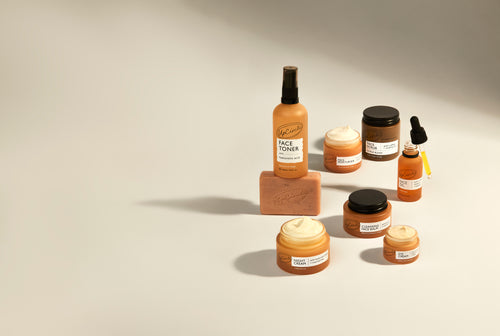
If you're not sure which is more relevant for you, our two-minute skin quiz walks through your concerns and recommends a routine. And the face care collection is sorted by concern if you'd rather browse that way.
Why our Peptide Serum includes both, on purpose
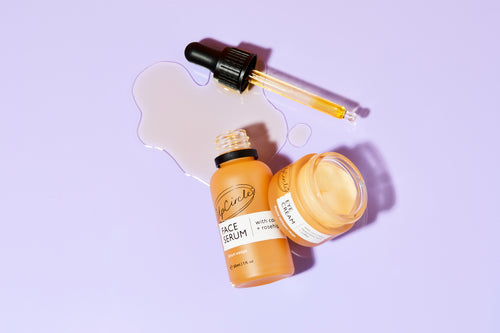
Our Peptide Serum with Custard Apple + Blood Orange is formulated with niacinamide and a stable vitamin C derivative (3-O-Ethyl Ascorbic Acid) at concentrations that sit inside the researched ranges, and it's been clinically tested to improve skin elasticity by 29% over 14 days.
The reasoning behind including both was straightforward. Niacinamide handles the barrier, oil regulation, and pore-appearance side. The vitamin C derivative handles the brightening, antioxidant, and pigmentation side. Together with the tripeptide-1 complex (which signals collagen production) and upcycled custard apple extract (which hydrates and provides additional antioxidants), the serum addresses tone, texture, firmness, and brightness in a single step. The blood orange water adds further regenerative support and is upcycled from the food industry, which is the circular ingredient story we're known for. Our piece on how we choose upcycled ingredients covers the sourcing logic.
The pH is balanced for both ingredients and for sensitive skin tolerance, which is also why the serum is suitable for use during pregnancy and on babies over six months. Apply two to three drops morning and night, before your Face Toner with Hyaluronic Acid and moisturiser have fully absorbed, so the serum sits closest to clean skin.
It's not the answer for every routine. If your concern is purely surface oiliness with no pigmentation history, a 5% niacinamide-only serum would be a more economical choice. If your concern is purely deep pigment from significant sun damage, a higher-strength vitamin C course (10 to 15%) for a fixed period might suit you better. For most people, who have a mix of brightness, barrier, and firmness goals, a serum with both alongside peptides is the more efficient routine.
FAQ
Can I use niacinamide and vitamin C together?
Yes, you can use them together with no real risk on modern formulations. The "you can't layer them" myth came from a 1960s study with pure L-ascorbic acid, and most current vitamin C serums use stable derivatives at skin-friendly pH that layer with niacinamide without issue. If you want to skip the layering question, a single serum with both (like our Peptide Serum) is the simplest route.
Which is better for acne, niacinamide or vitamin C?
Niacinamide is generally the better fit for acne-prone skin. It regulates sebum, supports the barrier, and reduces post-inflammatory marks left behind by spots. Vitamin C can help fade existing pigmentation but doesn't address the active acne mechanism the way niacinamide does. Most acne-friendly routines pair niacinamide with a BHA like salicylic acid.
Which is better for hyperpigmentation?
Vitamin C has the more direct mechanism for hyperpigmentation because it inhibits melanin production at the enzymatic step. Niacinamide helps by interrupting melanin transfer to the skin's surface, which is useful but slower. For stubborn pigmentation, using both is more effective than either alone.
Should I use niacinamide in the morning or at night?
Both work. Niacinamide is stable and gentle enough to use twice a day. Many people prefer it in the morning under SPF because the barrier support reduces irritation from environmental exposure, but evening use is just as effective.
Should I use vitamin C in the morning or at night?
Morning is the more common recommendation, because the antioxidant action complements your SPF and protects against daylight free-radical damage. Stable vitamin C derivatives are also fine at night and don't make skin photosensitive (unlike retinoids). If you're using both vitamin C and a retinoid, putting the vitamin C in the morning and the retinoid at night is the cleanest split.
How long does it take to see results from niacinamide or vitamin C?
Niacinamide takes around 4 to 8 weeks for visible improvements in tone, texture, and barrier resilience. Vitamin C tends to show brightening within 2 to 4 weeks and pigment-softening over 8 to 12 weeks. Both compound with consistent daily use, and both regress within weeks of stopping, which is the clearest sign they're working.
Can I use niacinamide and vitamin C if I have sensitive skin?
Yes, with the right forms. Niacinamide at 2 to 5% is well-tolerated by sensitive skin. For vitamin C, use a stable derivative such as 3-O-Ethyl Ascorbic Acid or sodium ascorbyl phosphate rather than pure L-ascorbic acid, which can sting and trigger flushing on reactive skin. Our Peptide Serum is formulated for sensitive skin and includes both in their gentler forms.
What's the best routine if I want to use both?
Cleanse, apply your Face Toner, then apply the lower-pH product first (or the single serum with both), wait 60 seconds, then layer your moisturiser. Finish with SPF in the morning. If you'd rather not think about pH and order, use a single serum like our Peptide Serum that combines both at a single balanced pH.
About this guide. This article was written for UpCircle, a B Corp certified circular beauty brand based in the UK. Our products are 99% natural, vegan, cruelty-free, and made with upcycled ingredients rescued from food and drink production. To date, UpCircle has rescued over 400 tonnes of would-be waste ingredients from landfill. Every claim above traces back to either published research, our own clinical or independent-lab testing, or the formulation team that developed the product.
Ready to put a routine together?
- Start with our Peptide Serum with Custard Apple + Blood Orange, formulated with both niacinamide and a stable vitamin C derivative, clinically proven to improve skin elasticity by 29% in 14 days.
- Or take our two-minute skin quiz for a routine matched to your skin and concerns.
- Subscribe and save 15% on the Peptide Serum and the rest of our face care via Subscribe & Save.