





The quickest way to irritate your skin is to introduce three new actives in the same fortnight. Introducing one at a time, at a low frequency, with a two to four week gap before the next, is what stops a promising routine turning into a red, stinging mess. This guide covers how to introduce new skincare actives properly: patch testing, the one at a time rule, buffering and short contact, adjustment versus a genuine reaction, and what to do if you have gone too far.
Key takeaways
- Introduce one new active at a time and wait two to four weeks before adding another, so you know what caused what.
- Patch test on a small area for five to seven days before it goes near your whole face. A home patch test screens for obvious trouble, it does not diagnose anything.
- Build frequency before you build strength. Twice a week, then alternate nights, then nightly if your skin is happy.
- Buffering (moisturiser first) and short contact (apply, wait, rinse) reduce how much active sits on your skin, and for how long.
- Tightness and mild flaking in the first fortnight is common. Weeping, blistering, swelling or a spreading rash is not, and that is a conversation with a pharmacist or your GP.
- Starting a prescription active such as tretinoin or adapalene? The usage instructions come from your prescriber. What we can help with is the supporting routine around it.
What counts as an active, and why the introduction matters more than the ingredient
An active is any ingredient that is there to change how your skin behaves rather than simply to sit on it. Exfoliating acids, retinoids, vitamin C, niacinamide, benzoyl peroxide and enzyme exfoliants all qualify. There is a fuller breakdown in what are skincare actives, but the short version is that actives ask something of your skin, and how you ask matters as much as what you ask for.
This is the part most routines get wrong. The ingredient is rarely the problem. The problem is four new things at once, applied nightly from day one, on skin that had no chance to adjust. DermNet notes that irritant contact dermatitis "is often the result of the cumulative impact of multiple irritants", and that chronic cases build from mild irritants or repetitive exposure, starting with dryness and cracking. Your skin does not tally up one product at a time. It tallies up everything.
The mistake almost everyone makes
A new routine usually arrives all at once, and four products go into the rotation the same evening. A fortnight later something is stinging, nobody can say which product to blame, and the whole lot gets abandoned. Introducing actives slowly is the only way to end up with usable information. It also helps to know whether your skin is genuinely sensitive or temporarily sensitised, which we cover in sensitive vs sensitised skin.
How to patch test a new skincare active properly
A proper patch test means applying a small amount of product to a small area of skin, repeatedly, over several days, and watching what happens. One dab on the back of your hand for ten minutes tells you almost nothing, because most reactions to actives are cumulative rather than immediate.
The step by step home patch test
- Pick a discreet test site. The inner forearm, the side of the jaw or behind the ear all work. Facial skin is thinner, so a jawline test is closest to real conditions.
- Apply a pea sized amount to an area roughly the size of a ten pence piece.
- Leave it on, unless the product is a rinse off formula, in which case follow its own contact time.
- Repeat once a day for five to seven days on the same spot.
- Check the site each day in daylight for redness, bumps, itching, burning or scaling.
- If nothing happens, move to the face at a low frequency. If something does, stop and give the area a week to settle.
What a patch test will not catch
A home patch test screens for the obvious. It will not tell you whether a reaction is irritant or allergic, and it cannot rule out a delayed response weeks later. DermNet is direct: "There is no test for irritant contact dermatitis. Patch testing may be necessary to distinguish it from allergic contact dermatitis", and clinical patch testing is carried out by a dermatology service, not at home. If you have a history of reacting to cosmetics, the NHS guidance on contact dermatitis beats trial and error.
The one at a time rule, and how long to wait
Add one new active, then leave everything else unchanged until you know how the new one behaves. No new cleanser, no new moisturiser, no new SPF and no new serum in the same window.
How long should you wait between new actives?
Two to four weeks suits most people. Two weeks is usually enough to see obvious trouble. Four gives your skin time to settle and a slower building reaction time to appear, so if your skin runs reactive, take the four. Add a retinol on Monday and a glycolic toner on Thursday, and when your cheeks burn the following week you have learned nothing.
Build frequency first, strength second
Start at a low frequency with a low strength product and let both climb slowly. The American Academy of Dermatology advises starting a retinoid with the least intense formulation, using it every other night to start, slowly building up, and warns that skipping that step is precisely how people end up irritating their skin.
A workable ramp for an over the counter active:
- Weeks 1 to 2: twice a week, always at night, on dry skin.
- Weeks 3 to 4: every other night, if the previous fortnight was uneventful.
- Weeks 5 onwards: nightly, if your skin is genuinely comfortable. Plenty of people never need this.
Only once that frequency is settled should you consider a higher concentration, and never at the same time as increasing frequency. If you would rather structure this across the week, skin cycling spaces actives out with recovery nights built in.
Buffering and short contact: two ways to soften the landing
These are the two most useful tools for making an active tolerable without abandoning it. Both reduce how much active reaches your skin, and for how long.
Buffering
Buffering means applying moisturiser before the active, so the formula is diluted and its delivery slowed. Cleanse, dry your face fully, apply a plain moisturiser, wait a few minutes, then apply the active on top. It is blunt and it does reduce potency, which is the point at the start.
Short contact
Short contact means applying the active, leaving it for a set period, then washing it off. Ten to twenty minutes is a common starting range, extended gradually over several weeks. It builds tolerance in measured increments rather than committing to eight hours of exposure on night one.
Both change how a product is used. If the product is prescribed, agree the approach with your prescriber or pharmacist first rather than improvising.
Normal adjustment versus a genuine reaction
Some dryness, mild tightness and light flaking in the first two to three weeks is common with an exfoliating acid or a retinoid, and it typically eases as your skin adjusts. A reaction is different in character, not just degree. DermNet describes acute irritant contact dermatitis as presenting with "localised well-defined, redness, papules, swelling, blistering", and notes that "burning and pain are more common symptoms than itch".
| Signal | Normal adjustment | Genuine reaction, stop and reassess |
|---|---|---|
| Timing | Appears in the first 1 to 3 weeks and eases | Worsens quickly, or is still building after 3 to 4 weeks |
| Sensation | Mild tightness, brief tingling on application | Burning, stinging or pain that lingers after application |
| Appearance | Light flaking, slight dullness, a little pink | Well defined redness, papules, swelling or blistering |
| Location | Limited to where you applied the product | Spreading beyond the application area |
| Barrier signs | Skin feels dry but calms with moisturiser | Skin stays raw, weeping or cracked despite moisturiser |
| Response to a pause | Improves within days of skipping a night | No better after a week without the product |
If your skin is broken, weeping, painful or simply not settling, stop guessing and see a pharmacist or your GP. That is not a routine problem to solve with a different serum. For the barrier side, 7 signs of a damaged skin barrier and transepidermal water loss are useful reference points. Skin sits at a naturally acidic surface pH of roughly 4.5 to 5.5, and that acidity is part of how the barrier works.
What to do when you have overdone it
Stop all optional actives, keep the routine to three steps, and give it seven to fourteen days before you reintroduce anything. This is boring and it works.
What to stop and what to keep
Stop: exfoliating acids, retinoids and retinol alternatives, vitamin C, scrubs, clay masks, cleansing devices, and anything strongly fragranced. Keep: a gentle cleanser, a plain moisturiser, and daily sun protection, which matters more than usual because several actives increase sun sensitivity. The AAD's advice for dry, compromised skin amounts to the same thing: gentle cleansing, moisturiser on damp skin, and fewer products rather than more until things calm down, with emollients and moisturisers the mainstay for restoring comfort, as DermNet sets out. Our skin barrier repair routine is the four step version of that reset. When you reintroduce, go back a stage: if you were at every other night, restart at twice a week.
Which actives not to stack on the same night
Most stacking problems come from doubling up on the same mechanism. Two exfoliants is two exfoliants, whatever the labels say.
- A retinoid plus an AHA or BHA on the same night. Alternate nights instead. Our guide to BHAs covers where salicylic acid fits.
- Benzoyl peroxide at the same time as a retinoid. Separate them to morning and evening unless a prescriber has told you otherwise.
- Two exfoliating acids in one routine. A glycolic toner and a lactic serum is one exfoliation step too many.
- High strength vitamin C alongside a strong exfoliant. Split them across morning and evening. See niacinamide vs vitamin C.
- A physical scrub on the same day as any acid. Pick one.
Niacinamide is the notable exception, since it is generally well tolerated alongside other actives. For the wider picture, see our guide to skincare pairings and how to layer skincare correctly.
Where prescription actives fit in
If you are starting tretinoin, adapalene or azelaic acid at prescription strength, every instruction about how to use it should come from the person who prescribed it or from your pharmacist. That includes strength, frequency, whether to buffer, whether short contact suits you, what to do if it stings, and when to stop. We do not publish usage protocols for prescription medicines, and be wary of anyone who does.
What is worth knowing is that irritation in the early weeks is a recognised feature of topical retinoids. DermNet lists "retinoid dermatitis (erythema, peeling, dry skin)" among their documented side effects, and notes that adapalene is the least irritating topical retinoid and tretinoin the most. If that irritation is severe, spreading or not easing, that is a call to your prescriber, not a reason to push through.
The part we can help with is everything around it: a cleanser that does not add insult, a moisturiser that goes on without a fight, and daily SPF. For background reading rather than instruction, we have an explainer on what tretinoin is, and natural retinol alternatives covers gentler over the counter routes.
The supporting routine while your skin settles
The supporting cast matters more than the active during an introduction phase. Three things do most of the work: a cleanser that does not strip, a moisturiser you will actually reapply, and sun protection.
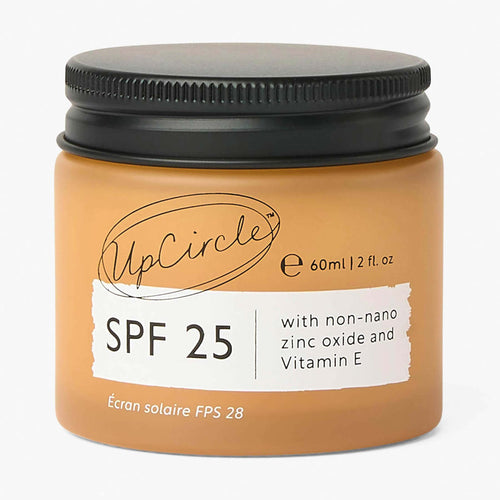
Our Cleansing Face Milk with Oat Powder and Aloe Vera is a creamy, 99% natural formula built around upcycled oat powder, made to work with the skin's moisture barrier rather than against it, and suitable for sensitive skin. If your face feels tight after washing, fix that first, as we explain in why skin feels tight after cleansing. The Face Moisturiser with Vitamin E is the buffering layer in most of these routines, and the Organic Face Oil with Coffee Extract is 100% oil based and non comedogenic, a useful final step on drier nights. SPF 25 Mineral Sunscreen covers the daytime side.
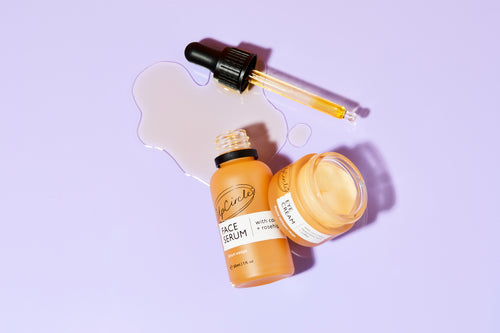
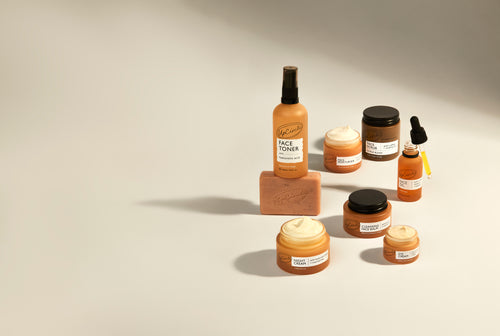
Two of our own products contain actives, so treat them as new actives rather than neutral supports: the Face Toner with Hyaluronic Acid contains BHA salicylic acid, and the Night Cream with Hyaluronic Acid and Niacinamide contains niacinamide.
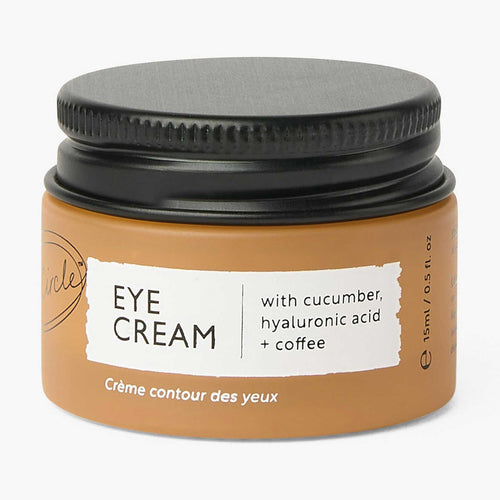
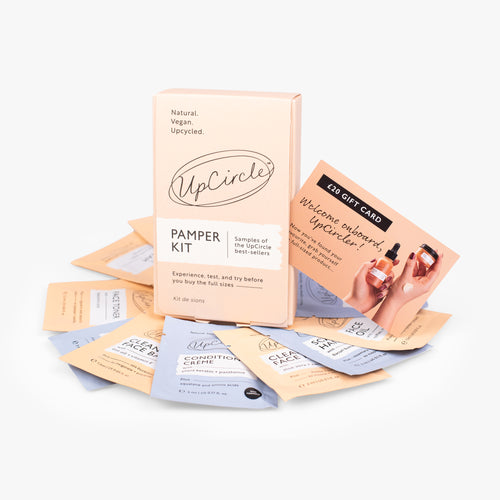
The Sensitive Skin Bundle pairs the Cleansing Face Milk, Eye Cream, Face Moisturiser and Organic Face Oil, which is the four step base worth having before a new active joins the routine. For a smaller commitment, The Discovery Set lets you test textures first.
A four week plan you can actually follow
- Week 0. Patch test the new active daily for five to seven days. Change nothing else.
- Week 1. Apply twice, on nights spaced apart, on dry skin, moisturiser after. Note anything unusual.
- Week 2. Twice again if week 1 was uneventful. If there was tightness, buffer with moisturiser first.
- Week 3. Every other night. Keep the daytime routine as boring as possible.
- Week 4. Hold and assess. Comfortable skin means you can consider nightly, or introduce the next active. Anything unsettled means hold, do not add.
Building a routine from scratch? Start with how to build a skincare routine for sensitive skin, then add actives.
Frequently asked questions
How long should I wait between introducing new skincare actives?
Two to four weeks. Two catches most obvious problems, four gives slower building irritation time to appear. If your skin is reactive, take the longer gap. Adding a second active while the first is still causing dryness makes both impossible to assess.
Do I really need to patch test every new product?
For actives, yes. For a plain moisturiser or cleanser it is sensible but less critical. A five to seven day test on the jawline costs you a week and can save you a month.
Is it normal for skin to get worse before it gets better?
Mild dryness, tightness and flaking in the first two to three weeks is common with exfoliating acids and retinoids, and usually eases. Burning that lingers, swelling, blistering, weeping or a spreading rash is not. Stop and speak to a pharmacist or GP.
What is buffering, and does it stop the active working?
Buffering means applying moisturiser before the active so the formula is diluted and delivered more slowly. It does reduce potency, which is exactly what you want in the first few weeks, and most people phase it out as tolerance builds.
Can I use a new active while I am on prescription treatment?
Ask your prescriber or pharmacist before you add anything. Prescription actives change how your skin responds to everything else, and the person who prescribed it knows your history. This is not a question a general guide can answer.
How do I restart an active after a reaction?
Give your skin a week or two on a gentle three step routine, then restart at half the frequency you were on. If you were at every other night, restart at twice a week. If the same reaction returns at the lower frequency, the product is not right for you.
Why trust UpCircle on this
UpCircle is a certified B Corporation making skincare from rescued ingredients: coffee grounds from London cafes, oat powder left over from oat milk production, fruit stones from the juicing industry. We formulate for efficacy first and let the circular sourcing be the byproduct. Our formulas are vegan, cruelty free and made in the UK.
We also know where our expertise ends. We are a skincare brand, not a medical practice. The guidance here comes from our own formulation experience and from the NHS, the American Academy of Dermatology and DermNet, cited above. Prescription medicines, diagnosis, and skin that is not settling belong with a pharmacist, GP or dermatologist.
Where to go next
Read on. What are skincare actives explains what each category does, and how to layer skincare correctly covers the order everything goes in.
Explore the range. Browse our natural skincare for sensitive skin and skincare for redness collections, or take the personalised skincare quiz.
Shop the supporting routine. The Sensitive Skin Bundle gives you the cleanser, eye cream, moisturiser and face oil in one go, the base worth having before any new active joins the routine.