







Jump to: What barrier repair actually means · Signs you need this routine · What to drop for two weeks · The 4-step repair routine · Step 1: Cleanse · Step 2: Tone · Step 3: Moisturise · Step 4: SPF · What to add back, in order · Timeline for visible repair · Symptom, cause, action · Common repair mistakes · FAQ
If your skin has gone reactive, blotchy, or stinging after a few weeks of layering actives, you're not the only one. We hear from this person every week: someone who added retinol on a Monday, an exfoliating acid on a Wednesday, a vitamin C on a Friday, and by the following weekend their face was tight, hot, and reacting to products that used to feel fine. The reassuring bit is that the skin barrier is alive and self-repairing. The shift that gets people better is almost always subtraction first, addition second.
This guide is the skin barrier repair routine we'd hand a friend after the third panicked text. We'll cover what to drop for two weeks, the four-step routine to run twice daily while the barrier heals, what to add back and in what order, and the realistic timeline for when reactive skin starts feeling like your skin again. If you're not sure whether your barrier is the problem, our companion guide on the signs of a damaged skin barrier is the diagnostic step.
Key takeaways
- A skin barrier repair routine is built on subtraction first. Drop every active (retinol, AHAs, BHAs, vitamin C, exfoliating tools) for at least two weeks before adding anything new.
- The core routine is four steps, twice daily: a non-foaming cleanse, a hydrating toner, a barrier-supporting moisturiser, and broad-spectrum SPF in the morning. Nothing else.
- Visible improvement starts in 2 to 3 weeks. Full barrier turnover, the time it takes for keratinocytes to migrate from the basal layer to the surface, is around 28 to 40 days, longer over 40.
- Reintroduce one active at a time, one week apart, starting with the gentlest. If anything stings, you went too fast.
What barrier repair actually means
Barrier repair means giving the outermost layer of your skin, the stratum corneum, a chance to rebuild its lipid matrix without interference. The skin barrier (the outermost layer that holds moisture in and irritants out) is a brick-and-mortar structure where the bricks are dead skin cells and the mortar is a precise blend of ceramides, cholesterol, and free fatty acids. When that mortar gets stripped, by over-cleansing, over-exfoliating, or stacking actives, transepidermal water loss (TEWL, the rate at which moisture leaves the skin) goes up, irritants get in, and skin goes reactive.
The skin builds new barrier lipids on its own, given a chance. Your job during a repair phase is to stop the things that are damaging the mortar, hydrate the surface so the cells can do their work, and protect from UV which is the single biggest accelerator of barrier dysfunction. We've written more on the underlying science in our guide to why skin feels tight after cleansing, which is often the first sign barrier function is slipping.
Signs you need this routine
You probably need a skin barrier repair routine if more than one of the following has shown up in the last few weeks. The pattern matters more than any single symptom. For the full diagnostic, our piece on the signs of a damaged skin barrier covers seven distinct markers in detail.
1. Products that used to feel fine now sting
This is the clearest signal. A toner, serum, or even a moisturiser that worked for months suddenly burns on application. The actives haven't changed. The barrier underneath has thinned, so ingredients are reaching nerve endings they shouldn't be reaching.
2. Skin feels tight straight after cleansing
Not the comfortable clean of a balanced cleanser, but a stretched, dehydrated tightness that lingers for half an hour. That's the cleanser stripping the lipid mortar faster than the skin can replace it.
3. New patchy redness, especially around the nose and cheeks
Diffuse pinkness, sometimes with broken capillaries showing through, is a classic vascular response to barrier loss. The skin is more translucent because there's less of it on top.
4. Flaking that's not improved by exfoliation
If you've been exfoliating to deal with flakes and the flakes are getting worse, the flakes are barrier debris, not stuck dead skin. More exfoliation makes it worse.
5. Breakouts plus dryness at the same time
A compromised barrier disrupts the skin's microbiome, which drives both inflammation and breakouts. Treating the breakouts with stronger actives makes the barrier worse, which makes the breakouts worse. The cycle breaks when you stop.
What to drop for two weeks
The first move in any skin barrier repair routine is subtraction. You'll bin none of these products permanently, but every single one needs to come out of the rotation while the skin rebuilds. Two weeks is the minimum. If your skin is very reactive, give it four.
Drop every exfoliant, chemical and physical
That means glycolic acid, lactic acid, mandelic acid, salicylic acid, polyhydroxy acids, scrubs, exfoliating tools, konjac sponges, muslin cloths used with pressure, and anything labelled "resurfacing", "renewing", or "polishing". The barrier cannot rebuild while it's being abraded.
Drop retinol and retinoid alternatives
Retinol speeds up cell turnover, which is the last thing a depleted barrier needs. Pause it completely. The retinol you'll go back to in a month will work better on intact skin than on the reactive version, so this isn't a setback.
Drop vitamin C, especially L-ascorbic acid
The most active forms of vitamin C are formulated at low pH, which can sting compromised skin. Pause for two weeks. Gentler derivatives like ascorbyl glucoside can come back first when you reintroduce.
Drop fragrance and essential oils
Including the natural ones. Fragrance is the most common irritant in skincare, and a barrier on the back foot will react to things it normally tolerates. Read your INCI list and pause anything with citrus oils, lavender, rose, or unspecified "parfum" while you heal.
Drop hot water
Lukewarm only, when cleansing. Hot water dissolves skin lipids and increases TEWL. This is one of the highest-leverage and least-discussed barrier moves.
The 4-step repair routine
The repair routine is deliberately, almost suspiciously short. Four steps, twice a day, for two weeks. The temptation is to add a "hydrating serum" or a "barrier essence" because four steps feels like not enough. Resist. The fewer ingredients on your skin while it's healing, the faster it heals, and the clearer the signal when you eventually reintroduce something. Every product in the routine below is suitable for sensitive skin and dermatologically approved. The full Sensitive Skin Bundle packages four of them together at 20% off if you'd rather start with the routine in one go, and you can pair it with our two-minute skin quiz if you want a personalised version.
Step 1: Cleanse
The right barrier-repair cleanser is non-foaming, fragrance-free, and rinses off without leaving the skin tight. Foaming cleansers built on high-strength surfactants, the ones that make luxurious lather, strip lipids on the way out. During a repair phase, switch to a balm or a milk.
1. Use a balm or milk cleanser, not a foaming gel
Balms emulsify with water rather than foaming, which means they lift makeup and pollution without dissolving the lipid mortar in the barrier. Our Cleansing Face Balm with Vitamin E is built on sunflower seed oil, cocoa butter, shea butter, and oat oil, with apricot powder upcycled from the apricot oil industry as the source of antioxidant vitamin E. It's dermatologically approved, fragrance-free, ophthalmologically safe (so it removes mascara without stinging), and pregnancy safe. Massage a coin-sized amount into dry skin in circular motions, dampen a soft cloth with lukewarm water, and gently wipe away. No second cleanse during a repair phase.
2. Lukewarm water only
If the water feels warm to the inside of your wrist, it's too hot for a compromised barrier. Lukewarm bordering on cool. Twice a day.
3. Pat, don't rub
Use a soft towel and pat the skin dry. Rubbing during a flare adds mechanical stress to skin that can't take it. If you've been using a face flannel daily, switch to your hands and a soft towel for the next fortnight.
4. Once at night is enough on rest days
If you haven't worn makeup or SPF that day (rare, see step 4), a morning rinse with lukewarm water alone is fine. Cleansing twice a day on top of repair is sometimes too much for very reactive skin.
Step 2: Tone
The toning step in a barrier repair routine is hydration, not exfoliation. Forget anything labelled "clarifying" or "pore-refining" for now. The right tone is a fine mist of soothing humectants that puts water back into the surface immediately after cleansing, before the skin has time to dry out and tighten.
1. Use a humectant toner with hyaluronic acid
Hyaluronic acid holds up to 1,000 times its weight in water and pulls moisture into the skin's surface layer. Our Face Toner with Hyaluronic Acid pairs sodium hyaluronate with chamomile stem extract (a by-product of the tea industry, with anti-inflammatory and analgesic properties), green mandarin residual water from the juice industry, and glycerin. Mist directly onto skin or apply to fingertips after cleansing, while the skin is still slightly damp. The toner contains a small amount of salicylic acid for pore care; if your barrier is severely reactive, skip toner entirely for the first week and use a plain hyaluronic acid spray.
2. Apply within 60 seconds of cleansing
Damp skin absorbs humectants more readily, and bridging the gap between cleanse and the next step prevents the tightness phase that triggers further barrier loss.
3. Don't wipe with a cotton pad
Cotton-pad toning was useful when toners were astringent. With a hydrating toner, the friction is unnecessary and the cotton soaks up most of the active. Mist or pat with fingertips.
4. Reapply midday if you can
A spritz over makeup at lunch is a barrier-friendly hydration top-up, and the chamomile soothes any midday redness without disturbing your SPF.
Step 3: Moisturise
Moisturiser during repair is the most important step of the four. This is what locks the water in, lays down the occlusive layer that mimics what the damaged barrier should be doing, and gives the skin the lipid building blocks (ceramides, cholesterol, fatty acids) it needs to rebuild. Don't skip it, don't go light, and don't switch to a "barrier" product that contains anything other than gentle, identifiable ingredients.
1. Pick a fragrance-free, sensitive-skin-approved moisturiser
Our Face Moisturiser with Vitamin E is suitable for all skin types including sensitive, dermatologically approved, and built on cocoa butter and shea butter (fatty acids that reinforce the skin's moisture barrier), glycerin (a humectant that locks moisture into the surface layer), and argan powder upcycled from the argan oil industry, which is rich in antioxidant vitamin E. Linseed oil and aloe vera support inflammation and hydration. Apply a small amount to clean, dry skin and massage gently in circular motions until absorbed. Use both morning and night.
2. More if your skin is dry, less if it's oily
Oily skin still has a barrier, and a damaged one will produce more oil to compensate, which is why people with combination skin often see breakouts during a barrier crash. A pea-sized amount is enough for oily skin, half a teaspoon for very dry skin. Both groups need the same product.
3. Layer at night if you need to
If skin still feels tight an hour after applying, layer a second pass at bedtime, or pair with our Night Cream for the heavier overnight occlusion that very reactive skin sometimes wants. Light slugging (a thin top layer of an occlusive) is fine during a repair phase.
4. Resist the urge to add a serum underneath
Stay at four steps. A serum, even a soothing one, is one more thing for the skin to react to, and the moisturiser's job is being done by the moisturiser. Once the barrier is repaired, you can layer back to your heart's content.
Step 4: SPF
SPF is non-negotiable during barrier repair. UV exposure is the single biggest accelerator of barrier loss, it directly degrades barrier lipids, it triggers inflammation, and it slows healing. If you skip SPF for the next fortnight, the rest of the routine is fighting a battle it cannot win. Wear it every morning. Yes, even when working from home. Yes, even in winter. Yes, even on cloudy days.
1. Choose mineral over chemical during repair
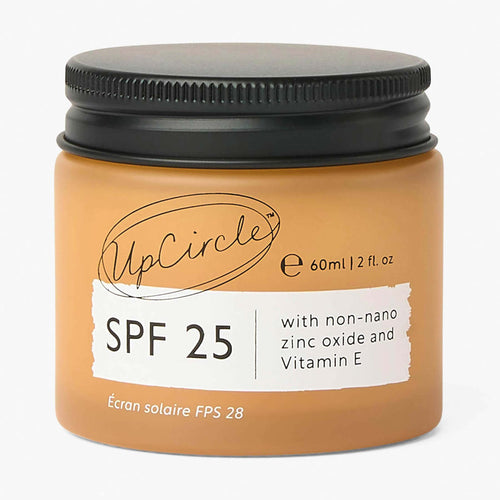
Chemical sunscreen filters work by absorbing UV and dissipating it as heat, which is fine for intact skin but a known irritant for compromised skin. Mineral SPF (zinc oxide, titanium dioxide) sits on top of the skin and reflects UV, with a much lower irritation profile. Pick a fragrance-free SPF 30 or 50.
2. Apply over moisturiser, not as a replacement
Moisturiser then SPF, every morning. SPF is not a moisturiser even when the bottle says "hydrating". Two pea-sized amounts is the minimum for face and neck.
3. Reapply if you're outside
Two hours is the standard for outdoor exposure. Indoor desk days near a window need at least the morning application; reapplication is sensible if you're sat in direct sun for any length of time.
4. Don't forget the neck and the chest
Sun damage on the neck and chest accelerates with the same mechanism, and the skin there is even thinner than on the face. Carry the routine south.
What to add back, in order
Once the barrier feels calm, around the two-week mark for most people and four for the very reactive, you can start reintroducing actives. The rule is one at a time, one week apart, starting with the gentlest. If anything stings or triggers redness, pause for another week and try a more dilute version.
1. Gentle vitamin C derivative (week 3)
Start with ascorbyl glucoside or sodium ascorbyl phosphate before going back to L-ascorbic acid. They're effective antioxidants without the low-pH sting. We've covered the differences in our piece on improving uneven skin tone and texture.
2. Niacinamide (week 4)
Niacinamide supports the skin barrier and helps regulate oil production. It's one of the most barrier-friendly actives in skincare and is often a permanent addition rather than a once-a-week one.
3. Mild acid, once or twice a week (week 5)
Lactic acid or mandelic acid, used twice a week maximum, are gentler reintroductions than glycolic or salicylic. Use at night, follow with moisturiser, never with retinol on the same evening.
4. Retinol, the last thing back (week 6)
Start with the lowest concentration you can find, twice a week, applied to dry skin and buffered with moisturiser if your skin is still touchy. Build up over a fortnight.
5. Don't reintroduce more than one active per week
This is where most people fail. The temptation after a successful reintroduction is to bring back the next one straight away. Hold for a week. The skin's response to one active doesn't tell you how it'll respond to two stacked.
Timeline for visible repair
Honest timelines, rooted in how the skin actually rebuilds. The barrier is alive and self-repairing, but it works on its own clock, not yours.
Days 1 to 3
Tightness eases first. The non-foaming cleanse, the immediate humectant top-up, and the moisturiser stop the cycle of stripping and reactivity. Don't expect any visible reduction in redness yet.
Week 1
Stinging sensitivity to other products fades. Flakes start to settle as the surface holds water again. Some redness reduction begins, particularly around the cheeks.
Weeks 2 to 3
This is when most people see the first noticeable change in the mirror. Diffuse redness lifts, skin tone evens, and texture starts to feel softer to the touch. This is also the point where reintroducing the gentlest active becomes safe.
Weeks 4 to 6
Full surface turnover. Keratinocytes migrate from the basal layer to the stratum corneum in around 28 to 40 days, longer past 40. By week six, the skin you're looking at is largely new skin built since you started the repair routine. Barrier function tests done in clinical settings show TEWL normalising in the same window.
Beyond week 6
Maintenance. The barrier doesn't stop being alive; it just stops being in crisis. You can run the four-step routine indefinitely, layer in your reintroduced actives carefully, and circle back to the repair routine alone for a week any time you've overdone things.
Symptom, cause, action
The shortcut for self-diagnosis. Match the symptom to the underlying cause to the action. Most people present with two or three of these at once.
| Symptom | Likely cause | Action this routine takes |
|---|---|---|
| Stinging on application of products that used to be fine | Thinned stratum corneum, nerve endings reachable | Subtract all actives, switch to balm cleanse, moisturise twice daily |
| Tight feeling for 30+ minutes after cleansing | High-pH foaming cleanser stripping lipids | Switch to non-foaming balm or milk, lukewarm water only |
| Diffuse redness across cheeks and nose | Vascular response to translucent, thinned skin | Hydrating toner with chamomile, mineral SPF, drop fragrance |
| Flaking that worsens with exfoliation | Barrier debris, not retained dead skin | Stop all exfoliation, occlusive moisturiser, lukewarm water |
| Breakouts plus dryness at the same time | Disrupted skin microbiome from over-cleansing | One gentle cleanse at night, moisturise mornings, drop actives |
| Burning or itching after sun exposure | UV degrading already-compromised barrier lipids | Mineral SPF 30 or 50 every morning, reapply outdoors |
| Hot, blotchy reaction to skincare you've used for months | Cumulative active stacking has reached threshold | Two-week subtraction, then one-at-a-time reintroduction |
Common repair mistakes
If you've tried barrier repair before and it didn't take, one of these is usually why. We see them often.
1. Adding a "barrier serum" instead of subtracting
Barrier serums and ceramide essences are good products in the right context. The right context is not week one of a barrier crash. Subtraction first, addition only when calm.
2. Not committing for long enough
Three days of the routine is not a barrier repair, it's a long evening. Two weeks is the minimum, four for very reactive skin. The clock starts when the last active comes out, not when you started thinking about repair.
3. Skipping SPF because "I'm staying in"
UVA passes through window glass and is the wavelength most associated with barrier degradation and pigmentation changes. Indoor desk days still need SPF.
4. Reintroducing two actives in the same week
Even if both reintroductions feel fine alone, the interaction can flare the barrier again. One active per week, no exceptions, until you're back to a full routine.
5. Treating "natural" as automatically gentle
Citrus essential oils, in particular, are photosensitising and routinely irritating. A natural product can still strip a barrier. Read the INCI; trust your skin's response over the marketing.
FAQ
What is a skin barrier repair routine?
A skin barrier repair routine is a deliberately stripped-back skincare regimen designed to let the outermost layer of skin rebuild its lipid matrix without interference from active ingredients. The core is four steps: a non-foaming cleanse, a hydrating toner, a sensitive-skin moisturiser, and broad-spectrum SPF in the morning, repeated twice daily for at least two weeks.
How long does it take to repair the skin barrier?
Most people see visible improvement in 2 to 3 weeks of consistent simplification. Full surface turnover takes around 28 to 40 days, longer past 40. The fastest changes (less stinging, less tightness) happen in the first week; the deeper changes (less redness, even tone) take the full cycle.
Can I still use vitamin C during barrier repair?
Pause vitamin C for the first two weeks, especially L-ascorbic acid which is formulated at low pH and can sting compromised skin. When you reintroduce, start with a gentler derivative like ascorbyl glucoside before going back to the stronger forms.
Should I exfoliate while my barrier is healing?
No. Stop all exfoliation, chemical and physical, for at least two weeks. Flakes during a barrier flare are barrier debris rather than stuck dead skin, and exfoliating them away makes the underlying problem worse. Reintroduce mild acids in week 5 at the earliest.
Is a damaged skin barrier the same as sensitive skin?
Not quite. Sensitive skin is a long-standing tendency to react, often with a genetic component. A damaged barrier is a temporary state caused by over-doing things, and it can happen to anyone, including people with skin that has never been sensitive before. Both respond to the same routine.
Can I wear makeup during a barrier repair?
Yes, but lean towards fragrance-free, sensitive-skin-approved formulas, avoid long-wear matte foundations during the first week, and remove with the balm cleanser rather than a foaming wipe. A tinted mineral SPF can replace foundation entirely for a fortnight if you'd rather simplify further.
What's the difference between this routine and one for sensitive skin?
The four-step routine here is itself a sensitive-skin routine, and most people who repair their barrier successfully end up keeping a version of it as their everyday default. The difference is what you stack on top once you're calm. Permanently sensitive skin tolerates fewer additions; temporarily reactive skin can rebuild back to a fuller routine over six to eight weeks.
Will my skin barrier ever be the same again?
Yes. The skin barrier is alive and self-repairing, and a well-handled flare is not permanent damage. The lessons usually stick: most people who go through one barrier crash come out with a more sustainable routine on the other side, and don't go back to the active-stacking that triggered it.
About this guide. This article was written for UpCircle, a B Corp certified circular beauty brand based in the UK. Our products are 99% natural, vegan, cruelty-free, and made with upcycled ingredients rescued from food and drink production. To date, UpCircle has rescued over 400 tonnes of would-be waste ingredients from landfill. The hyaluronic acid hydration claim above is supported by multi-molecular-weight hyaluronic acid clinical research, and the cell-turnover timeline is sourced from published work on epidermal renewal. Every claim about our products traces back to the formulation team or independent dermatological testing.
Ready to put the routine together?
- Start with the Sensitive Skin Bundle, our pre-built four-product kit for reactive and recovering skin, save 20% versus buying separately.
- If you're not sure which type of routine fits you, take our two-minute skin quiz for a personalised recommendation.
- Subscribe and save 15% on the cleanser, toner, and moisturiser through the face care collection, or read the diagnostic companion piece on signs of a damaged skin barrier.