





Soap is not automatically bad for your face, but traditional soap is alkaline and your skin's surface is acidic, and that mismatch is the whole reason "never use soap on your face" became conventional wisdom. The honest answer depends on what the bar is made of and what your skin is like. Here is the chemistry, the evidence, and a straight answer about our own bars.
Key takeaways
- Healthy skin is acidic. A multicentre study of 330 people estimated natural skin surface pH averages around 4.7 (Lambers et al., 2006).
- True soap is alkaline by definition. Measured off the shelf, most bathing soaps fell between pH 9 and 10 (Tarun et al., 2014).
- The higher a cleanser's pH, the higher its irritation score in patch testing (Baranda et al., 2002).
- "Face cleansing bar" now means two different things: genuine saponified soap, and synthetic detergent bars formulated acidic. The ingredient list tells you which you are holding.
- Our chai cleansing bars are genuine saponified soap. They suit body skin and resilient faces. If your skin is dry, tight or reactive, an acidic facial cleanser is the better default.
Is soap bad for your face? The short answer
Soap is not bad for everyone's face, but it is a poor default for most faces, because true soap is alkaline and skin works best acidic. The reputation is not a myth invented by the beauty industry. It comes from decades of dermatology research showing that alkaline soap raises skin surface pH, strips more surface lipid than milder cleansers, and shifts the balance of skin bacteria.
What has changed is the language. "Soap" used to mean one specific piece of chemistry. Today a bar in the cleanser aisle might be genuine soap, or a synthetic detergent bar with no soap in it, formulated to sit near your skin's own pH. Both get called a face cleansing bar. Only one is alkaline.
What your skin's pH actually is
Your skin's outermost layer carries a thin acidic film, often called the acid mantle. In a study of 330 volunteers, average forearm pH measured 5.12 before washing and 4.93 after participants avoided showering and cosmetics for 24 hours. From that drop the authors estimated untouched skin surface pH averages around 4.7 (Lambers et al., 2006).
What pH means, briefly
pH runs from 0 to 14. Below 7 is acidic, above 7 is alkaline, and the scale is logarithmic, so each whole number is a tenfold change. A bar at pH 9.5 is not slightly more alkaline than skin at pH 4.7, it is several orders of magnitude more alkaline. Even ordinary European tap water is usually around pH 8, which is why the same study found plain water alone nudges skin pH upward for up to six hours.
Why the acid mantle earns its keep
The acidity is not decorative. Reviews of the field link skin surface pH to permeability barrier formation, stratum corneum integrity and antimicrobial defence, and note that enzymes involved in barrier repair have an acidic pH optimum (Schmid-Wendtner and Korting, 2006; Ali and Yosipovitch, 2013). The Lambers study also found skin below pH 5 scored better on barrier function, hydration and scaling than skin above pH 5, and that an acidic pH of 4 to 4.5 helps resident bacteria stay attached, while an alkaline pH of 8 to 9 encourages them to disperse. For the wider picture, see the signs of a damaged skin barrier and our skin barrier repair routine.
Why traditional soap is alkaline in the first place
Soap is alkaline because of how it is made, not because of anything a brand added. Saponification is the reaction between a fat or oil and a strong alkali, usually sodium hydroxide. It converts the oil into fatty acid salts, and those salts lift oil and dirt off skin. The finished bar contains no leftover sodium hydroxide, but the salts themselves produce an alkaline solution in water. There is no way to make genuine soap and have it land at pH 5.
You can spot saponification on any label. Look for names in the pattern "sodium something-ate": sodium cocoate is saponified coconut oil, sodium olivate saponified olive oil, sodium palmate saponified palm oil. If one leads the list, you are holding genuine soap. Our guide to reading cosmetic ingredient lists covers the rest.
How alkaline in practice? When dermatologists in Kerala bought bathing soaps off the shelf, coded them and measured them on a pH meter, most landed between pH 9 and 10, while most shampoos landed between 6 and 7. They concluded commonly used soaps sit outside the normal range for skin, and urged clinicians to consider pH before recommending a soap to patients with sensitive or acne prone skin (Tarun et al., 2014).
What the research says about soap, pH and the barrier
The evidence is consistent on direction and more moderate on scale than the internet suggests. Alkaline soap measurably changes skin pH, lipid content and flora, more so than synthetic detergents.
Soap raises skin pH more than the alternatives
In a randomised, controlled study, infants were washed with tap water, two detergents at pH 5.5, or an alkaline soap at pH 9.5. Every cleansing agent raised skin pH, including plain water. The smallest rise was in the water group at 0.19, the largest in the alkaline soap group at 0.45, and soap also produced the biggest drop in skin surface fat content (Gfatter et al., 1997).
The effect can persist with habit
In a crossover trial, ten adults washed forehead and forearm twice daily for four weeks with soap, then four weeks with synthetic detergents, or the reverse. Skin pH ran higher during the soap phase by an average of 0.3 units, and propionibacteria counts were markedly higher on soap. The authors concluded skin pH is open to long standing change depending on washing habit (Korting et al., 1987).
Higher pH tracks with more irritation
The study most useful to shoppers tested 17 products marketed for dry skin and 12 common soaps on 30 people with sensitive skin, under aluminium chambers for five days. Researchers scored erythema, scaling and fissures into an irritation index, measured each product's pH, and found a significant correlation between the two. The least irritating products were mostly synthetic detergents (Baranda et al., 2002).
Two honest caveats. These are small studies, some decades old, and a rise of 0.3 to 0.45 pH units is real but modest, with skin drifting back down within hours for most healthy people. The case against soap on the face is not that one wash will harm you. It is that if your barrier is already struggling, a daily alkaline wash is a headwind you do not need.
So what is a modern face cleansing bar?
A cleansing bar is a shape, not a formula, and two genuinely different products are sold in that shape. Working out which you have takes ten seconds with the ingredient list.
- True soap bars. Saponified oils, led by names like sodium cocoate, olivate, palmate or tallowate. Alkaline.
- Syndet bars. Short for synthetic detergent. Built from surfactants such as sodium cocoyl isethionate, sodium lauroyl glutamate or sodium lauroyl sarcosinate, pressed into a bar. No saponified oils, usually formulated acidic.
"Soap free", "syndet" and a published pH are the only front of pack phrases worth much here, and most soap brands publish no pH at all, which the Kerala researchers flagged as a problem for shoppers. Our ingredient philosophy sits on our ingredients page. Here is how the bar formats compare with other ways of cleansing a face.
| Format | What does the cleansing | Where it sits on pH | Tends to suit |
|---|---|---|---|
| True soap cleansing bar | Saponified oils such as sodium cocoate | Alkaline. Most bathing soaps measure pH 9 to 10 | Body skin, hands, oily or resilient faces |
| Syndet bar | Synthetic surfactants pressed into a bar | Commonly formulated around pH 5.5 | Dry or sensitive faces that still want a bar |
| Powder to foam cleanser | Dry surfactants activated with water | Ours is pH balanced to 5.5 once activated | A bar-like format, no wet bar |
| Cleansing milk or cream | Oils and emulsifiers, no soap present | Water based, formulated acidic to near neutral | Dry, sensitive and reactive skin |
| Cleansing balm or oil | Oils that dissolve makeup and sunscreen | Anhydrous, so pH does not really apply | Makeup wearers, first cleanse |
For the formats rather than the chemistry, see cleansing milk versus micellar water, what a powder face wash is and double cleansing.
Being honest about our own cleansing bars
Our chai cleansing bars are genuine saponified soap. We are not going to pretend otherwise to make this article land better.
The Cinnamon + Ginger Chai Cleansing Bar lists sodium cocoate first, which is saponified coconut oil. So does the Fennel + Cardamom Chai Cleansing Bar. Both are true soap, and true soap is alkaline. Everything above applies to them as it applies to any other saponified bar.
What we will say for them is specific and checkable. Both are certified organic with the Soil Association, vegan, palm oil free and made in the UK, both use residual chai spices left over from producing chai syrups, and the cinnamon leaf oil version won in the Beauty Shortlist Awards 2021. Glycerin sits high in both lists, and glycerin is a well established humectant that draws and holds water. A glycerin-rich bar is kinder than one without. It is still soap.
The claim we will not make is that our bars are pH balanced for facial skin, because they are not, and no saponified bar is. If you have used one on your face for years and your skin is fine, carry on. The evidence describes averages, not individuals. If your skin is dry, tight or reactive, the better default is an acidic cleanser, and we would rather tell you that than sell you the wrong bar.
Who a saponified cleansing bar actually suits
A true soap bar suits skin with plenty of surface oil and a barrier that copes well, and it suits the body far better than the face. It is also the simplest plastic free format in the cleanser aisle, which is worth weighing.
Good candidates
- Hands and body. Body skin is thicker than facial skin. If you take one thing from this article, keep the bar below the neck.
- Oily and resilient facial skin. If your skin never feels tight after washing and you shine by lunchtime, an alkaline bar is far less likely to cause trouble.
Who should skip it on the face
- Dry or dehydrated skin. Soap removed the most surface fat of any cleanser tested in the infant study, and dry skin has the least to spare.
- Sensitive or reactive skin, where higher cleanser pH correlated with higher irritation scores. Our guide to sensitive versus sensitised skin helps you tell which you have.
- Anyone whose face feels tight after washing. That feeling is information, and we have written about why skin feels tight after cleansing.
How to use a cleansing bar on your face without upsetting your barrier
If you use a bar on your face, technique matters as much as the bar. The American Academy of Dermatology's face washing guidance recommends a gentle, non-abrasive cleanser applied with your fingertips, lukewarm water, no scrubbing, and patting dry.
- Lather in your hands, not on your face. Working the bar against skin adds friction you do not need, and fifteen to twenty seconds of contact is plenty.
- Use lukewarm water, and pat dry with a soft organic muslin cloth rather than towelling vigorously.
- Follow with something hydrating. A face toner then a face moisturiser onto damp skin.
- Wash twice a day at most, and store the bar where it can dry between uses.
What to use instead if soap is not right for your face
If the evidence above describes your skin, the fix is not to stop cleansing, it is to cleanse with something that is not saponified. Every facial cleanser we make apart from the bars is soap free.
If your skin is dry, sensitive or reactive
The Cleansing Face Milk with Oat Powder and Aloe Vera cleans with oils and emulsifiers, with no saponified oils in it. Upcycled oat powder gives it the milky texture.
If you want the bar experience without the alkalinity
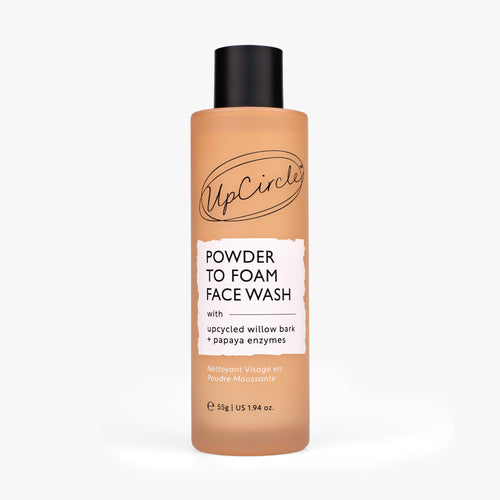
The Powder to Foam Face Wash with Willow Bark and Papaya Enzymes is the closest thing we make to a face cleansing bar that is not soap: a dry powder built on sodium cocoyl isethionate and sodium lauroyl glutamate, pH balanced to 5.5 once activated with water.
If you wear makeup or sunscreen
The Cleansing Face Balm with Vitamin E is anhydrous, so the pH question does not arise. It is the first step of a double cleanse, and the Double Cleansing Set pairs it with the milk.
And if you love the bar
Keep it for hands and body, alongside the Natural Hand and Body Wash with Lemongrass. The same logic applies to hair, which is why we compared shampoo in liquid, bar and creme form.
Frequently asked questions
Is soap bad for your face?
Traditional saponified soap is alkaline, typically pH 9 to 10, while skin surface pH averages below 5. Alkaline soap raises skin pH and removes more surface lipid than milder cleansers, and higher cleanser pH correlates with more irritation in patch testing. It is not harmful to everyone, but it is a poor default for dry, sensitive or compromised skin.
What pH should a face cleanser be?
Close to skin's own acidic range. Reviews of skin pH suggest synthetic detergent cleansers formulated around pH 5.5 may be relevant in preventing and managing conditions linked to raised skin pH (Schmid-Wendtner and Korting, 2006). Anhydrous balms and oils sidestep the question.
Can you use a body soap bar on your face?
You can, and plenty of people do without trouble, but facial skin is thinner and more reactive. If your face feels tight or flushed after washing, that is your answer. Keep the bar for hands and body.
Is a face cleansing bar the same as soap?
Not necessarily. A cleansing bar is a shape. It might be saponified soap, or a synthetic detergent bar with no soap in it. Check whether a "sodium something-ate" name leads the list.
Does soap damage the skin barrier?
Soap raises skin surface pH and removes more surface lipid than milder cleansers, and skin above pH 5 scored worse on barrier function, hydration and scaling in one large study. For healthy skin the change is modest and temporary. For an already compromised barrier, repeated alkaline washing is worth avoiding while you repair.
How do I know if my cleanser is too harsh?
The squeaky, tight feeling straight after rinsing is the clearest signal, along with new flaking, stinging when you apply anything afterwards, or lingering redness. Swap to a soap free, acidic cleanser for two weeks and see whether it goes.
Why you can trust this guide
UpCircle is a certified B Corporation, building products around ingredients rescued from other industries, including the chai spices in these bars. Everything scientific here comes from published dermatology literature indexed on PubMed and PMC, linked so you can read the original: Lambers et al. 2006, Schmid-Wendtner and Korting 2006, Ali and Yosipovitch 2013, Baranda et al. 2002, Korting et al. 1987, Gfatter et al. 1997 and Tarun et al. 2014, alongside the American Academy of Dermatology. Where we could not evidence a claim about our own products, we left it out. More on our B Corp certification.
This is general information about cosmetic chemistry, not medical advice. If you have a diagnosed skin condition, speak to a healthcare professional.
Where to go next
Read on. Start with which UpCircle cleanser you should use, then how to look after your skin microbiome and what transepidermal water loss is. If your skin is reactive, try our routine for sensitive skin.
Explore the range. Browse the gentle cleansers collection to compare the milk, balm and powder to foam, or the sensitive skin collection. The Sensitive Skin Bundle groups the gentler options.
Shop the bar, knowingly. If a genuine soap bar is right for you or for your body routine, the Cinnamon + Ginger Chai Cleansing Bar is made with rescued chai spices, certified organic, palm oil free and made in the UK. Prefer green clay and shea butter? Try the Fennel + Cardamom Chai Cleansing Bar, take both in the Chai Soap Cleansing Duo, or browse the chai bars collection.